Freightliner Trucks: A Century‑Long Evolution of Innovation and Dominance
Freightliner Trucks has grown from one of the earliest pioneers of diesel commercial vehicles into the leading heavy‑duty truck manufacturer in North America. Over more than 80 years of production, the brand has continually expanded and refined its lineup — building everything from medium‑duty vocational trucks to long‑haul Class 8 tractors, and most recently, electric and natural‑gas powered commercial vehicles. This article explores the evolution of Freightliner trucks, documents key models and variants across decades, and explains how the brand’s innovations helped shape the trucking industry.
Origins and Early History (1939–1950s)
Freightliner’s history dates back to the late 1930s and early 1940s. The company was conceived by Leland James, who championed the use of lightweight aluminum in commercial truck design — a radical idea at the time that would become a Freightliner hallmark. The first truck was produced in 1942, marking the beginning of Freightliner’s focus on efficient, robust commercial vehicles.
Production expanded after World War II, and by 1947 truck assembly had begun at a new plant in Portland, Oregon. In 1952, the Swan Island plant became the brand’s primary manufacturing hub. Freightliner made its early reputation with cab‑over‑engine (COE) tractors that offered high visibility and good length utilization — key traits in an era when length laws were strict.
Growth and Model Diversification (1950s–1980s)
Through the 1950s and 1960s, Freightliner expanded its model range. Early trucks focused on vocational and heavy‑haul applications, reflecting a growing market demand for specialized rigs. By the 1970s, Freightliner began refining conventional‑hood tractors while still offering various COE designs.
During the 1970s and 1980s, engineers transitioned from early cab‑over designs like the WFT and FLT series into new configurations that emphasized driver comfort and highway performance. These models laid the foundation for Freightliner’s future success in both vocational and over‑the‑road applications.
Medium‑Duty Entry: Business Class and FL‑Series (1990s–2000s)
Freightliner’s Business Class (also known as the FL‑Series) marked the company’s first major lineup of medium‑duty trucks spanning Class 5 through Class 8. Produced from 1991 to 2007, the FL‑Series included models such as the FL50, FL60, FL70, FL80, FL106, and FL112, designed for everything from delivery work to vocational hauling.
These trucks were conventional‑cab designs that offered greater visibility and maneuverability compared to earlier medium‑duty competitors. The FL‑Series also served as a bus chassis backbone (e.g., the FS‑65 school bus chassis) during the 1990s and early 2000s, broadening Freightliner’s reach into commercial vehicle markets.
.

.
Classic Highway Tractors: Century, Columbia, Coronado (1990s–2000s)
In 1995 for the 1996 model year, Freightliner introduced the Century Class (C120), designed to replace the older FLD series of long‑haul tractors. The Century Class became a mainstay of Class 8 highway fleets, loved for its aerodynamic design, onboard telematics, and safety features such as improved seat‑mounting and optional airbags.
Following the Century, Freightliner launched the Columbia (early 2000s) to target fleet buyers seeking efficiency and low cost of operation. The Coronado (CC132) appeared in 2002 as a classic‑styled long‑hood model echoing traditional designs reminiscent of owner‑operator favorites. It offered a longer hood and chrome aesthetics while using modern cab‐and‑chassis components.
Freightliner continued producing these conventional trucks into the late 2000s, even as aerodynamic priorities grew and new flagship models emerged.
The Flagship Era: Cascadia and Its Generations (2007–Present)
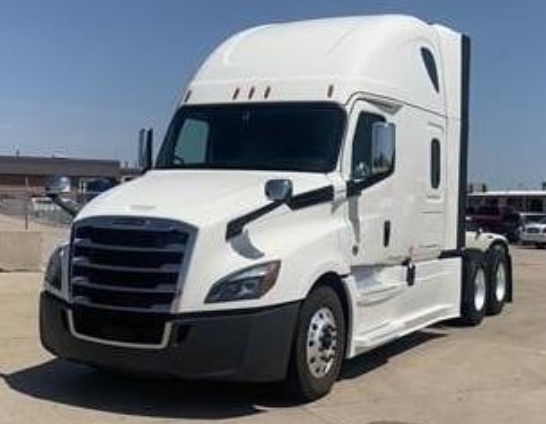
The Freightliner Cascadia represents a pivotal evolution — a truck designed fundamentally for fuel efficiency, driver comfort, and uptime. First introduced in 2007 for the 2008 model year, it became Freightliner’s flagship Class 8 highway tractor, blending advanced aerodynamics with a range of powertrain options (including Detroit and Cummins engines).
The Cascadia’s ongoing evolution has spanned multiple generations:
- First Generation (2008–2012): Designed to improve fuel efficiency, reliability, and comfort over prior models like the Century Class and Columbia.
- Second Generation / Cascadia Evolution (2012–2017): Featured enhanced aerodynamics, fuel‑saving technology, and improved driver ergonomics.
- Third Generation / New Cascadia (2017–Present): Built with advanced digital safety, improved aerodynamics, and enhanced driver amenities. It remains the backbone of heavy‑haul operations.
- Electric Variant – eCascadia (2022–Present): Freightliner’s battery‑electric version supports zero‑emission freight operations, marking a significant shift toward sustainability.
In 2024, Freightliner celebrated the production of the 1 millionth Cascadia, underscoring the model’s massive impact on the industry.
Medium‑Duty Trucks: M2 Series (2003–Present)
Replacing the FL‑Series, the Freightliner Business Class M2 debuted in 2003 as a modern range of medium‑duty trucks covering Class 5 through Class 8. Available in multiple cab configurations — day cab, extended cab, and crew cab — and varied layouts including straight trucks and semitractors, the M2 has become one of Freightliner’s most versatile platforms.
Trim and configuration options include models such as the M2 100, M2 106, and M2 112, each differentiated by bumper‑to‑back‑of‐cab (BBC) length and engine/transmission choices to suit different applications.
In 2024, Freightliner introduced the M2 Plus — an updated series with redesigned interior, new safety technology, and improved ergonomics.
Severe‑Service and Vocational Line: SD Series (2010s–Present)
To serve construction, municipal, and heavy‑haul markets, Freightliner expanded its Severe‑Duty (SD) lineup in the 2010s. Models such as the 108SD, 114SD, and 122SD offer heavy‑duty frames, robust suspensions, and configurations tailored to demanding environments.
These trucks often share components with the M2 series but feature vocational‑optimized setups like enhanced powertrains and rugged chassis designs. Recent updates under the Plus series brought improved interiors and safety systems to these vocational models alongside the M2 Plus.
Trim Levels, Options, and Customization
Freightliner trucks are highly configurable to meet fleet requirements. While highway tractors like the Cascadia and legacy Century Class weren’t marketed in fixed “trim levels” akin to passenger cars, they offered packaged options such as:
- Sleeper configurations: day cab vs. various sleeper sizes for long‑haul comfort.
- Engine choices: Detroit, Cummins, and other diesels with varied horsepower and torque outputs.
- Transmission options: manual, automated manual, and automatic variants.
- Safety packages: active safety, connectivity suites like Detroit Connect on newer Cascadia units.
- Vocational packages: enhanced cooling, frame options, and suspension choices on SD and M2 series.
These choices allow fleets and owner‑operators to tailor applications from long‑haul trucking to regional delivery, construction, and municipal services.
Innovation, Technology, and Future Outlook
Freightliner has a long track record of innovation. From pioneering aluminum cab construction in the 1940s to building the first full‑scale wind tunnel operated by a North American truck maker in 2004, technology has consistently been a priority.
Recent advances include efforts in alternative fuels and electrification:
- eCascadia: a battery‑electric heavy‑duty tractor for zero‑emissions freight operations.
- eM2: electric versions of medium‑duty trucks, expanding sustainable options in urban and regional markets.
- Natural gas variants: for select models, responding to market interest in cleaner combustion alternatives.
Freightliner has also contributed to autonomous vehicle research. Concept semi‑trucks like the Freightliner Inspiration demonstrated Level‑3 autonomous capability on public highways, pointing toward future driver‑assistance and automation technologies.
Cultural Impact and Industry Position
Freightliner’s impact on trucking is evident in its market leadership — particularly with the Cascadia, which has become the best‑selling heavy‑duty truck in America and celebrated production milestones over its lifecycle.
The brand’s versatility — bridging medium‑duty, on‑highway, severe‑service, and alternative propulsion trucks — has helped it dominate commercial trucking across North America and beyond.
The evolution of Freightliner trucks reflects more than eight decades of continuous development and market adaptation. From early cab‑over pioneers to dominant highway tractors like the Cascadia, and from foundational medium‑duty platforms like the FL‑Series to modern electric variants such as the eCascadia and eM2, Freightliner has consistently innovated to meet customer needs. With deep engineering roots, an expansive product lineup, and a future embracing emissions reduction and connectivity, Freightliner remains a defining name in commercial trucking.