The De Tomaso Longchamp: Evolution of an Italian Grand Tourer
The De Tomaso Longchamp stands as one of the most intriguing and rare grand tourers of the 1970s and 1980s. Built by the Italian automaker De Tomaso over an extended production life that spanned nearly two decades, the Longchamp was a luxury‑oriented 2 + 2 coupe — and later convertible — powered by American‑sourced V8 power and wrapped in sleek Italian styling. Designed to broaden the marque’s appeal beyond the famed Pantera supercar, the Longchamp shared architecture with De Tomaso’s own Deauville sedan and later influenced the Maserati Kyalami under De Tomaso’s ownership of Maserati. Despite limited sales numbers, its evolution reveals a unique blend of Italian design, Ford mechanicals, and exotic grand touring ambition.
Origins and Design Philosophy (Early 1970s)
The Longchamp debuted at the 1972 Turin Motor Show as De Tomaso’s contender in the luxury grand touring class, aimed at rivaling vehicles like the Mercedes‑Benz 450 SLC. Styled by Tom Tjaarda at Ghia, the Longchamp drew inspiration from earlier Ghia prototypes like the Lancia Marica and represented a departure from De Tomaso’s more aggressive sports cars toward a more refined, comfort‑oriented GT.
Built on a shortened version of the De Tomaso Deauville’s chassis, the Longchamp featured fully independent suspension, in‑board rear disc brakes, and power‑assisted steering — a sophisticated setup for its time. The Longchamp was initially offered only as a 2‑door coupe with a fixed roof.
At its heart was a 5.8‑litre (351 ci) Ford Cleveland V8 — a reliable, accessible engine choice that delivered strong torque and a distinctive V8 character to what was otherwise an Italian‑styled grand tourer. Customers could choose between a 3‑speed Ford automatic transmission and, in rare cases, a 5‑speed ZF manual gearbox; approximately 17 manual‑equipped cars are believed to have been built.
.

.
Series 1 (1973–1979): Establishing the Grand Tourer
Although introduced in 1972, Series 1 production began in earnest in 1973, and continued into the late 1970s. During this period most of the approximately 409 Longchamps produced were built, with about 395 coupes and 14 cabriolets (“Spyder” models) outfitted by coachbuilder Carrozzeria Pavesi.
Longchamp Coupe
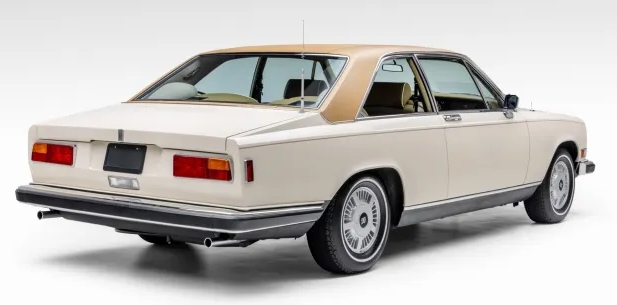
The standard coupe was the core model throughout this era. With its long bonnet, elegant fastback profile, and 2 + 2 seating arrangement, it blended performance potential with a comfortable grand tourer cabin upholstered in leather, featuring wood trim and luxury amenities uncommon on other Italian sports vehicles of the period.
Mechanical highlights included:
- Ford 351 Cleveland V8: delivering power in the range of approximately 267 hp (1973–1980) and later higher outputs later in Series 1.
- Independent suspension with MacPherson struts front and rear.
- Rear‑wheel drive and front‑engine layout designed for balanced long‑distance driving.
Performance figures of the early cars indicated 0–60 mph in around 7.7–8.0 seconds with a top speed around 149 mph (240 km/h) — impressive for a comfortable GT of its size and weight.
The Longchamp’s first years coincided with the 1973 oil crisis, which diminished demand for large‑engined GT cars and contributed to its modest sales from the outset.
Longchamp Series 2 and GTS Evolution (1980–1986)
By 1980, De Tomaso introduced the Series 2 Longchamp with a number of updates aimed at modernizing the car and boosting its appeal. The revised model featured slightly updated styling cues, improved interiors, and mechanical tweaks.
GTS Variant (1980–1989)
At the 1980 Turin Motor Show, De Tomaso unveiled a sportier GTS variant of the Longchamp. The GTS featured:
- Wider wheel arches to accommodate wider wheels and tires.
- Campagnolo alloy wheels — the same used on the contemporary Pantera GT5 — fitted with high‑performance Pirelli P7 tires.
- Suspension revisions to better handle the enhanced grip.
These upgrades helped sharpen handling and added a more aggressive stance to complement the GT personality. Later GTS versions were available with approximately 286 hp and could sprint from 0–60 mph in the mid‑6‑second range, with a top speed often quoted around 149 mph.
Convertible (“Spyder”) Models (Early 1980s)
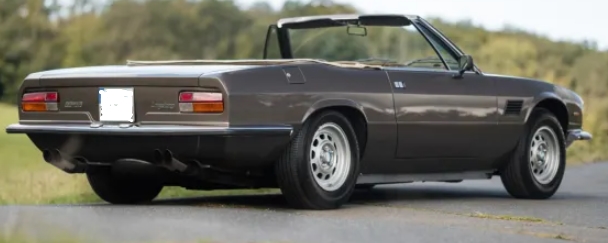
During this era, a convertible variant, often referred to as the “Spyder,” appeared. Built by Carrozzeria Pavesi of Milan, the Spyder showcased a targa or full convertible roof, with only a small number built — just 14 convertibles total across the model’s lifespan. Some later Spyders were constructed to GTS specifications, making them extremely rare and sought after today.
GTS/E and Late Enhancements (1983–1986)
By the mid‑1980s, De Tomaso introduced a top‑of‑the‑line “GTS/E” variant, which included distinctive styling enhancements such as:
- Twin round headlights replacing earlier units.
- Additional spoilers, body skirts, and a rear wing for increased aerodynamic presence.
- A more extreme look intended to push the Longchamp further toward a performance GT coupe.
While still powered by the venerable Ford 351 V8, these late‑day cars are often regarded as the most desirable in terms of collectibility and performance.
Trim Levels and Specifications
Unlike modern cars with clearly delineated factory trims, the Longchamp’s evolution was more organic, defined by variant names and eras rather than discrete equipment packages. Key versions included:
- Standard Longchamp (1973–1980): The original grand tourer with coupe body and Ford V8.
- Longchamp GTS (1980–1989): Sportier version with wide wheels, flared arches, suspension tweaks.
- Longchamp Spyder / GTS Spyder: Rare convertible models with coachbuilt bodies often combined with GTS enhancements.
- Longchamp GTS/E (1983–mid‑1980s): Upper‑end performance variant with distinctive styling and aerodynamic gear.
Across these versions, engines were largely variations of the 5.8 L Ford V8 with power typically ranging from about 267–296 hp depending on tuning and year. Transmissions were primarily automatic (Ford C‑6), with the rarer ZF 5‑speed manual offered on a minority of units.
Production Totals and Market Reception
Production of the Longchamp ran from 1972 to 1989, although most sources suggest that actual manufacturing wrapped by the mid‑1980s, with later cars sold from stock or built only sporadically in very small numbers.
In total, roughly 409 vehicles were built: about 395 coupes and 14 convertibles.
Despite its elegant design and American V8 power, the Longchamp never sold in large numbers — in large part due to its niche positioning, the oil crisis era that began shortly after its debut, and competition from more established marques in the luxury GT segment. It was also never officially sold in the United States, although a few examples made their way there as grey‑market imports.
Legacy and Influence
Though it never achieved mainstream success, the Longchamp boasts a few noteworthy achievements and influences in automotive history:
- It served as the technical basis for the Maserati Kyalami, which replaced Maserati’s older Ghibli and leveraged the Longchamp’s architecture after De Tomaso acquired Maserati in the mid‑1970s.
- It demonstrated De Tomaso’s ability to blend Italian styling with accessible, durable American V8 power — an approach that appealed to a subset of GT enthusiasts.
Today the Longchamp is a rare and collectible grand tourer, prized by enthusiasts of Italian classics and low‑production exotic cars. Its limited numbers, coachbuilt variants, and unique place in De Tomaso’s lineup make it distinct among European GTs of the period.
Future Outlook
In recent years, the classic car market has shown a renewed appreciation for unique niche European cars with compelling backstories and low production numbers. The Longchamp’s rarity — just a few hundred built over 17 years — enhances its desirability among collectors, as does its comfortable grand touring character paired with American V8 power. As more enthusiasts seek alternatives to mainstream Italian exotics such as Ferrari and Lamborghini, well‑preserved and original Longchamps, particularly rare GTS Spyder and GTS/E models, are likely to continue attracting attention in the classic market.
While no modern successor exists under the De Tomaso name, the brand’s revived efforts (e.g., the P72 hypercar) signal a desire to preserve heritage while innovating. Should De Tomaso or other boutique manufacturers explore reimagined GT cars with heritage cues — perhaps even modern interpretations of the Longchamp ethos — the classic Longchamp may help inspire such future designs.
Conclusion
The De Tomaso Longchamp remains a fascinating chapter in European automotive history — a blend of Italian design and American muscle, offered as a luxurious grand tourer in an era of shifting tastes and economic pressures. From its debut in 1972 through the late 1980s, the Longchamp evolved through standard, GTS, Spyder, and GTS/E variants, each reflecting subtle shifts in styling, performance, and grand touring emphasis. Although only around 409 examples were built, the Longchamp’s legacy endures as a rare and distinctive GT, admired by aficionados for its combination of design flair, V8 performance, and low production numbers.