The Evolution of the Hyundai Eon: The Entry-Level City Car for the 2010s
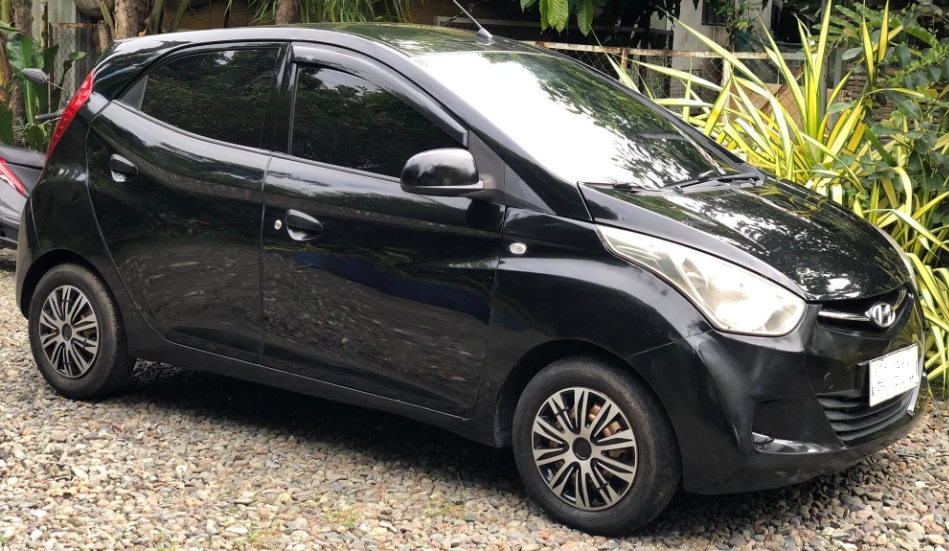
The Hyundai Eon is a subcompact city car produced by the South Korean automaker Hyundai Motor Company for emerging markets from 2011 to 2019. Designed as a fuel-efficient, affordable urban vehicle, the Eon played a key role in Hyundai’s lineup — particularly in India, Southeast Asia, and Latin America — filling the gap below larger hatchbacks like the Hyundai i10 and succeeding the aging Hyundai Atos in many territories. Over its production life, the Eon received updates in styling, engines, and equipment, and offered a range of trim levels tailored to its budget-oriented audience. This article looks at its history, models and trim levels, technical details, and future legacy.
Origins and Market Positioning
The Hyundai Eon was introduced on 13 October 2011 in India and subsequently launched in other markets, including the Philippines (March 2012), Vietnam (June 2012), and Sri Lanka (June 2014). It was also sold in several Latin American, African, and Asian markets under the name Hyundai Atos Eon.
Developed specifically for price-sensitive markets with high demand for compact, fuel-efficient vehicles, the Eon was positioned below the Hyundai i10 in the brand’s portfolio. Its tall-boy design maximized interior space while maintaining a compact exterior footprint, ideal for congested urban environments.
Hyundai manufactured the Eon at its Chennai plant in India for both domestic sales and exports, later adding assembly facilities in the Philippines to meet regional demand.
.

.
Production Timeline and Major Milestones (2011–2019)
2011: Launch and Early Variants
The Eon debuted in India in October 2011, marking Hyundai’s entry into the highly competitive entry-level city car segment dominated by models like the Maruti Suzuki Alto and Renault Kwid.
At launch, the Eon was offered primarily with a 0.8-litre 3-cylinder petrol engine (814 cc) — known for its simplicity and fuel economy — paired with a 5-speed manual gearbox.
Trim offerings at the outset varied by market, but in India typical early trims included budget-oriented options such as D-Lite, Era, and Magna — emphasizing value with basic features and minimal equipment.
2012–2013: Expansion and Feature Differentiation
As the Eon established itself in the market, Hyundai expanded the number of trim levels to provide a wider choice of features and options, catering to customers with varying budgets and preferences. These early models included more than a half-dozen variants — with key names such as D-Lite Plus, Era Plus, Magna Plus, and Sportz across different model years.
Key features available in higher trims included power steering, body-colored bumpers and mirrors, front power windows, adjustable ORVMs (outside rear-view mirrors), and basic audio systems — all uncommon in the entry-level class at that time.
2014: Facelift and Engine Upgrade
In May 2014, Hyundai introduced a facelift for the Eon to keep it competitive against newer rivals. The update included cosmetic refinements and the introduction of a 1.0-litre Kappa II three-cylinder engine producing approximately 69 PS and 9.6 kg·m of torque.
This larger engine — shared with the Hyundai i10 and Kia Picanto — delivered improved performance over the smaller 0.8-litre unit and broadened the Eon’s appeal for buyers seeking a bit more power without sacrificing fuel economy.
Despite the addition of the 1.0-litre option, the drivetrain remained simple and focused on urban practicality, with power routed exclusively through a 5-speed manual transmission.
2017: Sportz and Infotainment Enhancements
By 2017, Hyundai continued to update the Eon lineup to extend its relevance in a rapidly evolving market. That year saw the introduction of the Eon Sports Edition, based on the existing Era+ and Magna+ trims.
The Sports Edition added cosmetic touches like side body moldings and roof rails, and upgraded the interior with a touchscreen infotainment system with Phone-Link — a notable feature for a car in its price segment.
This move demonstrated Hyundai’s awareness of shifting customer expectations — even in the entry-level segment — toward more connectivity and convenience features.
2018–2019: Decline and Discontinuation
By the late 2010s, regulatory changes in safety and emissions standards in India and other key markets began to outweigh the feasibility of updating the Eon’s aging platform. In August 2018, Hyundai announced that the Eon would be discontinued by the end of September 2019 due to its inability to meet new safety regulations taking effect in 2019 and the upcoming Bharat Stage VI emissions standards.
The last Eon rolled off the production line on 3 May 2019, marking the end of an eight-year production run. Its exit coincided with the revival of the Hyundai Santro nameplate in India — a more modern entry-level offering built to meet contemporary regulatory demands.
Trim Levels and Variants Across the Years
The Hyundai Eon’s trim structure evolved over its production life, especially in its key market of India. While the exact naming conventions varied slightly by year and across other markets such as the Philippines, core trims included the following:
Base and Value Trims
- D-Lite / D-Lite Plus – The most basic trims designed for maximum affordability, often without air conditioning, power steering, or advanced features.
- Era / Era Plus – Added essentials such as power steering, body-colored bumpers, and improved styling elements over the very base trims.
Mid-Range Offerings
- Magna / Magna Plus – Focused on comfort and convenience with features like front power windows, central locking, and adjustable mirrors.
- Sportz – A more feature-rich variant with additional equipment, often including better interior trim, additional entertainment options, and more exterior accents.
Special Editions
- Sports Edition – Introduced in 2017, this variant added visual upgrades like side moldings, roof rails, and a touchscreen media interface — a rare inclusion in such an affordable model.
Some markets also differentiated by engine size (0.8 L vs. 1.0 L), with top-end trims most likely to feature the larger engine for better performance and drivability.
Technical Specifications
Engines
- 0.8-litre Epsilon I3 petrol engine: Produced 56 PS at 5,500 rpm and 7.6 kg·m of torque at 4,000 rpm.
- 1.0-litre Kappa II petrol engine: Introduced in 2014, it delivered approximately 69 PS at 6,200 rpm and 9.6 kg·m of torque at 3,500 rpm.
Both engines were paired with a 5-speed manual gearbox, and the Eon remained strictly front-wheel-drive throughout its life.
Dimensions
As a city-oriented car, the Eon featured compact dimensions ideal for urban driving: length around 3,495 mm, width 1,550 mm, height 1,500 mm, and a wheelbase of 2,380 mm.
Safety and Market Perception
Safety ratings for the Eon were modest by international standards. For example, the 1.0-litre Eon tested under Global NCAP protocols in India (without airbags and ABS) received a 0-star rating, reflecting limited occupant protection in basic configurations — a common shortcoming among entry-level cars of the era.
Despite this, the Eon’s focus on affordability, fuel efficiency, and city-friendly dimensions made it popular with first-time car buyers and urban commuters. Its simple mechanics and ease of ownership also contributed to strong secondary market demand in several regions.
Legacy and Future Outlook
Though the Hyundai Eon was discontinued in 2019, its impact in entry-level segments remains clear. It filled a crucial gap in Hyundai’s lineup during a period when compact, inexpensive cars were high in demand in markets like India and Southeast Asia.
Today, its successor in key markets is the Hyundai Santro — relaunched with modern safety, emissions compliance, and updated design — demonstrating how evolving regulatory and consumer expectations drive model refreshes.
With increasing emphasis on safety regulations, emissions standards, and electrification in the automotive industry, it’s unlikely the Eon’s traditional internal-combustion format will return. However, the core idea of a compact, efficient, affordable urban vehicle lives on in modern hatchbacks and emerging electric city car concepts Hyundai and other manufacturers are developing.
Conclusion: A Cornerstone of Hyundai’s Entry-Level Strategy
The Hyundai Eon served as a simple, affordable city car that met the needs of budget-conscious buyers for nearly a decade. From its 2011 launch through its 2019 discontinuation, the Eon offered a wide range of trims — from entry-level basics like D-Lite to more equipped Sportz editions — and engine options that balanced economy with everyday usability.
While it never matched premium hatchbacks in features or safety, its contribution to Hyundai’s penetration of entry segments in India and other markets was significant — and its legacy continues through successors like the Santro and newer city car offerings designed for an increasingly environmentally conscious future.