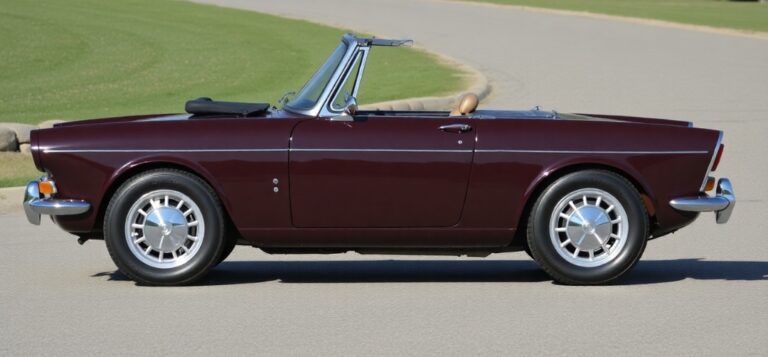
The Triumph 2500: Evolution of a British Luxury Sedan
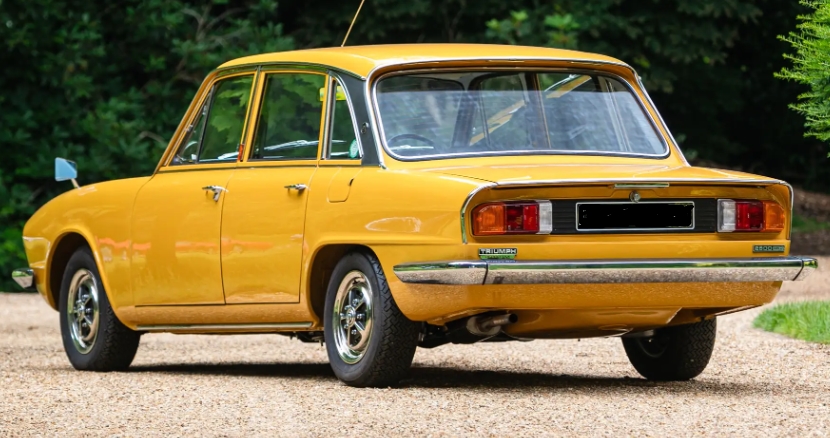
The Triumph 2500, a product of the British Leyland Group, stands as a key model in the history of the British automotive industry. Aimed at competing with the mid-size luxury sedans of the era, the 2500 offered a blend of comfort, style, and performance. Produced from 1968 to 1977, it evolved from the Triumph 2000, and its legacy includes notable developments in engineering, design, and performance, all while responding to the needs of the changing automotive market of the 1960s and 1970s.
Origins and Development of the Triumph 2500
The Triumph 2500 was a continuation and a significant upgrade of the Triumph 2000, a car that was initially launched in 1963. The Triumph 2000 was designed as a mid-size, family-oriented luxury sedan, with an emphasis on a spacious interior, smooth ride, and good performance. Its success led Triumph to consider further expansion into this market, which ultimately resulted in the creation of the Triumph 2500.
The Triumph 2500 was introduced in 1968 as an upgraded version of the earlier 2000. It shared many of the same features with the 2000, but the main difference was the larger 2.5-liter engine, which provided more power and improved performance. The model was positioned to compete with more established sedans from brands like Ford, Vauxhall, and Jaguar, all of which were dominant in the British market for luxury and mid-range sedans.
The 2500 was designed with a sleek, modern appearance and offered a more refined driving experience compared to the smaller, more utilitarian cars of the era. The car was also marketed for its smooth six-cylinder engine, which was an appealing alternative to the four-cylinder engines found in many competing cars.
Introduction of the Triumph 2500 (1968)
The first iteration of the Triumph 2500 was released in 1968. It was powered by a 2.5-liter six-cylinder engine, which was derived from the same engine family used in the Triumph 2000, but with increased displacement for greater performance. The engine produced approximately 100 horsepower, which was respectable for the era, giving the 2500 a top speed of around 100 mph (160 km/h). The 2500 was also available with a four-speed manual or optional automatic transmission, giving buyers flexibility based on their preferences.
The original 2500 featured a relatively straightforward sedan design. It had a clean, angular body with simple lines, characteristic of the mid-1960s and 1970s British styling. It had a spacious cabin with room for five passengers and a generous trunk, offering good practicality for its class.
One of the key selling points of the Triumph 2500 was its handling. Thanks to its independent rear suspension system, the 2500 offered a smoother and more controlled ride compared to many of its competitors. This was a particular point of pride for Triumph, as the company sought to carve out a niche in the competitive luxury sedan market.
.

.
Trim Levels and Models of the Triumph 2500 (1968–1974)
When it was first launched, the Triumph 2500 was available in several trim levels, which allowed the car to appeal to a broader market. The basic model was the standard 2500, which came equipped with the 2.5-liter engine and standard features like cloth upholstery, manual windows, and a basic sound system.
A more premium trim level was introduced in the form of the 2500 PI (Petrol Injection), which offered greater performance. The PI featured a fuel-injected version of the 2.5-liter engine, which boosted power output to approximately 130 horsepower. This model had a stronger performance capability, making it an attractive option for those who valued driving dynamics and speed.
Additionally, Triumph offered an automatic transmission option for buyers looking for more convenience. This variant was labeled the 2500 Automatic, which allowed for easier driving in stop-and-go traffic without the need for a manual gearbox. The automatic transmission was a particularly popular choice among buyers who preferred comfort over sporty handling.
These early models (1968–1974) were generally well-regarded for their comfort, style, and reliability. However, as the 1970s progressed, British Leyland, the parent company of Triumph, faced internal financial struggles and a shift in the automotive market. This led to changes in the Triumph 2500 to ensure its competitiveness.
The 2500 S and Changes Under British Leyland (1974–1977)
In 1974, the Triumph 2500 underwent significant updates. British Leyland, which had absorbed Triumph, introduced a more refined and upscale version of the 2500, known as the 2500 S. This model offered enhanced features and styling updates, including a redesigned front end with a more modern grille and revised bumpers. The trim options were further expanded, and the 2500 S targeted a higher-end customer segment.
One of the key upgrades for the 2500 S was the introduction of more luxury-oriented interior features. Leather upholstery was available as an option, and the car’s dashboard was redesigned to include more advanced instruments and controls. Additionally, the ride quality was improved with the introduction of upgraded suspension components, further solidifying the 2500’s reputation as a comfortable cruiser.
The 2500 S also had a more refined performance profile. Although the base engine still had the 2.5-liter six-cylinder, it now featured enhanced fuel delivery systems for improved efficiency and a smoother driving experience. The model was available in both manual and automatic versions, and Triumph marketed it as a more premium option for the growing market of buyers looking for British luxury without the higher price tag of Jaguar or Rolls-Royce models.
The Triumph 2500 TC (1974)
In 1974, Triumph introduced the 2500 TC model, a variant of the 2500 aimed at offering better performance and handling characteristics. The 2500 TC featured a more sporty suspension setup and improvements to the engine, which allowed the car to achieve better acceleration and handling while retaining its comfort-focused nature. The TC was aimed at buyers who wanted a blend of performance and luxury in a more practical and affordable package.
1975–1977: Final Years and Discontinuation
By 1975, the British Leyland Group was facing significant financial challenges, and the market for large sedans was changing. The Triumph 2500, which had been introduced as a competitor to the likes of the Ford Granada and Vauxhall Victor, found itself increasingly squeezed by rising competition from Japanese automakers, who were producing more fuel-efficient and reliable cars.
Despite these pressures, the Triumph 2500 continued to be produced until 1977, when it was ultimately discontinued. The 2500’s replacement came in the form of the Triumph Acclaim, which was introduced in 1981 and marked a shift toward more economical and compact vehicles, thanks in part to the collaboration with Honda.
Legacy and Importance of the Triumph 2500
Though the Triumph 2500 was not a massive commercial success, it holds a significant place in British automotive history. The car’s development mirrored the challenges and shifting trends in the auto industry during the late 1960s and 1970s, as consumers began to demand more from their vehicles in terms of fuel economy, reliability, and performance.
The 2500 was one of the last models produced by Triumph before the company’s downfall and eventual transition into British Leyland’s broader automotive portfolio. It represented the final push by the brand to make its mark in the luxury sedan market, offering a blend of performance, comfort, and sophistication that appealed to a particular segment of buyers.
Despite its relative obscurity today, the Triumph 2500 has gained a cult following among classic car enthusiasts. The vehicle is often restored and maintained by collectors who appreciate its British engineering, classic design, and its role in the history of British Leyland.
The Triumph 2500 in Popular Culture
The Triumph 2500 made a significant appearance in British popular culture, especially in the 1970s. It was a regular sight on British roads, particularly among professionals, government officials, and executives. Due to its smooth ride and refined interior, it was sometimes associated with the upper middle class or senior management positions.
In recent years, the Triumph 2500 has appeared in numerous classic car exhibitions and has been restored to its original glory by enthusiasts and collectors who want to preserve the legacy of British sedans from the 1970s.
Conclusion
The Triumph 2500 was a critical model in the evolution of the British Leyland Group’s offerings during a challenging time for British car manufacturers. It reflected the brand’s aspirations to compete with larger, more luxurious European sedans and provided buyers with an elegant and refined option. Though production ended in 1977, the car’s legacy endures, symbolizing a particular era in British automotive history. Whether in its base 2500 form, the more luxurious 2500 S, or the sportier 2500 TC, the Triumph 2500 remains a notable example of British automotive ambition during the 1960s and 1970s.