The Triumph Renown: A Journey Through British Luxury and Innovation
The Triumph Renown is one of the lesser-known yet fascinating cars in the history of British motoring. Produced by the Triumph Motor Company between 1946 and 1954, the Renown is a luxury saloon that encapsulated post-war British craftsmanship and the desire to return to a sense of elegance and prestige in an era defined by recovery. Though its production run was relatively short and it was ultimately overshadowed by more mass-market vehicles in Triumph’s lineup, the Renown holds a special place in automotive history for its stylish design, technical innovations, and the role it played in the Triumph brand’s post-war revival.
This article will explore the history, design, development, models, trim levels, and legacy of the Triumph Renown, focusing on its evolution throughout its production years. We’ll also delve into the car’s impact on the British automotive market and its place within the broader narrative of post-war car manufacturing in the UK.
The Birth of the Triumph Renown: Post-War Recovery (1946)
The end of World War II brought about significant changes for the British automotive industry. With many factories having shifted to war production, the country was in dire need of consumer goods, including automobiles. At the time, the UK faced a shortage of cars, and most of the vehicles on the road were outdated or in poor condition. As the country sought to rebuild, there was an emerging demand for affordable, practical cars, but also for vehicles that could embody the recovery of the British people—something that offered both style and substance.
For Triumph, a company with a rich history in both motorcycles and cars, the post-war years presented an opportunity to reposition itself as a manufacturer of more luxury-oriented automobiles. Triumph had produced a few pre-war models, such as the Triumph Gloria, but its reputation had been focused on smaller, practical vehicles. The company, now under new ownership after being acquired by Standard Motor Company in 1944, sought to cater to the increasing demand for stylish, well-engineered cars that embodied the optimism of post-war Britain.
The Triumph Renown was conceived as a premium, yet affordable, luxury car that would appeal to the upper-middle class and professional buyers. It was intended to be a vehicle that combined the best elements of comfort, style, and practicality, filling a niche between mass-market sedans and expensive, hand-crafted luxury cars.
.

.
Introduction of the Triumph Renown (1946-1948)
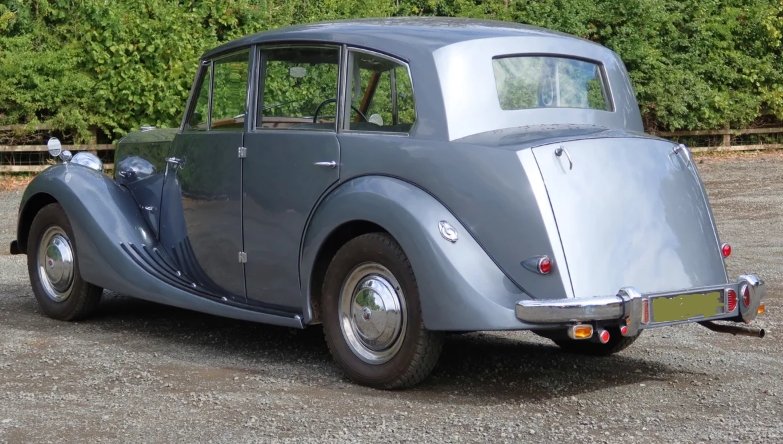
The Triumph Renown was launched in 1946 and, though it was designed with a distinctive post-war aesthetic, it still retained some elements of pre-war design. This was most evident in its large, rounded front grille and smooth, flowing lines that harkened back to the grandeur of earlier British luxury cars. The Renown was a large, four-door saloon (sedan), with an imposing and elegant presence.
Under the bonnet, the Renown was powered by a 2.1-liter inline-six engine. The engine was a significant improvement over smaller four-cylinder engines, delivering 68 horsepower, which allowed for a comfortable driving experience, but it was not a high-performance vehicle. It had a top speed of around 75 mph (121 km/h), which, for the time, was sufficient for a car of its class. The powertrain was coupled with a four-speed manual transmission, providing drivers with smooth acceleration and gear changes.
The chassis was based on Triumph’s proven design philosophy, with independent front suspension and a leaf-spring rear suspension, making it one of the more comfortable and stable cars in its class. The car’s suspension setup was designed for long-distance driving, which was essential for the luxury saloon market. This would also help make the Triumph Renown a popular vehicle for professionals, government officials, and small business owners who needed a reliable, comfortable car for daily use.
In terms of its design, the Renown featured elegant exterior detailing, including prominent chrome trim, round headlights, and a long, sweeping rear. The large, vertical grille at the front became one of the most identifiable features of the car. The car’s styling reflected a mix of pre-war influences and the modern design cues that would become popular in the late 1940s and early 1950s.
The interior was finished with high-quality materials, offering a luxury experience. Leather upholstery, wood veneer, and chrome accents were used throughout the cabin. The dashboard layout was traditional, with circular instruments, including a speedometer and oil pressure gauge. While the Renown was not as opulent as higher-end luxury cars like Rolls-Royce or Bentley, it offered a level of luxury and comfort that was competitive within its price range.
Trim Levels and Variants: Standard and Deluxe (1947-1954)
For the Triumph Renown model, there were essentially two primary trim levels offered during its production run: the Standard model and the Deluxe variant.
- Standard Model: The base version of the Renown offered all the essential features that made the car a desirable option in the luxury saloon market. It was equipped with the 2.1-liter inline-six engine and the standard four-speed manual transmission. The interior featured leather upholstery and wood trim, but with slightly less refined materials than the Deluxe trim.
- Deluxe Model: The Deluxe trim level was introduced to appeal to buyers looking for additional luxury and features. It featured higher-quality upholstery, more polished wood finishes, and greater attention to detail in terms of interior fittings. The Deluxe model also included extra chrome detailing on the exterior and more comfortable suspension adjustments. It was marketed to those seeking a more premium driving experience without stepping up to the more expensive high-end luxury cars of the time.
Renown’s Production and Sales (1946-1954)
Despite being a well-designed and appealing vehicle, the Triumph Renown did not achieve widespread sales success. The car’s price point, though lower than that of luxury brands like Rolls-Royce, was still relatively high for the average consumer in post-war Britain. The Renown’s relatively large size and performance capabilities made it a difficult sell in a market that was increasingly driven by smaller, more economical cars such as the Morris Minor and Ford Anglia.
Production numbers for the Renown were modest, with only about 2,500 units being produced between 1946 and 1954. The car struggled to compete with the rising popularity of smaller sedans and economy cars, and despite its quality and luxury features, it was ultimately overshadowed by the Triumph Mayflower and other, more affordable models in Triumph’s lineup.
The Renown’s production ceased in 1954, primarily due to market demand shifting towards more economical vehicles. While the Renown’s performance and comfort were appreciated, the British car-buying public was more focused on purchasing smaller cars that were better suited for daily commutes and limited family budgets.
Technological Features and Innovations
While the Triumph Renown was not known for introducing groundbreaking technological innovations, it did feature several key aspects that set it apart from other vehicles of its time:
- Independent Front Suspension: The Renown was one of the first cars in its class to feature an independent front suspension, which helped improve the ride quality, particularly on rougher road surfaces. This feature was rare for vehicles of its size during the late 1940s.
- Engine and Performance: The inline-six engine, while not overly powerful by modern standards, provided a balanced combination of power and efficiency. Its 68 horsepower was more than sufficient for most driving needs, and the Renown was a smooth cruiser on both urban streets and rural roads.
- Spacious Interior: The cabin was designed with comfort in mind, with spacious seating for up to five passengers. The luxurious materials used, such as leather upholstery and wood veneer trim, added a touch of refinement that was appreciated by those looking for a higher level of luxury.
- Luxury and Practicality: While it was a luxury car, the Renown was still practical enough for everyday use. Its relatively large boot space and the four-door configuration made it suitable for both family use and professional purposes, as well as providing ample comfort for long-distance travel.
Legacy and Collectibility
Although the Triumph Renown had a relatively short production life and modest sales, it has become a sought-after classic among enthusiasts of British motoring. Its combination of post-war design, technical competence, and luxury appeal has ensured that well-maintained or restored models are still appreciated today.
Because of its limited production, the Renown is considered a rare find in the classic car market. Examples in good condition are highly prized by collectors, especially those with a particular interest in British vehicles from the late 1940s and early 1950s. The Renown’s distinctive styling and comfortable interior make it a favorite among those who enjoy restoring vintage vehicles and showcasing them at classic car shows.
Specialist clubs and organizations dedicated to Triumph cars often provide resources for owners looking to maintain and restore their Renown models. Parts can still be sourced through these clubs, and many enthusiasts continue to take pride in owning a piece of British automotive history.
Future Outlook for the Triumph Renown
While the Triumph Renown’s appeal is largely limited to classic car collectors and vintage vehicle enthusiasts, its future in the collector car market looks promising. As interest in post-war British cars continues to rise, especially among those interested in the legacy of iconic brands like Triumph, the Renown is likely to maintain or even increase in value. Its combination of elegant styling, quality engineering, and historical significance make it a standout among other luxury saloons from the same era.
The Renown’s place in automotive history, especially as part of Triumph’s post-war recovery and the changing landscape of the British car market, ensures its continued importance to collectors. For those passionate about Triumph vehicles or British luxury cars, the Triumph Renown will likely remain a symbol of elegance and refinement for years to come.
Conclusion: A Unique Chapter in British Automotive History
The Triumph Renown may not have had the commercial success of more mass-market vehicles from Triumph’s lineup, but it remains an important part of the company’s history. Produced from 1946 to 1954, the Renown was a post-war luxury car that combined comfort, style, and practicality. While it faced challenges in a market dominated by smaller and more affordable cars, it nonetheless left a lasting impression on the world of British luxury motoring.
Today, the Renown is remembered as a classic example of Triumph’s commitment to quality and craftsmanship. Its place in British automotive history is secure, and for those who appreciate mid-century British cars, the Triumph Renown represents a fascinating and elegant era of design, performance, and innovation.