The Evolution of the Stutz Bearcat: From Early American Speedster to 1970s–1980s Neoclassic Luxury Icon
The Stutz Bearcat occupies a distinctive place in automotive history. First introduced in the early twentieth century as a lightweight performance roadster, the Bearcat became one of America’s earliest sports cars. Decades later, the legendary name returned during the 1970s and 1980s, when the revived Stutz Motor Car of America produced an extravagant neoclassic luxury roadster aimed at celebrities and wealthy collectors.
Although the original Bearcat established the reputation, the modern incarnation built from 1979 through the late 1980s represents the most unusual phase in the model’s evolution. These later cars combined vintage styling cues with contemporary American mechanical components, creating one of the most recognizable—and rare—luxury automobiles of its era. This article explores the Bearcat’s origins, the rebirth of the name in the 1970s, the various models and trim evolutions of the 1970s–1980s cars, and the vehicle’s legacy.
Origins of the Bearcat Name (1910s–1930s)
The Bearcat name originated with the early Indiana-based automaker Stutz Motor Car Company. The original Bearcat appeared in 1912 as a stripped-down, high-performance roadster designed primarily for speed and spirited driving. At a time when most cars were heavy touring vehicles, the Bearcat emphasized performance, minimal bodywork, and racing-inspired engineering.
Early Bearcats became famous through motorsport success and aggressive advertising slogans such as “The Car That Made Good in a Day.” Their lightweight construction and powerful engines allowed impressive speeds for the era, helping establish the brand’s reputation for performance and exclusivity.
Production of the early Bearcat continued through several variations until the mid-1920s. After the original Stutz company ceased operations in the 1930s, the model name disappeared for decades. Yet the legend of the Bearcat remained strong enough that when a new company revived the Stutz name in the late 1960s, the Bearcat title was chosen for its eventual convertible model.
.
NO MORE dead batteries with this:

.
The Stutz Revival and Neoclassic Movement
The modern Stutz story began when New York banker James O’Donnell revived the brand under the company Stutz Motor Car of America. Working with former Chrysler designer Virgil Exner, O’Donnell created a line of extravagant neoclassic automobiles inspired by luxury cars of the 1920s and 1930s.
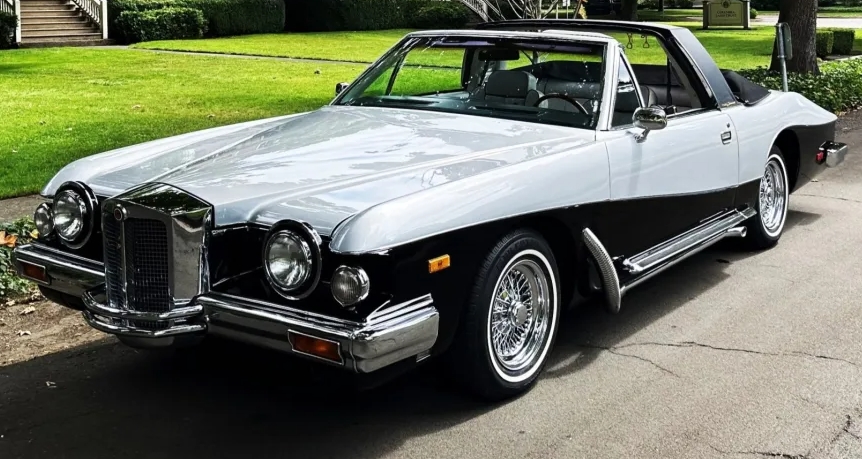
These vehicles used contemporary American mechanical components—mostly from General Motors—but featured elaborate hand-built bodies with retro styling cues such as freestanding headlamps, chrome external exhaust pipes, and exposed spare wheels.
The first production model of the revived company was the Stutz Blackhawk, introduced in 1970. Because of design and safety complications related to convertibles, the Bearcat roadster originally planned for the launch was delayed for nearly a decade.
The Modern Bearcat (1979–1986)
Development and Launch (1979)
The revived Bearcat finally appeared in 1979 after federal safety rules concerning convertibles delayed its release. The new car was essentially a convertible or targa-style version of the Blackhawk coupe and shared much of its styling and engineering.
The 1979 Bearcat used the GM A platform derived from the Pontiac Grand Prix. This meant that beneath its exotic hand-built body, the car shared many components—including drivetrain and suspension—with mass-produced GM vehicles.
Despite the mainstream mechanical foundation, the Bearcat was anything but ordinary. Each car was assembled largely by hand in Italy before being shipped to the United States. Luxury appointments included:
- Extensive chrome or optional gold-plated trim
- Hand-stitched leather interiors
- Plush carpeting and wood trim
- Custom luggage sets
- Highly individualized paint finishes
The price was approximately $100,000 at launch—an extraordinary figure for 1979, equivalent to several hundred thousand dollars today.
1979 Bearcat (Series III–Based Version)
The first production Bearcat was essentially a convertible adaptation of the Blackhawk Series III. Key characteristics included:
Production year: 1979
Platform: GM A-body (Pontiac Grand Prix)
Body style: Targa-style roadster / convertible
Estimated production: around 30 examples
This initial version retained the dramatic Blackhawk styling: long hood, freestanding headlights, vertical grille, and the iconic external spare tire mounted on the trunk.
Although not officially divided into trim levels in the modern sense, customers could specify extensive customization. Interiors, trim finishes, and paint schemes were usually unique to each car.
1980–1986 Bearcat (B-Platform Versions)
In 1980 the Bearcat was redesigned alongside the Blackhawk when Stutz moved to the GM B platform. The updated car shared chassis components with vehicles such as the Pontiac Bonneville, Oldsmobile Delta 88, and Buick LeSabre.
Key Features
- Larger full-size GM chassis
- Continued neoclassic styling
- Exposed spare wheel integrated into the rear design
- Hand-built coachwork
- Highly customizable luxury interiors
These cars remained extremely rare. One variant based on the Blackhawk Series IV reportedly saw only about seven examples produced.
Engines
Although specifications varied slightly by donor platform, typical engines included GM V8s such as:
- 5.0-liter V8
- 5.7-liter V8
These engines emphasized smooth luxury performance rather than outright speed.
Trim Levels and Variants (1970s–1980s Bearcat)
Unlike mass-produced vehicles, Stutz did not typically offer standardized trim packages. Instead, buyers ordered cars with extensive bespoke options. However, several distinct Bearcat versions existed during the 1970s and 1980s:
1. Bearcat (1979)
- Convertible / targa version of the Blackhawk Series III
- GM A-body platform
- Approximately 30 built
2. Bearcat (1980–1986)
- Updated with GM B-platform chassis
- Styled similarly to the Blackhawk Series IV
- Extremely limited production (including a seven-car version tied to the Series IV redesign)
3. Experimental Precursor: Stutz D’Italia (1976)
Before the official Bearcat launch, Stutz revealed a one-off convertible prototype called the Stutz D’Italia. Only one was built, and it served primarily as a design preview for the upcoming Bearcat roadster.
The Bearcat II (1987–1995)
By the late 1980s, Stutz attempted to modernize the Bearcat concept with an entirely new design: the Stutz Bearcat II.
Design and Engineering
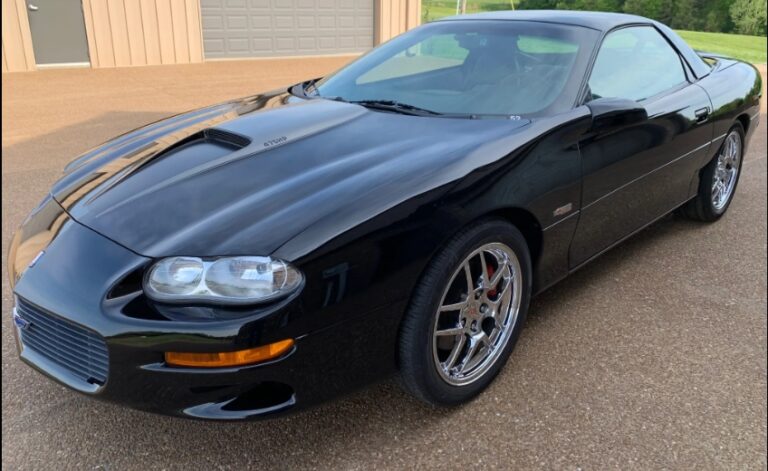
The Bearcat II represented a significant departure from earlier models. Instead of the large GM luxury chassis used by the Blackhawk, the new car utilized the GM F platform shared with the Pontiac Firebird and Chevrolet Camaro.
Key Specifications
- Production years: 1987–1995
- Platform: GM F-body
- Body style: Convertible roadster
- Engine: 5.7-liter fuel-injected V8 (Corvette-derived)
- Base price: about $125,000
- Production total: roughly 12–13 vehicles
One of the most innovative aspects of the Bearcat II was its body construction. Stutz used a composite material known as “Diamond Fiber,” essentially an early carbon-fiber-based composite that was lightweight and resistant to corrosion.
Features and Equipment
Despite its sporty platform, the Bearcat II remained a luxury vehicle:
- Removable carbon-fiber hardtop
- Matching custom luggage
- Plush leather interiors
- Distinctive external spare tire integrated into the rear bumper
The car targeted wealthy collectors and international buyers, including Middle Eastern royalty.
Celebrity Owners
Like the Blackhawk coupe, Bearcat-related Stutz models attracted high-profile buyers. Among the most famous enthusiasts were:
- Elvis Presley
- Wayne Newton
- Evel Knievel
- Sultan of Brunei
Such celebrity ownership reinforced the brand’s image as an ultra-exclusive luxury automobile.
End of Production and Decline
By the late 1980s and early 1990s, the neoclassic car trend that had inspired Stutz began to fade. Without a strong dealer network and facing shrinking demand, the company struggled to remain viable.
The Bearcat II continued in extremely small numbers into the early 1990s, with the final examples reportedly sold around 1993–1995.
After the retirement of company founder James O’Donnell in 1988 and the earlier death of designer Virgil Exner, the revived Stutz company gradually faded away.
Legacy of the Stutz Bearcat
Despite extremely low production numbers, the modern Bearcat holds a unique place in automotive history.
Design Significance
The Bearcat of the 1970s and 1980s represents one of the most flamboyant expressions of the “neoclassic” car movement. Its exaggerated styling—long hood, external spare tire, and ornate chrome trim—deliberately evoked luxury cars of the 1920s.
Technological Interest
The Bearcat II’s composite body construction was notably ahead of its time. Using carbon-fiber-type materials in a production vehicle during the 1980s was unusual and demonstrated Stutz’s willingness to experiment with advanced materials.
Rarity and Collectibility
With only a few dozen Bearcats and barely more than a dozen Bearcat IIs produced, surviving examples are extremely rare. Collectors value them not only for their exclusivity but also for their cultural connection to celebrity buyers and the flamboyant luxury culture of the 1970s and 1980s.
Future Outlook
Today, the Stutz brand remains dormant, but interest in rare luxury automobiles continues to grow. The Bearcat’s rarity ensures that surviving vehicles will likely remain highly collectible. Auctions and classic-car exhibitions frequently highlight these cars as examples of the boldest design era in American luxury automobiles.
While a revival of the Stutz brand has occasionally been rumored, no major production program has emerged. If the name ever returns again, the Bearcat would almost certainly be the model most closely associated with that revival—just as it was in both the 1910s and the 1970s.
Conclusion
From its origins as a stripped-down American performance roadster to its rebirth as a lavish neoclassic convertible, the Stutz Bearcat underwent one of the most unusual evolutions of any automobile nameplate. The 1979–1980s versions transformed the Bearcat from a racing-inspired sports car into an extravagant luxury statement aimed at the world’s elite.
Though production numbers were tiny and the company ultimately faded, the Bearcat remains a fascinating symbol of automotive individuality. Its blend of retro styling, bespoke craftsmanship, and celebrity appeal ensures that the Stutz Bearcat—particularly the rare 1970s and 1980s models—will continue to intrigue historians and collectors for years to come.