The Evolution of the Stutz Blackhawk: America’s Hand-Built Neo-Classic Luxury Icon
The Stutz Blackhawk is one of the most extravagant automobiles ever produced in the United States. Known for its flamboyant styling, hand-built Italian bodywork, and association with celebrities, the Blackhawk represents the revival of the historic Stutz Motor Company brand in the late twentieth century. Produced from 1971 through 1987, the Blackhawk combined American mechanical components with European coachbuilding techniques to create an exclusive personal luxury car that appealed to wealthy buyers around the world.
Although only approximately 500 to 600 cars were built, the Blackhawk left a lasting impression on automotive history and became one of the most recognizable neo-classic vehicles of the 1970s and 1980s.
This article examines the development of the Stutz Blackhawk, its production years, models and trim variants, design evolution, and its enduring legacy among collectors.
Origins of the Modern Stutz Brand
The original Stutz automobile company was founded in 1911 and built high-performance luxury cars before ceasing operations during the Great Depression in the 1930s. Decades later, the famous name was revived by James O’Donnell, a New York investment banker who purchased the rights to the Stutz brand in 1968.
O’Donnell envisioned a new luxury automobile that would rival prestigious European marques such as Rolls-Royce while incorporating distinctive retro styling. To achieve this goal, he enlisted the talents of renowned automotive designer Virgil Exner, formerly of Chrysler.
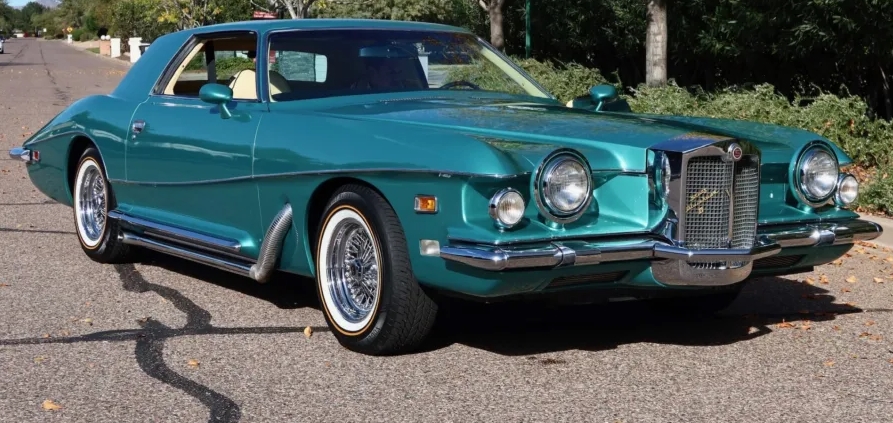
Exner created a dramatic neo-classic design that featured:
- A large chrome grille resembling prewar luxury cars
- Freestanding headlamps
- Sweeping fenders
- A protruding spare tire mounted on the trunk
- Side exhaust pipes
The prototype vehicle was built in Italy by the coachbuilder Carrozzeria Ghia, and the finished car debuted in 1970 at the Waldorf-Astoria Hotel in New York City.
The vehicle was named the Stutz Blackhawk, borrowing the name of a historic Stutz model used briefly in 1929–1930, though the modern car was entirely unrelated mechanically or stylistically.
.
NO MORE dead batteries with this:

.
Production Overview
The Stutz Blackhawk was manufactured from 1971 through 1987.
Production locations:
- 1971–1972: Italy (Padane coachworks)
- 1972–1987: Italy (Carrozzeria Saturn near Turin)
Each vehicle required roughly 1,500 hours of labor, emphasizing craftsmanship and exclusivity.
Total Production
- Estimated total: 500–600 vehicles
- Production rate: roughly six cars per month during the 1970s
Prices ranged from $22,500 in the early 1970s to as much as $75,000 by the 1980s, placing the car among the most expensive automobiles sold in the United States at the time.
Stutz Blackhawk Series and Model Evolution
Throughout its production life, the Blackhawk evolved through multiple “series” designations. These were roughly equivalent to generational updates rather than traditional trim levels.
Major versions included:
- Blackhawk Series I (1971)
- Blackhawk Series II (1972)
- Blackhawk Series III–VII (1973–1979)
- Blackhawk VIII (1980–1987)
Blackhawk Series I (1971)
The Series I represented the earliest production version of the Blackhawk.
Production Year
1971
Body Style
- Two-door luxury coupe
Chassis and Mechanical Components
The Series I used the Pontiac Grand Prix chassis as its mechanical foundation.
Power came from several American V8 engines depending on the customer specification.
Design Characteristics
Distinctive features included:
- Split windshield design
- Exposed spare tire mounted through the trunk lid
- Chrome exhaust pipes running along the sides
- Hand-crafted steel body panels
The interior was extraordinarily luxurious, featuring:
- Connolly leather upholstery
- Gold-plated interior trim
- Plush carpeting
- Advanced audio systems such as 8-track players
Because of the extreme cost of production, only a small number of Series I vehicles were built.
Blackhawk Series II (1972)
The Series II introduced several changes aimed at improving production efficiency.
Production Year
1972
Key Changes
- Production moved to Carrozzeria Saturn
- Slight modifications to body design
- Expanded seating for four passengers instead of two
The Series II marked the beginning of the Blackhawk’s transition from an ultra-exclusive two-seat coupe to a more practical luxury grand tourer.
Blackhawk Series III–VII (1973–1979)
From 1973 through 1979, the Blackhawk underwent a series of incremental updates.
These vehicles were designated Series III through Series VII, though the visual differences between them were often subtle.
Production Years
1973–1979
Body Style
- Two-door luxury coupe
Mechanical Platform
All versions continued to use a modified Pontiac Grand Prix platform, allowing the vehicle to benefit from reliable General Motors mechanical components.
Engines
Various American V8 engines were available during this period, including:
- Ford 351 Windsor V8
- Pontiac 455 V8
- Chevrolet 454 V8
- Cadillac 472 V8
- Cadillac 500 V8
These engines were paired with automatic transmissions and tuned primarily for smooth cruising rather than performance.
Styling and Equipment
Signature features of the Blackhawk during this period included:
- Chrome wire wheels
- Elaborate chrome trim
- Hand-stitched leather interiors
- Wood veneer dashboards
- Custom luggage compartments
The design remained intentionally flamboyant and unlike any other American automobile of the era.
Expansion of the Blackhawk Lineup
Although the coupe remained the core product, Stutz gradually expanded the Blackhawk family with additional body styles and luxury variants.
Stutz IV-Porte (1979–1981)
The Stutz IV-Porte was the four-door sedan version of the Blackhawk.
Production Years
1979–1981
Platform
General Motors B-body
Production
Approximately 50 vehicles built.
This sedan offered increased rear passenger space and became popular among wealthy entertainers and business executives.
Convertible Variants
Two convertible versions of the Blackhawk were produced.
Stutz D’Italia
- Convertible version of the Blackhawk
- Limited production
- Designed as a luxury grand touring convertible
Stutz Bearcat
- Convertible inspired by the famous prewar Stutz Bearcat
- More flamboyant styling
- Built in very small numbers
These convertibles were among the most expensive American cars available in the 1970s and early 1980s.
Blackhawk VIII (1980–1987)
In 1980, Stutz introduced the Blackhawk VIII, which represented the most significant redesign in the car’s history.
Production Years
1980–1987
Platform
The new model switched from the Grand Prix chassis to the Pontiac Bonneville and GM B-body platform, which offered similar wheelbase dimensions.
Later models used platforms derived from:
- Oldsmobile Delta 88
- Buick LeSabre
Design Changes
The redesign included:
- Slightly smaller overall dimensions
- Updated grille and trim details
- Revised taillight designs
- Modernized interior features
Despite these updates, the Blackhawk retained its signature styling elements, including the external spare tire and exaggerated front grille.
Craftsmanship and Customization
Every Stutz Blackhawk was essentially a custom-built automobile.
Buyers could specify numerous personalization options, including:
- Exterior paint colors
- Interior leather and wood combinations
- Gold-plated or chrome trim
- Custom audio systems
- Hand-fitted luggage sets
Because of this customization, no two Blackhawks were exactly alike.
The manufacturing process involved:
- Building a donor vehicle in the United States
- Shipping the chassis to Italy
- Removing the original body
- Installing the hand-built Stutz body and luxury interior
This process contributed to the car’s high price and exclusivity.
Celebrity Owners and Cultural Impact
The Stutz Blackhawk quickly became associated with celebrity culture.
Notable owners included:
- Elvis Presley
- Frank Sinatra
- Barry White
- Lucille Ball
- Evel Knievel
Presley famously purchased one of the first production Blackhawks in 1971, helping establish the vehicle’s reputation as a celebrity luxury car.
The Blackhawk also appeared in films and television shows during the 1970s and 1980s, further cementing its status as a symbol of extravagant wealth.
Production Numbers and Final Years
By the late 1980s, the market for ultra-expensive neo-classic cars had begun to decline. Changing consumer tastes and the rising cost of production made the Blackhawk increasingly difficult to sustain.
Production ended in 1987, after roughly 500–600 vehicles had been built over the car’s 16-year run.
Legacy and Collector Value
Today, the Stutz Blackhawk is considered a unique artifact of 1970s and 1980s automotive culture.
Collectors value the car for several reasons:
- Extremely limited production numbers
- Celebrity ownership history
- Distinctive neo-classic styling
- Hand-crafted Italian construction
Prices vary widely depending on condition and provenance, but well-preserved examples can sell for tens of thousands of dollars at auction.
Future Outlook
Although the original Stutz Motor Company no longer produces automobiles, the Blackhawk remains an enduring symbol of automotive extravagance.
Its future outlook lies primarily within the collector and classic-car community. Enthusiast clubs and restoration specialists continue to maintain surviving vehicles, ensuring that the Blackhawk remains visible at classic car shows and museums.
As interest in rare luxury automobiles continues to grow, the Stutz Blackhawk is increasingly recognized as one of the most distinctive neo-classic vehicles ever produced.
The Stutz Blackhawk represents a fascinating chapter in American automotive history. Created during the revival of the Stutz brand in the late 1960s, the car combined American mechanical reliability with European craftsmanship and dramatic retro styling.
Over its 1971–1987 production run, the Blackhawk evolved through multiple series, expanded into sedans and convertibles, and became a favorite among celebrities and wealthy collectors.
Although only a few hundred were produced, the Blackhawk’s bold design and lavish construction ensured that it would remain one of the most memorable luxury cars of the late twentieth century. Today, it stands as a symbol of the era’s fascination with opulence, individuality, and handcrafted automotive artistry.