The Evolution of the Baojun 510: China’s Record-Breaking Compact SUV
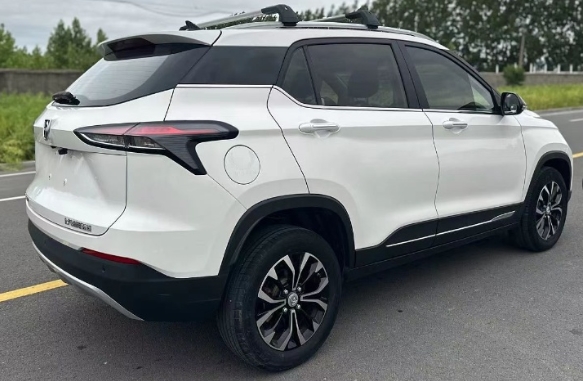
The Baojun 510 stands as one of the most remarkable success stories in the modern global automotive industry. Introduced as an affordable subcompact crossover SUV, it quickly rose to dominate the Chinese market, setting sales records and redefining expectations for budget-friendly vehicles. From its debut in 2017 to its discontinuation in 2025, the Baojun 510 underwent several updates, trim expansions, and global adaptations that shaped its legacy.
This article explores the full evolution of the Baojun 510, including its production timeline, trim levels, facelifts, global presence, and future outlook.
Origins and Background
The Baojun 510 was developed by SAIC-GM-Wuling, a joint venture between SAIC Motor, General Motors, and Liuzhou Wuling Motors. The Baojun brand itself was created to target China’s fast-growing entry-level car market with affordable, practical vehicles.
The 510 made its first public appearance at the 2016 Guangzhou Auto Show, signaling Baojun’s intention to expand aggressively into the booming SUV segment.
At the time, compact crossovers were becoming increasingly popular in China due to their higher driving position, perceived safety, and versatility. The Baojun 510 was strategically positioned below larger Baojun SUVs like the 530 and 560, offering a more affordable entry point.
.

.
First Generation (2017–2019)
Launch and Initial Production (2017)
The Baojun 510 officially entered production in January 2017, with sales beginning shortly after.
From the outset, the vehicle was designed to appeal to younger buyers, featuring:
- A modern, split-headlight design
- Compact proportions (about 166 inches long)
- A simple but functional interior
Mechanically, early models were powered by a 1.5-liter inline-four engine producing around 112 horsepower, paired with:
- 6-speed manual transmission
- 5-speed automated manual transmission
Early Trim Levels
During its initial years (2017–2019), the Baojun 510 was offered in multiple trims, typically structured around increasing levels of equipment. While exact naming conventions varied slightly by market and year, common trims included:
- Base / Standard trim
- Comfort trim
- Luxury trim
- Premium trim
Higher trims added features such as:
- Touchscreen infotainment
- Rearview camera
- Leather upholstery
- Alloy wheels
These trims helped position the 510 as a value-oriented yet well-equipped vehicle.
Record-Breaking Success
The Baojun 510 achieved extraordinary sales success almost immediately:
- Over 416,000 units sold in its first 12 months, a global record for a new nameplate
- Became the best-selling crossover in China in 2018
By mid-2019, cumulative sales approached 800,000 units, cementing its place as Baojun’s most successful model.
Facelift and Second Phase (2019–2025)
2019 Facelift Introduction
In July 2019, Baojun introduced a significant facelift for the 510.
Key updates included:
- Revised front grille design
- Updated rear styling
- Improved interior materials
- Introduction of a continuously variable transmission (CVT)
The facelift also brought three selectable driving modes (depending on trim), improving drivability and fuel efficiency.
Updated Powertrain Options
Post-facelift models (2019–2025) retained the 1.5-liter engine but introduced multiple tuning levels:
- 1.5L (105 hp)
- 1.5L (99 hp)
- Manual and CVT options
This diversification allowed Baojun to target both cost-conscious buyers and those seeking smoother automatic driving.
Trim Levels Over Time
As the model matured, Baojun expanded and refined the 510’s trim lineup. While exact names varied by year and region, the following structure broadly represents the evolution:
2017–2018 Trim Range
- Base / Entry
- Comfort
- Elite
- Luxury
2019–2021 (Facelift Introduction)
- Manual Base
- Manual Comfort
- CVT Comfort
- CVT Luxury
- CVT Premium
2022–2025 Final Years
- Entry Manual
- Mid-Level CVT
- High-End CVT Premium
Later trims emphasized:
- Larger infotainment screens
- Smartphone connectivity
- Enhanced safety features (though still basic by global standards)
Export Markets and Rebadging
One of the most interesting aspects of the Baojun 510’s evolution was its transformation into a global product.
Chevrolet Groove
Beginning in 2020, the facelifted Baojun 510 was exported to international markets under the name Chevrolet Groove.
Key markets included:
- Latin America
- Middle East
- Mexico (from 2021)
This rebadging strategy allowed General Motors to offer an affordable SUV in developing markets without investing in a completely new design.
Despite its global expansion, safety ratings raised concerns. For example, a Latin American version received a 0-star safety rating in 2024, highlighting limitations in its design relative to newer global standards.
Relationship to the Baojun RS-3
In late 2019, Baojun introduced the Baojun RS-3, intended as a more modern successor to the 510.
However:
- The RS-3 was positioned as a more premium offering
- The 510 continued production alongside it
- The RS-3 never matched the 510’s popularity
Interestingly, the continued demand for the 510 demonstrated the enduring appeal of simplicity and affordability in the Chinese market.
Decline and Discontinuation (2020–2025)
After peaking in 2018, sales of the Baojun 510 began to decline:
- 2019: Significant drop in sales
- 2020–2023: Continued downward trend
- 2024: Minimal production numbers
This decline can be attributed to:
- Increased competition in the compact SUV segment
- Rapid technological advancements in newer vehicles
- Consumer demand shifting toward electrified models
Production officially ended in September 2025, marking the end of the model’s lifecycle.
Design and Engineering Overview
Throughout its life, the Baojun 510 maintained a consistent core design philosophy:
Key Specifications
- Body style: 5-door SUV
- Layout: Front-engine, front-wheel drive
- Wheelbase: ~100 inches
- Engine: 1.5L naturally aspirated inline-4
- Transmission: Manual, automated manual, or CVT
Driving Characteristics
The 510 prioritized:
- Fuel efficiency (around 36–38 mpg US equivalent)
- Low purchase price
- Ease of maintenance
It was not designed for performance but rather for practical, everyday use.
Cultural and Market Impact
The Baojun 510’s impact extends beyond sales figures.
Key Achievements
- One of the fastest-selling new cars in history
- Helped establish Baojun as a major player in China
- Demonstrated the viability of ultra-affordable SUVs
Its success also influenced competitors, many of whom introduced similarly priced crossovers to compete in China’s lower-tier markets.
Future Outlook
Although the Baojun 510 has been discontinued, its influence continues.
Legacy
- It paved the way for successors like the RS-3
- It demonstrated the global potential of Chinese-designed vehicles
- It contributed to the rise of rebadged export models like the Chevrolet Groove
What Comes Next?
The future of vehicles in this segment is shifting toward:
- Electrification
- Advanced safety systems
- Connected technology
SAIC-GM-Wuling has already pivoted toward electric vehicles, such as the highly successful Hongguang Mini EV, indicating that future successors to the 510 will likely be electrified.
The Baojun 510’s journey from a budget-friendly crossover to a record-breaking sales phenomenon is a testament to strategic design, market timing, and affordability. Produced from 2017 to 2025, it evolved through multiple trims, a significant facelift, and even global rebadging.
Despite its eventual decline, the 510 remains a landmark vehicle in China’s automotive history—one that proved a low-cost SUV could achieve massive success on both domestic and international stages.
Its legacy continues to influence modern vehicle development, particularly in emerging markets where affordability and practicality remain key priorities.