Karry K50 & K60: The Evolution of Chery’s Affordable MPV and Crossover Duo
The development of the Karry K50 and Karry K60 represents a pivotal chapter in the expansion of Chery Automobile’s Karry sub-brand from purely commercial vehicles into the passenger-oriented MPV and crossover market. Produced during the mid-2010s through the mid-2020s, these vehicles were designed to deliver affordability, practicality, and multi-seat versatility—particularly for emerging markets and budget-conscious families.
This article examines the evolution of the K50 and K60 in detail, including their production timelines, trim levels, configurations, and broader significance.
Origins of the Karry Passenger Vehicle Strategy
Karry, founded in 2009 as a subsidiary of Chery, initially focused on commercial vans and microtrucks. By the early 2010s, however, the brand began expanding into passenger-oriented vehicles, aiming to compete in China’s growing low-cost MPV segment.
The introduction of the K50 in 2015 marked Karry’s first serious entry into this space, followed shortly by the K60, which built on the same platform but targeted buyers seeking a more SUV-like appearance.
.
THIS is GOOD stuff if your car is in need:

.
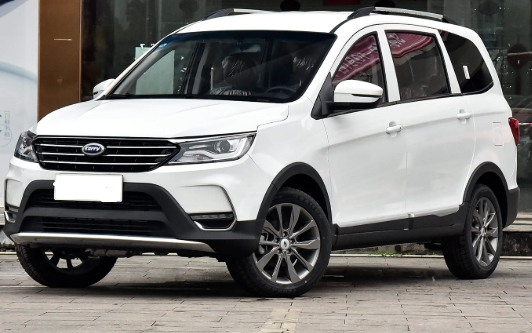
Karry K50: The Foundation Model (2015–2017)
Production Years
- 2015–2017
The K50 was Karry’s first compact MPV designed primarily for private ownership rather than commercial use.
Development and Launch
Production began in late 2014, with market availability starting in early 2015.
It was positioned as a budget seven-seat MPV, targeting families and small businesses needing flexible seating.
Key Specifications
- Engine: 1.5L ACTECO inline-4 gasoline
- Transmission: 5-speed manual or 4-speed automatic
- Layout: front-engine, front-wheel drive
Body Style
- 5-door MPV / wagon-style body
- Standard 7-seat configuration
Trim Levels and Variants
While trim naming varied slightly by market, the K50 generally followed a simple tiered structure:
- Base / Standard
- Manual transmission
- Minimal interior features
- Comfort / Mid-level
- Improved upholstery
- Air conditioning and basic infotainment
- Luxury / High trim
- Enhanced interior materials
- Additional convenience features
Pricing ranged from approximately 44,900 to 73,800 yuan, reinforcing its budget positioning.
Role in the Lineup
The K50 served as:
- Karry’s first modern MPV
- The platform foundation for the K60 crossover
Despite its short production run, it established the design and engineering base for future models.
Transition to the Karry K60 (2016–2025)
Production Years
- 2016–2025 (combustion models, with updates through early 2020s)
The K60 was introduced in 2016 as a more versatile and visually rugged evolution of the K50.
Concept and Positioning
Although marketed as a compact SUV, the K60 is fundamentally:
- A lifted MPV
- Built on the same architecture as the K50
- Enhanced with crossover styling elements
This approach mirrored a broader trend in China, where manufacturers adapted MPV platforms to create affordable SUV-like vehicles.
Karry K60 Early Phase (2016–2019)
Launch and Market Entry
The K60 entered the Chinese market in the third quarter of 2016.
Key Specifications
- Engine: 1.5L inline-4 gasoline (~109 hp)
- Transmission: 5-speed manual (primary)
- Drive layout: front-wheel drive
Seating Configurations
- 5-seat
- 6-seat
- 7-seat
This flexibility gave the K60 broader appeal compared to the fixed 7-seat K50.
Trim Levels
Typical trims included:
- Standard
- Basic equipment
- Manual transmission
- Comfort
- Additional interior features
- Improved materials
- Luxury
- Enhanced infotainment
- More convenience features
Pricing ranged from 58,800 to 81,800 yuan at launch.
Mid-Cycle Updates and Expanded Trims (2020–2022)
In 2020, Karry introduced an updated version of the K60 to meet newer emissions standards and improve competitiveness.
Key Upgrades
- Introduction of 1.5L turbocharged engine (~156 hp)
- Improved safety and infotainment systems
- Expanded equipment list
New Trim Structure
The facelifted K60 featured clearer differentiation:
- Base Model
- Essential features only
- Standard
- Power windows, USB connectivity
- Comfort
- Multi-function steering wheel
- Enhanced interior
- Luxury
- Cruise control
- Keyless entry and push-button start
- Navigation and larger infotainment display
These updates modernized the K60 without fundamentally changing its underlying structure.
Electric Variant: K60 EV and Derivatives (2017–2024)
As part of Karry’s electrification efforts, the K60 platform was adapted into electric versions.
Karry K60 EV
- Electric motor: ~80 kW
- Battery: high-density lithium pack
- DC fast charging capability (~1.5 hours)
Rebadged Versions
- Ciwei EV400
- Other regional variants
These models were aimed at:
- Urban fleet use
- Government and commercial electrification programs
The EV variant demonstrated Karry’s shift toward new energy vehicles.
Design Evolution and Engineering Philosophy
K50 Design Traits
- Rounded MPV styling
- Compact proportions
- Emphasis on interior space
K60 Design Enhancements
- Raised ride height
- SUV-style plastic cladding
- More aggressive front fascia
Despite these visual differences, both vehicles shared:
- Front-wheel-drive architecture
- Compact MPV-derived chassis
- Emphasis on low-cost production
Trim Levels and Configurations Overview
Across both models, the following configurations were offered:
Karry K50
- Base
- Comfort
- Luxury
- Single configuration: 7-seat
Karry K60
- Standard
- Comfort
- Luxury
- Post-2020: expanded trims including turbo variants
- Seating: 5, 6, or 7 passengers
Powertrain Options
- 1.5L naturally aspirated engine (both models)
- 1.5L turbocharged engine (later K60)
- Electric drivetrain (K60 EV)
Market Performance and Positioning
The K50 and K60 were designed as ultra-affordable alternatives to more established MPVs and compact SUVs.
Key strengths included:
- Low purchase price
- Flexible seating configurations
- Simple mechanical design
The K60, in particular, achieved moderate success early in its lifecycle, with strong sales in 2017 before declining in later years as competition increased.
End of Production and Transition (2017–2025)
- Karry K50
- Discontinued in 2017
- Replaced functionally by the K60
- Karry K60
- Continued production into the mid-2020s (around 2025)
- Gradually phased out as Karry shifted toward electric vehicles
By the early 2020s, Karry began discontinuing most internal combustion models, focusing instead on electric vans and trucks.
Relationship Between K50 and K60
The K50 and K60 are closely related:
- K50 = original MPV platform
- K60 = crossover-styled evolution
This relationship allowed Karry to:
- Minimize development costs
- Expand into new segments quickly
- Offer multiple body styles from a single architecture
Competitors and Segment Context
The K50 and K60 competed with:
- Wuling Hongguang series
- BAIC Weiwang MPVs
- Dongfeng DFSK MPVs
Their competitive advantage was primarily price and practicality, rather than advanced technology or performance.
Future Outlook
The discontinuation of combustion-powered Karry models signals a major strategic shift.
Electrification Focus
Karry has transitioned toward:
- Electric vans
- Electric light trucks
- Fleet-oriented vehicles
Legacy of the K50 and K60
These models played a crucial role in:
- Expanding Karry beyond commercial vehicles
- Introducing affordable multi-purpose family vehicles
- Bridging the gap between MPVs and crossovers
Potential Successors
Future models are likely to:
- Retain multi-seat practicality
- Adopt fully electric drivetrains
- Feature more modern safety and infotainment systems
The Karry K50 and K60 represent a significant phase in the evolution of Chery’s Karry brand. Produced from 2015 to 2017 (K50) and 2016 to around 2025 (K60), these vehicles transitioned Karry from a commercial vehicle specialist into a broader mobility provider.
The K50 laid the groundwork as a simple, affordable MPV, while the K60 expanded on that concept with crossover styling, additional configurations, and eventual electrification. Together, they reflect a pragmatic approach to vehicle development—prioritizing cost, versatility, and accessibility.
Although both models have now largely exited production, their influence continues to shape Karry’s modern electric lineup and its ongoing role in global emerging markets.