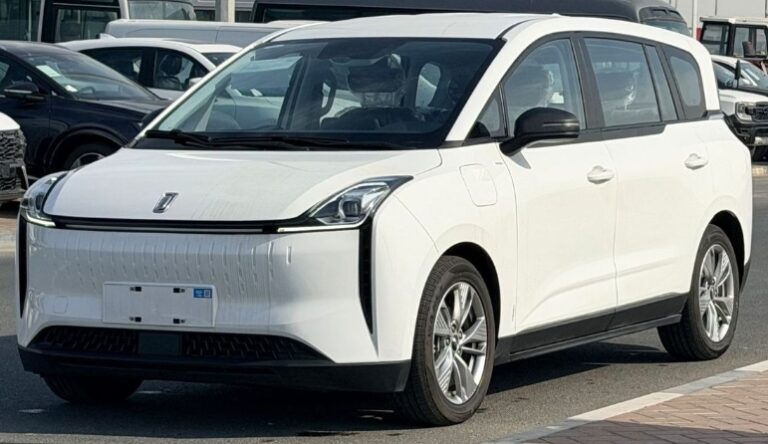
The History of Livan Automotive (Livan, Lifan, Maple)
China’s Reinvention-Focused Automaker
Livan Automotive is one of the newest automotive brands to emerge from China’s rapidly evolving auto industry, but its roots stretch back more than two decades through the older brands Lifan Group and Shanghai Maple Automobile. The story of Livan is not simply about launching another car company. It is a story of financial collapse, restructuring, electric vehicle experimentation, battery-swapping technology, and corporate consolidation under Zhejiang Geely Holding Group.
Although Livan itself officially began operations in 2022, the combined history of the companies behind it dates to the 1990s and early 2000s. The brand today represents Geely’s effort to create an affordable mobility company focused on practical electric transportation and battery-swapping systems.
The Origins of Lifan
Lifan Group was founded in 1992 in Chongqing, China, by Chinese entrepreneur Yin Mingshan. Before entering business, Yin had experienced significant hardship during China’s Cultural Revolution. He reportedly spent years performing manual labor and later worked as a teacher and editor before becoming involved in private enterprise during China’s economic reforms.
Lifan began as a small motorcycle repair shop called Chongqing Hongda Auto Fittings Research Center. During the 1990s, China’s motorcycle market expanded rapidly, and Lifan became one of the country’s largest motorcycle manufacturers. By 1997, the company had formally adopted the Lifan name, which roughly translates to “sail with full force.”
The company’s motorcycle business grew aggressively throughout Asia, South America, Eastern Europe, and parts of Africa. Lifan built a reputation for producing inexpensive and mechanically simple motorcycles and small engines. This export-focused strategy helped the company grow into one of China’s largest privately owned industrial firms.
Lifan entered the automobile industry in 2003 after acquiring an existing vehicle manufacturing operation in Chongqing. The company’s first automobiles entered production in 2005. Early products included compact sedans, small vans, and pickups designed mainly for emerging markets and budget-conscious buyers.
Among Lifan’s best-known vehicles were:
The Lifan X60 became the company’s most successful global automobile. Introduced in 2011, the compact crossover arrived at a time when affordable SUVs were becoming extremely popular worldwide. It sold strongly in Russia, South America, and parts of the Middle East because it offered SUV styling at a much lower price than Japanese or European competitors.
At its peak during the mid-2010s, Lifan exported vehicles to dozens of countries and operated overseas assembly plants in Russia, Uruguay, Iran, Ethiopia, and Vietnam. The company also became notable for being the first privately owned Chinese automaker listed on the Shanghai Stock Exchange.
Lifan’s Struggles and Financial Collapse
Despite early expansion, Lifan encountered major problems during the late 2010s.
The company faced several issues simultaneously:
- Declining vehicle quality reputation
- Weak dealership support
- Increasing competition from better-funded Chinese automakers
- Falling domestic sales
- Large debt burdens
- Overexpansion into unrelated industries
Lifan had also invested heavily in real estate and financial businesses outside the automotive sector, which strained company finances. At the same time, competitors such as Geely, BYD, Great Wall, and Chery dramatically improved vehicle quality and technology, leaving Lifan behind.
By 2018 and 2019, sales collapsed. Chinese consumers increasingly viewed Lifan as outdated compared to newer domestic brands offering better interiors, safer engineering, and advanced technology.
The company entered severe financial distress and reportedly owed billions of dollars to creditors. Production disruptions, unpaid suppliers, and dealership instability damaged the company’s reputation further.
In 2020, Lifan filed for bankruptcy restructuring in China. The collapse marked one of the most significant failures among China’s first generation of privately owned automakers. However, the company did not disappear entirely.
Instead, Zhejiang Geely Holding Group stepped in to rescue and restructure Lifan. Geely acquired control of the company’s automotive assets and reorganized operations under a new structure known as Lifan Technology.
This rescue prevented Lifan from vanishing completely and allowed its manufacturing resources and dealer network to be reused for a new automotive project.
The History of Maple
Shanghai Maple Automobile, commonly known as Maple, was established in 2000. The brand originally operated as a budget-focused automaker producing inexpensive passenger cars for the Chinese domestic market.
Maple’s early vehicles were largely based on older European vehicle platforms, including designs derived from the Citroën ZX platform from the 1990s. The first Maple production car entered the market in 2003.
Popular Maple vehicles included:
- Maple Marindo
- Maple C51
- Maple 30X
- Maple 60S
Maple struggled to establish a strong identity during its early years. The company competed primarily on low prices, but Chinese buyers increasingly demanded better styling and quality. In 2002, Geely acquired a strategic holding in Shanghai Maple Automobile. By 2008, Maple had been fully consolidated into Geely’s operations as a budget sub-brand.
The original Maple brand ceased independent operations in 2010 when Geely reorganized several of its lower-cost divisions.
However, Maple returned in 2020 as an electric vehicle brand connected to a Geely-backed venture involving Kandi Technologies. The revived Maple lineup focused on affordable electric vehicles derived from existing Geely gasoline-powered platforms.
This revival was important because it introduced one of the technologies that would later define Livan: battery swapping.
Geely’s Role and the Creation of Livan
Zhejiang Geely Holding Group played the central role in bringing together the remains of Lifan and Maple.
Founded in 1986 by Li Shufu, Geely evolved from a refrigerator parts business into one of China’s largest automotive groups. Li Shufu became internationally famous after Geely purchased Volvo Cars from Ford Motor Company in 2010. Geely later acquired stakes in numerous global transportation companies, including Lotus, Smart, and the London Taxi Company.
In late 2021, Geely and the reorganized Lifan Technology agreed to establish a joint venture focused on electric vehicles and battery-swapping systems. The new company officially launched in January 2022 under the name Livan Automotive.
The Livan name combined assets and technologies from both Maple and Lifan. Maple ceased operating as an independent brand and became integrated into Livan’s lineup.
Unlike many startup electric vehicle companies, Livan benefited from existing factories, supply chains, and Geely engineering platforms. This significantly reduced development costs.
What Makes Livan Different
The main feature separating Livan from many other automakers is its focus on battery-swapping technology.
Instead of waiting to recharge a depleted electric vehicle battery, drivers can swap the battery pack for a fully charged unit at dedicated stations. This process can take only a few minutes.
Livan and Geely viewed battery swapping as especially useful for:
- Taxi fleets
- Ride-hailing vehicles
- Commercial transportation
- Urban mobility services
The company’s Maple 60S became one of Geely’s first major battery-swapping vehicles. The car was designed specifically for ride-hailing and taxi fleets.
This strategy differed from companies such as Tesla, which focused primarily on high-speed charging networks rather than widespread battery swapping.
Livan also concentrated heavily on affordability. Most Livan vehicles reused existing Geely platforms and engineering systems, allowing the company to keep prices lower than many competitors.
Vehicle Lineups and Manufacturing
Livan’s vehicle lineup has included:
Most Livan vehicles are manufactured in China using Geely production facilities and engineering platforms. Rather than designing entirely new vehicles from scratch, Livan modifies and repurposes existing Geely architectures to reduce development costs and speed up production.
This “shared platform” approach has become common throughout the global auto industry. It allows brands to produce multiple vehicles efficiently while maintaining lower prices.
Racing Programs and Motorsports
Neither Maple nor Livan became heavily involved in international motorsports.
Lifan participated in limited promotional motorsport activities and regional automotive exhibitions, but the company never developed a major factory-backed racing program comparable to those operated by companies such as Toyota, Hyundai, or Ford.
Instead, Lifan focused more heavily on affordability and exports to developing markets rather than performance branding.
Geely itself has participated indirectly in motorsports through some of its global subsidiaries and technology partnerships, but Livan has remained primarily a practical transportation brand.
Marketing and Brand Strategy
Lifan’s early marketing focused on value and affordability. The company emphasized low ownership costs and accessible transportation for middle-class consumers in developing economies.
During the 2000s and early 2010s, Lifan aggressively expanded into export markets where buyers sought inexpensive alternatives to Japanese or European vehicles.
Livan’s modern marketing strategy has shifted toward:
- Electric mobility
- Smart transportation
- Battery-swapping convenience
- Fleet operations
- Urban efficiency
The company has particularly emphasized “freedom from charging anxiety” through battery swapping.
Livan also benefited from Geely’s broader technological image and engineering partnerships.
U.S. Consumer Reception
Neither Lifan, Maple, nor Livan achieved official large-scale passenger vehicle sales in the United States.
As a result, there are effectively no meaningful U.S. sales figures for Livan-branded passenger cars. Lifan did export some engines, motorcycles, and powersports products to North America, but its automobiles never established a significant American retail presence.
American automotive consumers generally remained unfamiliar with the brands. Chinese automakers during the 2000s and early 2010s faced major obstacles in the U.S. market, including:
- Safety regulations
- Emissions standards
- Brand recognition challenges
- Concerns about quality and reliability
Globally, however, Lifan experienced moderate export success before its collapse. During its strongest years, the company sold hundreds of thousands of motorcycles annually and exported vehicles broadly across emerging markets.
The Lifan X60 is widely considered the company’s most successful automobile because it combined low cost, SUV styling, and broad export availability during the global crossover boom of the 2010s.
Milestones and Accomplishments
Important milestones in the combined history of Lifan, Maple, and Livan include:
- 1992: Lifan founded in Chongqing
- 1997: Lifan becomes a major motorcycle producer
- 2000: Shanghai Maple Automobile established
- 2003: Maple launches first production vehicle
- 2005: Lifan begins automobile production
- 2007: Lifan becomes publicly traded
- 2008: Maple fully integrated into Geely
- 2010: Original Maple brand discontinued
- 2020: Lifan bankruptcy restructuring
- 2020: Maple revived as an EV brand
- 2022: Livan Automotive officially established
- 2022: Launch of battery-swapping EV programs
One of Livan’s biggest achievements has been helping Geely develop scalable battery-swapping systems for commercial transportation fleets.
Current Status and Future Outlook
As of 2026, Livan Automotive remains in operation as a Geely-backed automotive brand focused on affordable electric vehicles and battery-swapping technology.
The company has expanded into several export markets, including Russia, parts of the Middle East, and Europe. In some markets, Livan also serves as a lower-cost Geely brand offering gasoline-powered vehicles alongside electric models.
The long-term success of Livan will depend heavily on several factors:
- Growth of battery-swapping infrastructure
- Competition from lower-cost Chinese EV rivals
- Global EV adoption rates
- Geely’s continued financial support
- Expansion into overseas markets
Livan faces intense competition from Chinese automakers such as BYD, Chery, Great Wall, and NIO, all of which are rapidly expanding internationally.
Still, Livan represents a rare example of a failed automaker’s assets being transformed into a new-generation electric mobility company rather than disappearing completely.
The histories of Lifan, Maple, and Livan collectively reflect the broader transformation of China’s automotive industry: rapid growth, fierce competition, financial upheaval, consolidation, and a massive shift toward electric transportation.