The Evolution of the Foton Gratour: Foton’s Ambitious Family and Commercial Vehicle Series
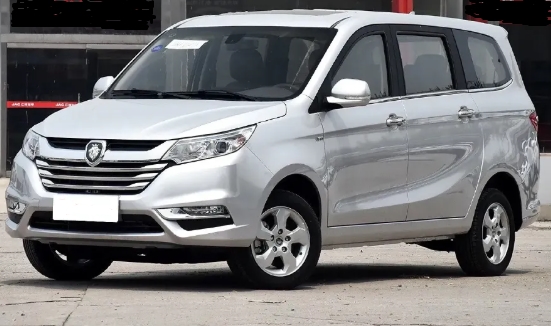
The Foton Gratour series represented one of the most ambitious passenger vehicle projects ever undertaken by Chinese commercial vehicle manufacturer Foton Motor. Introduced during the mid-2010s, the Gratour lineup expanded Foton beyond its traditional focus on trucks, buses, and commercial vans into the growing Chinese market for affordable multipurpose vehicles (MPVs), compact crossovers, microvans, and family-oriented transportation.
Although the Gratour brand existed for only a relatively short period before Foton shifted its priorities back toward commercial vehicles, the series included a surprisingly wide variety of models and trim levels. Vehicles under the Gratour name ranged from compact urban microvans to larger family MPVs and crossover-inspired utility vehicles. The lineup demonstrated Foton’s attempt to compete against rapidly growing Chinese domestic brands during a transformative period in China’s automotive industry.
Today, the Gratour name remains an interesting chapter in Foton’s history, reflecting both the rapid expansion and intense competition of China’s passenger vehicle market during the 2010s.
Origins of the Gratour Brand
Foton Motor was founded in 1996 as part of the BAIC Group and initially focused almost entirely on commercial vehicles. By the early 2010s, however, China’s domestic passenger vehicle market was growing rapidly, especially in lower-cost MPV and compact family vehicle segments. Buyers increasingly wanted affordable transportation capable of carrying larger families or supporting small businesses.
To enter this market, Foton launched the Gratour sub-brand around 2014. The name “Gratour” was used for a broad family of MPVs, microvans, and utility vehicles designed to compete with products from:
- Wuling,
- Changan,
- Dongfeng,
- and other Chinese manufacturers.
The Gratour series focused on:
- affordability,
- flexible interiors,
- practical cargo capacity,
- and modern styling.
Many models were marketed toward:
- families,
- rideshare operators,
- small businesses,
- and rural buyers.
Production Years
The Foton Gratour family entered production in:
- 2014
Most Gratour passenger models were discontinued by:
- approximately 2019–2020
Some commercial derivatives based on Gratour platforms, however, continued production under different names well into the 2020s.
.

.
The First Gratour Models: V3 and V5 (2014–Present)
The first Gratour vehicles introduced were the:
- Gratour V3
- Gratour V5
These compact microvans debuted in late 2014 and early 2015.
The V3 and V5 were designed as highly affordable multipurpose microvans aimed at both passenger and light commercial use.
Gratour V3
The Gratour V3 became the entry-level model of the lineup.
Production years:
- 2014–present under various renamed forms
Key specifications included:
- mid-engine rear-wheel-drive layout,
- 1.0-liter and 1.2-liter gasoline engines,
- 5-speed manual transmission,
- and seating for up to seven passengers.
Trim levels varied by market but commonly included:
- Standard
- Comfort
- Luxury
The V3 emphasized:
- low operating costs,
- compact dimensions,
- and cargo flexibility.
Gratour V5
The larger Gratour V5 debuted during the 2015 Shanghai Auto Show.
The V5 offered:
- a larger body,
- increased passenger room,
- upgraded styling,
- and improved comfort features.
Common features included:
- sliding side doors,
- air conditioning,
- touchscreen infotainment,
- and upgraded seating materials.
The V5 effectively served as the premium version of the V3 microvan platform.
Commercial Variants
The Gratour V3 platform also spawned:
- the Gratour T3 mini truck,
- later renamed the Ollin T3,
- and eventually the Xiangling V commercial series.
These variants included:
- cargo trucks,
- pickup-style mini trucks,
- RV conversions,
- and utility transport vehicles.
Remarkably, the platform later became the basis for the European-market Piaggio Porter NP6 introduced in 2021 through cooperation between Piaggio and Foton.
The Gratour ix Series (2016–2017)
In 2016, Foton expanded the lineup with the:
- Gratour ix5
- Gratour ix7
These vehicles moved the brand toward more family-oriented compact MPVs with crossover-inspired styling.
Gratour ix5
Production years:
- 2016–2017
The ix5 featured:
- front-wheel drive,
- 1.2-liter and 1.5-liter gasoline engines,
- and 5-speed manual transmission.
Trim levels commonly included:
- Basic
- Comfort
- Deluxe
- Luxury
The ix5 emphasized:
- practical family transportation,
- modern styling,
- and improved passenger comfort.
Pricing ranged between:
- 41,900 and 58,900 yuan during launch.
Engines
The ix5 used:
- a 1.2-liter inline-four producing approximately 86 horsepower,
- or a 1.5-liter inline-four producing roughly 116 horsepower.
Gratour ix7
The ix7 served as a more rugged and upscale version of the ix5.
Differences included:
- increased ground clearance,
- additional plastic body cladding,
- revised suspension tuning,
- and more premium trim details.
The ix7 was positioned as a crossover-style MPV targeting younger buyers and larger families.
Trim levels included:
- Comfort
- Elite
- Premium
- Luxury
Pricing ranged from:
- approximately 53,900 to 69,900 yuan.
The Gratour im Series (2017–2019)
By 2017, Foton introduced the more advanced:
- Gratour im6
- Gratour im8
These larger MPVs represented the most premium passenger vehicles ever sold under the Gratour name.
Gratour im6
Production years:
- 2017–2019
The im6 featured:
- front-wheel drive,
- 1.5-liter inline-four engine,
- and either manual or CVT transmission depending on trim.
The vehicle was styled as a larger family MPV with sliding-door practicality and more sophisticated interior technology.
Trim levels included:
- Standard
- Comfort
- Luxury
- CVT Premium
Features available on higher trims included:
- leather seating,
- touchscreen infotainment,
- automatic climate control,
- rear-view cameras,
- and upgraded safety systems.
The im6 drew attention because its styling closely resembled the fifth-generation Honda Odyssey, especially at the front and rear ends.
Gratour im8
The im8 served as the more upscale and crossover-inspired variant of the im6.
Production years:
- 2017–2019
Differences included:
- increased ride height,
- body cladding,
- larger wheels,
- and upgraded luxury equipment.
Trim levels included:
- Elite
- Luxury
- Premium
- Executive
Pricing ranged from:
- approximately 70,900 to 79,900 yuan.
Gratour GT
The highest-end version of the im8 platform became the:
- Gratour GT
This flagship variant added:
- two-tone exterior paint,
- premium interior materials,
- larger infotainment displays,
- and more upscale styling details.
The Gratour GT represented Foton’s attempt to push the Gratour brand into a more premium market segment.
Interior and Technology Evolution
As the Gratour lineup evolved, Foton continuously improved interior refinement and technology.
Features added throughout the lineup included:
- touchscreen infotainment systems,
- Bluetooth connectivity,
- USB charging,
- digital displays,
- reversing cameras,
- multifunction steering wheels,
- and upgraded sound insulation.
Higher-end models such as the im8 and GT added:
- leather upholstery,
- automatic climate control,
- larger multimedia systems,
- and more sophisticated dashboard designs.
The progression from the basic V3 microvan to the more advanced im8 highlighted how rapidly Chinese automakers improved passenger vehicle refinement during the late 2010s.
Market Reception
The Gratour series received mixed but generally positive attention in China’s budget MPV market.
Buyers appreciated:
- affordable pricing,
- spacious interiors,
- flexible seating,
- and practical cargo capability.
However, critics often pointed out that several Gratour models borrowed styling cues heavily from Japanese vehicles, especially Honda products. Automotive communities frequently discussed these similarities online.
Competition within China’s MPV market also became extremely intense during this period, making it difficult for smaller passenger-car programs like Gratour to maintain long-term momentum.
Decline of the Gratour Brand
By around 2019–2020, Foton gradually reduced its focus on passenger vehicles and returned greater emphasis to:
- commercial trucks,
- pickups,
- buses,
- and commercial vans.
Several Gratour models were discontinued, while others were renamed and absorbed into Foton’s commercial vehicle divisions.
The changing market and intense competition from larger Chinese automakers contributed to the decline of the Gratour passenger vehicle program.
Future Outlook
Although the Gratour brand itself has mostly disappeared, its legacy continues through several surviving commercial platforms derived from Gratour vehicles.
The V3 platform, in particular, remains relevant because of:
- ongoing commercial production,
- export-market use,
- and its relationship to the Piaggio Porter NP6.
The Gratour series remains historically significant because it demonstrated Foton’s attempt to become a broader automotive manufacturer during one of the fastest periods of growth in China’s automotive history.
Even though the brand ultimately retreated from the passenger vehicle segment, the Gratour lineup showed how Chinese manufacturers rapidly evolved in:
- vehicle design,
- interior quality,
- technology integration,
- and global platform development during the 2010s.