History of The Honda Brio: A Versatile Pioneer in Affordable Mobility
The Honda Brio, a compact hatchback designed to deliver practicality, fuel efficiency, and affordability, has carved out a significant niche in global automotive markets since its debut. As a strategic reimagining of the iconic Honda Fit/Jazz, the Brio has tailored its identity to emerging economies, offering a no-frills yet feature-rich experience. This article explores the history, specifications, and future trajectory of the Honda Brio, highlighting its role as a gateway to Honda’s innovation philosophy.
A Brief History: From Fit/Jazz to Brio
The roots of the Honda Brio trace back to the original Honda Fit, introduced in Japan in 2001 and known as the “Jazz” in Europe and other regions. Renowned for its space-efficient “Magic Seat” flexibility and fuel economy, the Fit became a global icon in the subcompact segment. However, in the mid-2000s, Honda identified an opportunity to offer an even more cost-effective version in price-sensitive markets like Southeast Asia, India, and other parts of Asia-Pacific. The result was the Honda Brio, launched in 2011, which retained the core technologies of the Fit/Jazz while streamlining features and production to achieve lower pricing.
The Brio’s debut coincided with a surge in demand for small, fuel-efficient vehicles in urban areas with rising fuel prices and congested traffic. By balancing affordability with functional design, Honda positioned the Brio as an entry-level model without compromising its brand’s commitment to innovation. Over time, the Brio also evolved to reflect regional preferences, including a name change in certain markets. For instance, in Japan and India, it was rebranded as the Honda Life in 2017, signaling a focus on lifestyle-oriented marketing.
Years Produced and Generations
The Honda Brio has undergone two major generations during its production run:
- First Generation (2011–2017):
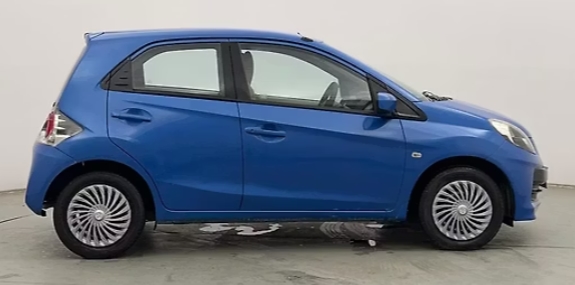
- Launched as a rebadged Fit/Jazz variant, the first-gen Brio offered a 1.2L engine across most markets.
- Characterized by a boxy, utilitarian design with a functional interior, it laid the groundwork for the model’s reputation as a practical city car.
- The 2014 model year saw minor updates, including enhanced driving comfort and additional trim levels in key markets.
- Second Generation (2017–2023):
- Introduced as the Brio Re:born in 2017/2018, this generation featured a refreshed aesthetic with a bold front grille, sleeker headlights, and updated infotainment systems.
- Improved ride quality and safety features, such as electronic stability control (VSA) and rearview cameras, were added to higher trims.
- The Brio Re:born maintained the 1.2L engine in most regions but expanded to a 1.5L option in select markets, enhancing performance without sacrificing fuel economy.
The 2023 Brio continues to evolve, with localized updates to meet regional regulations and consumer expectations. Honda has not announced plans to discontinue the model, indicating its continued relevance in cost-sensitive segments.
.

.
Models and Trim Levels
Honda tailors the Brio’s trim levels to suit the needs of each market, offering a range of configurations from basic to feature-rich. Here’s an overview of the primary trims and variants across key regions:
- Indonesia (Primary Market for Brio):
- Brio E (Base Trim): Manual transmission, dual airbags, analog AC, basic infotainment.
- Brio S: Automatic transmission, power windows, upgraded audio system with USB connectivity.
- Brio S CVT: Enhanced build quality with additional safety features like Vehicle Stability Assist (VSA).
- Philippines:
- Brio L: Basic model with essential features.
- Brio S: Adds power steering, air conditioning.
- Brio S CVT: Automatic transmission, reverse camera, dual SRS airbags.
- India (Honda Life Variants):
- Life VX: Base model with manual transmission and minimal luxury.
- Life EX: Automatic transmission, power windows, rear parking sensors.
- Life VX+: Optional sunroof, advanced infotainment, and enhanced safety tech.
- Vietnam and Malaysia:
- Brio 1.2 E: Manual transmission, dual airbags.
- Brio 1.2 S: Automatic transmission, reverse camera, ABS.
- Brio 1.2 RS (facelifted version): Sporty styling, LED lighting, and premium audio systems.
- Additional Variants:
- The 1.5L engine option, available in select Asian markets, includes the Brio 1.5 S CVT (Malaysia) and Brio 1.5 VX+ (India), offering more power (90 hp vs. 89 hp) but comparable fuel efficiency.
Local dealerships often customize trims to meet specific tastes, such as sunroofs, chrome accents, or rear fog lamps, as seen in the Indonesian “Brio Satya” (a special edition with racing-inspired aesthetics).
Design and Technology: Maximizing Space and Practicality
The Brio’s design philosophy centers on “Space” and “Eco,” principles inherited from the Fit/Jazz. Its compact exterior (ranging from 3,830 mm to 3,995 mm in length) belies an expansive interior, thanks to the Magic Seat system, which allows seating for five adults while retaining ample cargo space. Key design features include:
- Interior Flexibility: Fold-flat rear seats, adjustable storage compartments, and an extended rear legroom.
- Aerodynamic Efficiency: Second-gen models feature a smoother front bumper and underbody panels to reduce drag.
- User-Friendly Infotainment: Later trims include capacitive multi-angle screens, smartphone integration, and Bluetooth connectivity.
The Brio’s 1.2L i-VTEC engine (118cc in India) delivers 89 horsepower and 103 Nm of torque, paired with a 5-speed manual or continuously variable transmission (CVT). The 1.5L version (in select markets) boosts output to 90 hp while maintaining a 25–30 km/L fuel efficiency rating, making it ideal for urban commutes.
Awards and Market Success
Since its launch, the Brio has earned recognition as a bestseller in markets like Indonesia, where it consistently ranks among the top-selling cars since 2011. Key accolades include:
- 2012 – 2014: “Best Small Family Car” in the Philippines and Malaysia.
- 2017: Redesigned Brio Re:born received the “Top Safety Pick” in India’s Global NCAP crash tests (despite lacking airbags in some trims).
- 2018: Named “Best Hatchback Under 10 Lakh” in India.
With over 500,000 units sold annually in 2021, the Brio remains a cornerstone of Honda’s strategy in emerging economies.
Safety Features and Future Outlook
Safety has evolved for the Brio over time. Early models offered only dual airbags and ABS, while newer trims include:
- VSA (Vehicle Stability Assist)
- Reverse Camera
- Dual front airbags and side airbags (in India’s Life VX+)
Looking ahead, Honda is likely to integrate mild hybrid systems or electric powertrains into the Brio’s lineup to meet stricter emissions standards. In 2023, Honda has also experimented with hydrogen fuel cell technology, hinting at potential alternatives to traditional combustion engines. However, the Brio’s affordability is its core strength, and any electrification will need to balance cost and accessibility.
Conclusion: A Model of Endurance
The Honda Brio has successfully bridged the gap between affordability and innovation, offering buyers a reliable, space-efficient vehicle without compromising Honda’s signature quality. From its humble beginnings as a rebadged Fit to its current status as a top-selling compactor in Asia-Pacific, the Brio exemplifies how strategic localization can fuel global success. While the automotive industry shifts toward electrification, the Brio’s future hinges on its ability to adapt without losing its essence: a small car that does the big things simply and well.