History of The Maruti Suzuki Dzire: India’s Favorite Compact Sedan
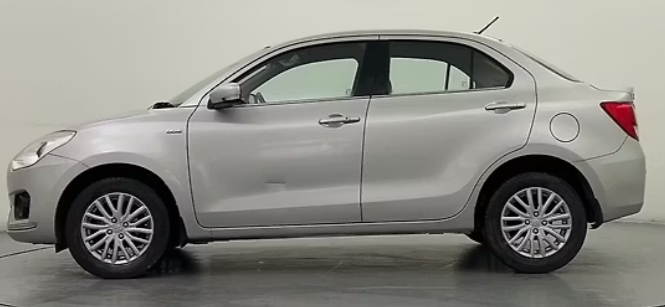
For well over a decade, the Maruti Suzuki Dzire has held the top spot among India’s compact sedans, carving out an unbeatable record of sales, customer loyalty, and industry awards. What began life in 2008 as the Swift Dzire—essentially a booted version of the bestselling Swift hatchback—has evolved through three distinct generations, multiple facelifts, and no fewer than a dozen trim and engine combinations. In this deep dive, we trace the history of the Dzire from its first appearance to today’s BS-VI petrol and CNG line-up, catalog every model and trim level, and look ahead at what the future may hold for Maruti’s perennial bestseller.
- A Sedan Is Born (2008–2012)
When Maruti Suzuki launched the first-generation Swift Dzire in May 2008, compact sedans were a fast-growing but highly contested segment. Maruti’s strategy was simple: take its proven Swift hatchback platform (internally coded RS410), add a three-box silhouette, and price it aggressively. The formula worked immediately. In its debut year, the Swift Dzire outsold every other sedan in its class combined.
Engines and Drivetrains
• 1.2-litre K12B petrol (87 PS, 113 Nm) with 5-speed manual
• 1.3-litre DDiS diesel (75 PS, 190 Nm) with 5-speed manual
Trim Levels
Petrol: LXI, VXI, ZXI
Diesel: LDI, VDI, ZDI
Across the board, the base “L” grade was Spartan, offering manual windows and no A/C; the “V” grade added power windows, central locking, air-conditioning, and an audio system; the “Z” grade topped the range with body-colored bumpers, front fog lamps, and 15-inch alloys. - First Facelift and Rebadging (2012–2015)
By April 2012, Maruti had replaced the first-gen Dzire with a new model based on the second-generation Swift (BL506 platform). The “Swift” badge was dropped from dealer signage—it was now simply the Maruti Suzuki Dzire—but the recipe remained the same: a frugal chassis married to city-friendly dimensions and robust reliability.
Key Improvements
• Improved rear-seat legroom (+50 mm) and boot space (from 316 to 378 L)
• Revised suspension for a more compliant ride
• Enhanced interior quality with soft-touch plastics and chrome accents
Trim Levels and Powertrains
Petrol (K12M 1.2-litre VVT, 82 PS, 113 Nm)
• LXi (base)
• VXi
• ZXi
Diesel (1.3 L DDiS 200, 75 PS, 190 Nm)
• LDi
• VDi
• ZDi
Optional Auto Gear Shift (AGS) was introduced in 2014 on the VXi+ and ZXi+ variants, making the Dzire one of the first in its segment to offer an automated-manual transmission. Dual airbags, ABS with EBD, and rear-parking sensors became available as part of higher-end packs. - Mid-Cycle Facelift (2015)
In July 2015, Maruti gave the Dzire a subtle mid-life reboot:
• New, wide chrome grille with horizontal slats
• Reprofiled front bumper and integrated LED daytime running lights
• Dual-tone alloy-wheel design
• Refreshed interior upholstery and touchscreen infotainment (in ZXi+ and ZDi+ only)
Mechanically, the engines remained unchanged, but NVH levels improved thanks to thicker glass and better insulation. Price increases were moderate, keeping the Dzire competitively priced between ₹5.15 Lakh and ₹8 Lakh (ex-showroom, Delhi). - Third Generation and the “True Dzire” (2017–Present)
June 2017 saw the launch of the third-generation Dzire (code BZ—shared with the latest Swift), now positioned even more clearly as a dedicated sedan rather than a booted hatchback. This model dropped the diesel option in early 2020 to comply with stringent BS-VI emission norms, leaving Maruti to focus on its proven 1.2-litre petrol engine and a factory-fitted CNG kit.
Engines and Transmissions
• 1.2 L K12B Dual-Jet Dual-VVT petrol (82 PS, 113 Nm)
– 5-speed manual
– 5-speed AMT (Automated Manual Transmission)
• 1.2 L K12C Dual-Jet Dual-VVT petrol + CNG (67 PS, 95 Nm)
– 5-speed manual only
Trim Levels (Petrol)
• LXi (MT only)
• VXi (MT/AMT)
• ZXi (MT/AMT)
• ZXi+ (MT/AMT)
Trim Levels (CNG)
• VXi CNG (MT only)
Safety and Convenience Highlights Across the Range
• Dual front airbags (standard across all trims since 2019)
• ABS with EBD
• Reverse parking sensors (all trims)
• Rear-view camera with dynamic guidelines (ZXi+)
• Keyless entry with push-button start (ZXi+)
• SmartPlay touchscreen infotainment with Apple CarPlay & Android Auto (ZXi+)
• Automatic climate control (ZXi+)
• ISOFIX child seat anchors (ZXi+)
• ABS traction control and electronic stability program (ZXi+) - Model-by-Model Trim Summary
First Generation (2008–2012)
• LXI – No A/C, no power windows, no central locking
• VXI – A/C, power windows front and rear, central locking, basic audio
• ZXI – Body-colored bumpers, fog lamps, 15″ alloys, driver-side airbag (post-2010)
• LDI/VDI/ZDI – Diesel counterparts with DDiS 75 PS engine
Second Generation (2012–2017)
Petrol (K12M VVT)
• LXi, VXi, VXi+ (AGS), ZXi, ZXi+ (AGS)
Diesel (1.3 L DDiS)
• LDi, VDi, VDi+ (AGS), ZDi, ZDi+ (AGS)
Third Generation (2017–Present)
Petrol (K12B Dual-Jet Dual-VVT)
• LXi (MT), VXi (MT/AMT), ZXi (MT/AMT), ZXi+ (MT/AMT)
CNG (factory-fitted)
• VXi CNG (MT only)
.
We LOVE cars & cruising around, but sometimes day trips to explore new cities are required (with family or friends) for a spice of variety in your life!
So GO explore!
Cruises & Day/Night City Tours to: Baltimore, Boston, Chicago, Marina Del Ray, New York, Niagara, Philadelphia, San Diego, San Francisco, Toronto, Washington DC, etc.:

.
- Why the Dzire Resonates with Indian Buyers
• Proven Maruti-Suzuki reliability and low cost of ownership
• Fuel-efficient engines delivering 21–23 km/L (petrol manual) and upwards of 28 km/kg (CNG)
• Spacious rear cabin and ample boot space (378 L in 2nd gen, 318 L in 3rd gen)
• Widespread service network ensures routine maintenance is both quick and inexpensive
• Strong resale values—historically, the Dzire commands among the highest returns in its segment - Safety and Technology Through the Generations
Over the years, Maruti has steadily improved the Dzire’s safety credentials. The first-gen model offered a driver-airbag option only in top-end ZXi and ZDi trims from 2010, while ABS and EBD were dealer-fitted extras. By the second generation, dual airbags and ABS/EBD became standard on mid and high trims, and ISOFIX mounts were added in later facelifts. The current Dzire comes with two airbags, ABS with EBD, reverse parking sensors, and a rear-view camera even on mid-level VXi grades. ZXi+ buyers enjoy advanced features such as SmartPlay Studio touchscreen, steering-mounted controls, cruise control, and ESP with traction control. - Market Performance and Sales Milestones
Since its debut, the Dzire franchise has sold over 2.5 million units (as of early 2024). It has consistently led its segment, often accounting for 25–30% of Maruti’s total domestic monthly sales. In 2019 alone, the Dzire crossed the 300,000-unit mark—a record for any sub-4 metre sedan in India. Its popularity is particularly strong among first-time car buyers, app-based taxi fleets, and small families seeking a no-nonsense urban runabout. - Environmental Commitments and the End of Diesel
Maruti Suzuki phased out the 1.3 L DDiS diesel engine in April 2020 following the introduction of BS-VI emission norms. As a result, the Dzire today is offered only with the BS-VI-compliant 1.2 L Dual-Jet Dual-VVT petrol engine and a factory-fitted CNG option. This transition dramatically reduced particulate and NOx emissions, improved urban air quality, and aligned the Dzire with global trends away from older diesel technologies. - Future Outlook: What Comes Next?
Looking ahead, Maruti Suzuki has signaled a strong push toward electrification. The Dzire is expected to receive a mild-hybrid (SHVS) system in the coming years, integrating a 48-volt belt-driven starter/generator to boost fuel economy by 5–8%. Rumors also hint at a next-generation Dzire debuting by 2026 on Suzuki’s new Heartect platform, offering enhanced structural rigidity, more efficient packaging, and the possibility of a full-hybrid powertrain borrowed from the forthcoming Baleno Hybrid. In addition, software upgrades to SmartPlay and connected-car features are likely as Maruti competes with newer entrants from Kia, Hyundai, and Tata. - Conclusion
Over three generations and more than fifteen distinct trim and powertrain combinations, the Maruti Suzuki Dzire has remained true to its founding principles: affordable pricing, fuel efficiency, robust reliability, and a comfortable cabin in a city-friendly footprint. As it transitions away from diesel and embraces hybridization and connectivity, the Dzire looks set to retain its crown as India’s favorite compact sedan for years to come. For buyers seeking a proven, cost-effective, and spacious small-car sedan, the Dzire remains the benchmark—an enduring testament to Maruti Suzuki’s mastery of the Indian market.