The 2002 GMMG Blackbird Trans Am: The Ultimate Farewell to Pontiac’s Pony Car
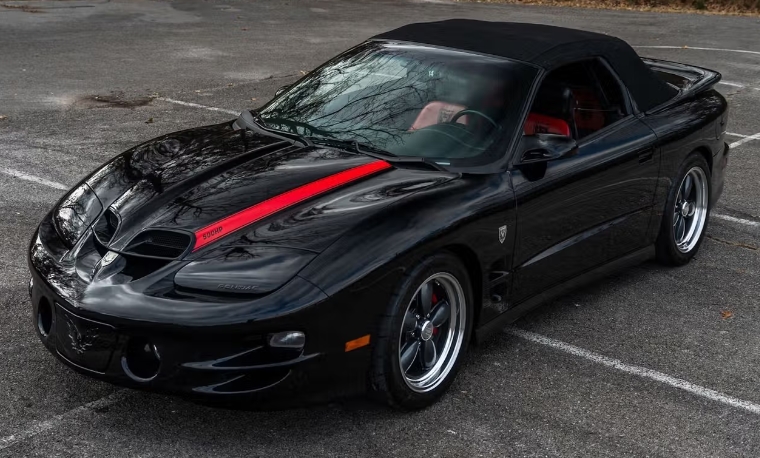
The final chapter of the Pontiac Firebird Trans Am is a story rich with performance, emotion, and a revered place in American automotive history. Among the most legendary and collectible versions of the last-year fourth-generation Firebirds is the 2002 GMMG Blackbird Trans Am—a bespoke, high-performance special edition created through a collaboration between Carl Black Pontiac (a performance dealer) and GMMG, Inc. (a well-known aftermarket builder). These cars were crafted as a tribute to the Trans Am’s heritage and as a high-performance send-off for the iconic pony car as Pontiac prepared to end Firebird production in 2002.
This comprehensive article explores the origins, production, variants, performance tiers, and lasting legacy of the GMMG Blackbird Trans Am, delving into why these machines remain among the most celebrated special editions in the Firebird lineage.
Origins: A Special Send-Off for an Iconic Pony Car
Pontiac announced in 2001 that the 2002 model year would be the last for the fourth-generation Firebird (produced from 1993–2002) and for the Trans Am nameplate itself due to GM’s restructuring and the eventual shuttering of the Pontiac brand.
To mark this end of an era, Carl Black Pontiac of Kennesaw and Roswell, Georgia—one of the most prolific dealers of performance Pontiacs in the Southeast—collaborated with GMMG, Inc., a specialty performance builder based in Marietta, Georgia. The goal was to craft a limited-run Trans Am that not only stood apart from standard models but paid homage to the Panthers’ golden age and muscle-car spirit. The result was the Blackbird Trans Am—a special edition that blended performance upgrades, unique styling, and rarity in a way few other versions of the 2002 Trans Am ever did.
GMMG—led by Matt Murphy—was already known for its performance Camaros and bespoke builds, and the Blackbird program brought that expertise to the Firebird platform, giving enthusiasts something truly special to mark the end of an era for the pony car.
.

.
Production and Rarity (2001–2002)
Although commonly referred to as the 2002 Blackbird Trans Am, production began in late 2001 in preparation for the ’02 model year. All Blackbirds were based on Pontiac Trans Am WS6 models—meaning they started with factory WS6 Ram Air performance and handling packages, which included an LS1 5.7-liter V8 engine and upgraded suspension. These were already desirable cars, but GMMG’s enhancements took them to a new level of exclusivity and performance.
According to the GMMG Registry, total Blackbird production across all variants is believed to be around 112 cars, though exact counts may vary slightly due to prototype units and the rarity of some editions. The breakdown is as follows:
- Regular Blackbird – 50 production cars + 2 prototypes
- 35th Anniversary Blackbird – 19 production cars + 2 prototypes
- CETA (Collector Edition Trans Am) Blackbird – 10 production cars + 1 prototype
- Year One Blackbird – ~10 production cars + 2 prototypes (some sources indicate approximately 8)
- Year One Edition Formula – ~14 production cars + 2 prototypes (some variance reported)
These numbers reflect just how rare Blackbird Trans Ams are—and when compared to standard Trans Am production figures, the exclusivity becomes even more apparent.
Technical and Performance Upgrades
At their core, Blackbird Trans Ams were much more than simple cosmetic packages. GMMG’s approach was rooted in performance—the idea was to craft cars that could compete with the best muscle and performance cars of the early 2000s while honoring classic performance traditions.
Base Platform
All Blackbirds began as Trans Am WS6 models equipped with the LS1 5.7-liter V8, a powerful and reliable engine found in competitive muscle cars of the period. The WS6 package already gave the Firebird enhanced suspension, larger brakes, and the Ram Air induction system, providing a strong foundation for further enhancement.
GMMG Performance Phases
Like other performance builds of the era (such as GMMG Camaros), Blackbirds were available in a series of performance “phases”, each indicating progressively higher power and performance levels:
- Phase 1 – The entry-level Blackbird upgrade, typically retaining near-stock performance but with GMMG improvements such as enhanced intake and exhaust.
- Phase 2 – Increased performance; around 435 hp with bolt-on upgrades and tuning.
- Phase 2X – Higher output, typically around 475 hp with additional performance components.
- Phase 3 – Further refinement, often approaching around 500 hp.
- Phase 5 – Major performance bump; approximately 600–630 hp.
- Phase 5X – The highest available tuning, often around 680 hp, using larger displacement and racing-derived components.
Even though many Blackbirds were delivered as Phase 1 or Phase 2 cars, some owners later upgraded their cars through higher phases, pushing performance to uncanny levels for the era.
In particular, Phase 5X Blackbirds represented the pinnacle of GMMG’s tuning capability: naturally aspirated high-displacement engines (including 427 or 455 ci C5R race-derived units) producing around 680 hp and significant torque figures, all mated to six-speed manuals and beefed-up drivetrains.
Blackbird Variants and Editions
Because the Blackbird program was dealer-driven and enthusiast-focused, several distinct editions emerged within the Blackbird family. Each carries its own identity and level of rarity.
Regular Blackbird
The original and most numerous version of the Blackbird, consisting primarily of 50 production cars plus a couple of prototypes. These were typically T-top WS6 coupes built with Phase 1 or Phase 2 performance upgrades and distinctive Blackbird badging and trim.
35th Anniversary Blackbird
A special subset of around 19 cars built to celebrate 35 years of the Firebird (1967–2002). These cars carry unique cloisonné badges and styling details set apart from the regular Blackbirds. They were often finished in unique color schemes and carry commemorative interior touches.
CETA Blackbird
Perhaps the rarest of all are the Collector Edition Trans Am Blackbirds, which involved 10 production cars and one prototype based on factory CETA models (Pontiac’s official 2002 Collector Edition Trans Am). Many of these CETA Blackbirds were convertibles and one was fitted with the formidable Phase 5X package, making it arguably the most extreme factory-based Trans Am in existence.
Year One Blackbird and Year One Edition Formula
Produced in extremely limited numbers (often cited as around 8–10 Year One Blackbirds and 14 Year One Edition Formulas), these variations were linked to a classic restoration parts brand and offered unique appearance packages and trim choices. They represent some of the rarest and most collectible Blackbirds of all.
Styling and Aesthetic Features
Visually, Blackbird Trans Ams were designed to be bold and distinctive. They often featured unique paint schemes, badging, and subtle trim changes that set them apart from standard WS6 Trans Ams:
- Blackbird cloisonné badges on hoods and fenders.
- Custom wheels often American Racing Torq Thrust II or similar classic designs.
- Exhaust systems designed for performance and a distinctive sound reminiscent of classic late-1960s muscle cars.
- Streamlined bodies with body-side moldings removed to highlight the sleek F-body shape.
These visual upgrades, paired with spirited performance, made Blackbirds stand out at shows and in enthusiast circles, cementing their status as some of the most desirable special editions of the final Trans Am generation.
Legacy and Collector Appeal
Since production ended and GMMG closed its doors in 2009, the Blackbird Trans Am has only grown in stature among collectors and enthusiasts. They are considered by many to be the ultimate expression of the fourth-generation Trans Am—especially in Phase 2X and higher tuned forms.
When these cars come up for sale, they often command premium prices relative to standard WS6 models. For example, a Phase 5X CETA Blackbird convertible with ~1,000 miles sold for more than $117,000 at auction, underscoring both rarity and desirability.
As a result, Blackbird Trans Ams are viewed today not just as rare muscle cars, but as modern classics—unique bridges between classic Pontiac performance heritage and early 2000s tuner culture. Their production figures and variety create a landscape where certain editions (like CETA Blackbirds or Year One editions) are among the most collectible and valuable F-bodies still on the market.
Future Outlook
With Pontiac itself long gone and the Firebird name retired forever, Blackbird Trans Ams represent a finite and irreplaceable slice of American performance history. As interest in late-generation muscle cars continues to grow among collectors, these cars are likely to appreciate in value and recognition. They are not just a piece of Pontiac’s past—they are a celebration of performance tuning, dealer-community collaboration, and the passion of enthusiasts who refused to let a legend fade quietly into the sunset.
The 2002 GMMG Blackbird Trans Am stands as one of the most fascinating special editions of an already iconic pony car. Conceived as a final tribute to the Firebird, created through an enthusiast collaboration, and enhanced with true performance upgrades, Blackbirds embody a unique chapter in automotive history. With fewer than a couple of hundred ever built across all variants and performance phases, these cars are rare, collectible, and enduring symbols of raw American muscle and the passion that surrounds it.