The Apex of Iteration: Charting the Evolutionary Path to the McLaren 750S
In the rarefied air of the modern supercar, evolution is not merely a process; it is a religion. For McLaren Automotive, the Woking-based purveyor of surgical speed, this religion is practiced with a fervent, almost obsessive devotion. Their cars are not born from whimsical sketches but are forged in the crucible of data, honed on the racetrack, and perfected through relentless iteration. The McLaren 750S, unveiled to the world in April 2023, is the ultimate testament to this philosophy. It is not a revolution, but something far more impressive: the absolute zenith of a specific evolutionary line, a rolling dissertation on the art of refinement.
To truly understand the 750S, one must first address a common misconception. The car itself does not have a multi-year evolutionary history with various trim levels and models. As a model that began production in late 2023 for the 2024 model year, its story is just beginning. The genuine “evolution” to explore is the remarkable journey of its direct ancestors—the lineage of McLaren’s “Super Series”—that made the 750S not just possible, but inevitable. This is the story of a bloodline, from the foundational MP4-12C to the game-changing 720S, culminating in the masterful 750S.
Chapter 1: The Genesis – The McLaren MP4-12C (2011-2014)
The modern McLaren Automotive story began here. After the legendary F1 of the 1990s and the Mercedes-Benz SLR McLaren collaboration, the MP4-12C was the company’s first solo series-production car, and it set the template for everything to come.
Core Technology: The 12C introduced the three pillars of McLaren’s engineering DNA. First, the carbon fibre monocoque chassis, dubbed the “MonoCell.” This lightweight, immensely rigid tub provided a foundation of unparalleled structural integrity. Second, the M838T, a 3.8-liter twin-turbocharged V8 engine, which in its initial form produced 592 horsepower. Third, and perhaps most revolutionary, was the Proactive Chassis Control (PCC). This system eschewed traditional mechanical anti-roll bars in favor of a hydraulically interlinked suspension system, allowing for a remarkable duality: a supple, comfortable ride in normal conditions and an incredibly flat, controlled posture during aggressive cornering.
Character and Reception: The 12C was clinically, devastatingly fast. Its technology was mind-bending, and its performance metrics could humble almost any rival. However, it faced criticism for being somewhat anodyne. In a world of screaming Italian V12s, the 12C’s V8 was effective but not overtly emotional. Its styling was seen as clean and functional but lacked the dramatic flair of a Ferrari or Lamborghini. It was a scalpel in a world that often celebrated the sledgehammer.
Models Offered: The MP4-12C was offered as a Coupe and, from 2012, as a Spider with a retractable hardtop that added minimal weight and sacrificed no structural rigidity, thanks to the inherent strength of the MonoCell.
The 12C was the proof of concept. It established that McLaren could build a world-class supercar from the ground up. But the company listened intently to the feedback, setting the stage for the first crucial step in evolution.
Chapter 2: The First Refinement – The McLaren 650S (2014-2017)
If the 12C was the brilliant but reserved engineer, the 650S was that same engineer after a shot of espresso and a lesson in charisma. Rather than a completely new car, the 650S was a comprehensive evolution of the 12C platform, addressing its perceived shortcomings directly.
Performance and Engagement: Power from the 3.8-litre V8 was increased to 641 horsepower (650 PS, hence the name). The seven-speed dual-clutch gearbox was recalibrated for faster, more aggressive shifts. The PCC system was retuned to provide more driver feedback and a more connected feel. The entire car was sharpened to inject the emotion and engagement that some felt the 12C lacked.
Design and Aero: The most noticeable change was the front end, which was completely restyled to mimic the face of the P1 hypercar. This wasn’t just aesthetic; the new bumper and splitter significantly increased downforce. Standard features were also expanded, with carbon-ceramic brakes and an Alcantara interior becoming part of the base package.
Models and Trims: The 650S was available as a Coupe and Spider. The crucial addition to this generation, however, was the introduction of the modern “Longtail” (LT) philosophy with the 675LT (2015-2016). The 675LT was a track-focused, limited-edition halo model. Lighter by 100kg, more powerful (666 hp), and draped in aggressive aerodynamics including the signature longer airbrake, it was a raw, visceral machine that became an instant legend. The LT sub-brand signified the ultimate, most driver-focused expression of a given platform.
The 650S and its 675LT sibling proved McLaren could not only build a fast car but also an intensely desirable and emotionally resonant one. They had perfected the formula of their first generation. It was time for a quantum leap.
Chapter 3: The Leap Forward – The McLaren 720S (2017-2023)
The 720S was not an iteration; it was a revolution. Debuting at the 2017 Geneva Motor Show, it was a complete generational shift that reset the benchmark for the entire supercar category.
A New Foundation: The core of the 720S was the “Monocage II,” a new carbon fibre tub that was even lighter and stronger than its predecessor. Crucially, it included an upper structure and roof, creating a true coupe form and allowing for thinner pillars and a teardrop glasshouse that offered unparalleled visibility. The dihedral doors were reimagined, now incorporating a large portion of the roof for easier entry and exit.
Heart of the Beast: The V8 engine was bored out to 4.0 litres, creating the M840T. It produced a staggering 710 horsepower (720 PS) and delivered it with ferocious, almost terrifying immediacy. The 720S’s straight-line performance was so immense that it frequently outperformed competitors in the class above, encroaching deep into hypercar territory.
Aerodynamic Artistry: The design was radical and controversial, driven entirely by function. The most notable feature was the absence of traditional radiator side-intakes. Instead, air was channelled over the car’s body and into a hidden channel within the double-skinned doors. The “eye-socket” headlights were not just lights; they were also complex aerodynamic intakes that funnelled air to low-temperature radiators.
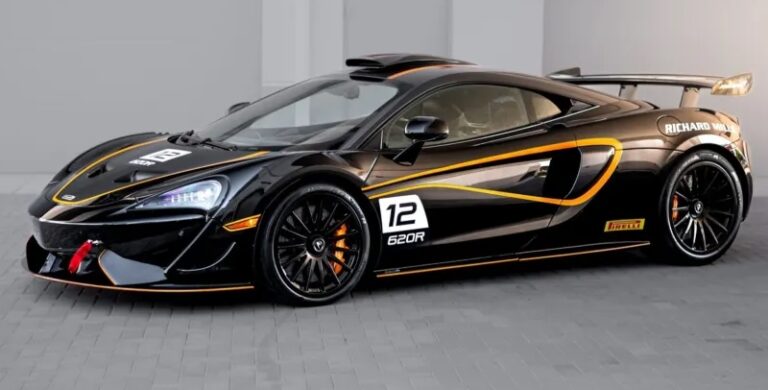
Models and Trims: The 720S was sold as a Coupe and Spider. Following the established pattern, it was eventually crowned by its Longtail variant, the 765LT (2020-2021). The 765LT was the 720S turned up to eleven and beyond. Power was boosted to 755 hp, weight was slashed by 80kg through extensive use of carbon fibre and titanium, and the aerodynamics were even more aggressive. It was a sensory overload, a track weapon with a license plate, and the direct spiritual predecessor to the 750S.
The 720S was an undisputed masterpiece, a car that seemed almost perfect. So, how could McLaren possibly evolve from near-perfection?
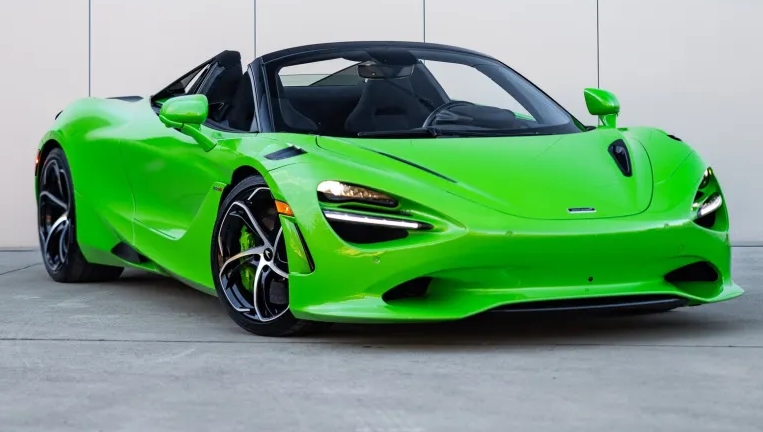
Chapter 4: The Apex Predator – The McLaren 750S (2023-Present)
This brings us to the present day and the McLaren 750S. If the 720S was the groundbreaking album, the 750S is the meticulously remastered director’s cut, where every single track has been polished to an impossible shine. McLaren claims that roughly 30% of the 750S’s components are new or changed compared to the 720S, with every single change obsessively focused on one thing: enhancing driver engagement.
Years Produced: 2023 – Present (Starting with the 2024 model year)
Models Offered:
750S Coupe: The fixed-head variant, offering the absolute lightest weight and maximum structural rigidity.
750S Spider: Featuring a one-piece Retractable Hard Top (RHT) that can be operated in just 11 seconds at speeds up to 50 km/h. Thanks to the Monocage II’s strength, it requires minimal additional bracing, weighing only 49kg more than the Coupe.
Trim Levels: It is crucial to note that McLaren does not offer “trim levels” in the traditional automotive sense (e.g., L, LE, XLE). There is the 750S, and then an extensive list of standalone options and curated packs. Customization is handled primarily through McLaren Special Operations (MSO), which allows for a nearly limitless bespoke experience, from unique paint colors to entirely custom interiors.
The Evolutionary Refinements:
Power and Sound: The 4.0-litre twin-turbo V8 now produces 740 horsepower (750 PS) and 800 Nm of torque, achieved with lighter pistons from the 765LT, increased boost pressure, and revised engine management. The most significant change for the driver’s ear is the new P1-inspired, centre-exit stainless steel exhaust system, which is lighter and engineered to produce a more dramatic, high-rpm crescendo.
Obsessive Lightweighting: The 750S is the lightest series-production McLaren ever. Standard carbon fiber-shelled racing seats are 17.5kg lighter than the 720S’s standard seats. New 10-spoke forged alloy wheels save 13.8kg. Even the instrument display is 1.8kg lighter. The result is a dry weight of just 1,281kg for the Coupe.
Chassis Dynamics: Here lies the heart of the 750S’s evolution. It features the next-generation Proactive Chassis Control III. The front springs are 3% softer and the rear springs are 4% stiffer than the 720S, a counter-intuitive change that, when combined with revised suspension geometry and damper tuning, provides a more compliant ride over bumps while simultaneously improving turn-in precision and body control. The steering rack is faster, and a new brake booster and vacuum pump improve pedal feel and consistency.
Driver-Centric Interface: The cockpit is refined for focus. The instrument binnacle now moves with the steering column, and rocker switches to control the Handling and Powertrain modes are mounted directly on it, allowing the driver to change settings without taking their hands off the wheel. A new feature, the McLaren Control Launcher (MCL), allows the driver to save their favorite combination of aero, handling, powertrain, and transmission settings and recall it with a single push of a button.
.

.
Conclusion: The Last of its Kind
The McLaren 750S is more than just the latest car in a lineup. It represents the final, perfect form of McLaren’s non-hybrid, V8-powered Super Series—a lineage that started with the technically brilliant MP4-12C, found its voice with the 650S, and shattered expectations with the 720S. Each step was a lesson learned, each critique a data point for improvement.
The 750S is the embodiment of that decade-long pursuit of perfection. It distills the explosive performance of the 765LT into a more accessible, usable, yet equally thrilling package. It takes the universally acclaimed chassis of the 720S and imbues it with an even deeper layer of feedback and connection. It is the definitive statement on what a modern supercar can be—a seamless fusion of blistering technology and pure, unadulterated driver involvement. Its evolution is not measured in years of its own production, but in the giant leaps of the legends that paved its way.