The Birth and Evolution of The Rimac Concept One
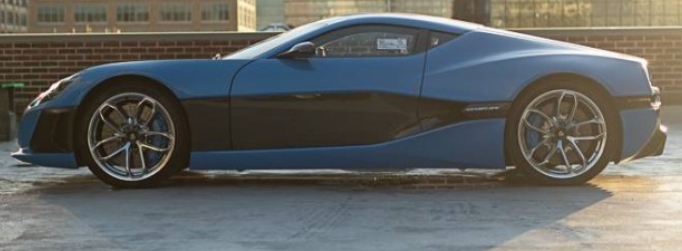
The Rimac Concept One marked not just the beginning of an automotive brand but the dawn of the electric hypercar era. Conceived by Croatian engineer and entrepreneur Mate Rimac, this groundbreaking vehicle demonstrated that fully electric propulsion could challenge — and in some respects exceed — the performance of the most revered combustion-engine supercars of its era. This article traces the evolution of the Rimac Concept One, including its history, production years, variants, and its enduring impact on high-performance electric vehicles (EVs).
Origins: From Idea to Concept Reveal (2011–2013)
The story of the Rimac Concept One begins well before production ever commenced. In the early 2010s, automotive markets were dominated by combustion-engine supercars boasting breathtaking performance and similarly exorbitant price tags. Seeing an opportunity to push the boundaries of electric propulsion, Mate Rimac founded Rimac Automobili and began developing a radically different kind of performance car.
The Concept One (often stylized Concept_One) was publicly unveiled at the 2011 Frankfurt Motor Show, showcasing Rimac’s vision of a hypercar powered solely by electric motors. The concept featured four independent electric motors, one at each wheel, allowing precise torque distribution — an innovation Rimac dubbed All-Wheel Torque Vectoring.
Early demonstrations showed that the vehicle wasn’t merely a theoretical exercise: the Concept One’s design promised blistering acceleration and handling characteristics rivaling the fastest cars on the planet. This striking debut helped attract not just public interest but potential buyers and investors.
.

.
Production Run and Timeline (2013–2016)
After several years of development, engineering refinement, and homologation for road use, Rimac commenced production of the Concept One in January 2013.
Production Details
- Production Years: 2013–2016 (main series)
- Total Units Produced: 8 Concept One vehicles (plus very limited “Concept S” variants — see below)
- Assembly Location: Sveta Nedelja, Croatia
- Body Style: 2-door coupe
Though initially rumoured to target a much higher production number, the limited build of only eight cars reflected Rimac’s bespoke, low-volume, high-technology production ethos and the challenges inherent in pioneering such a radical vehicle.
Rimac’s own communication made clear that production versions were engineered from the ground up, with extensive redesigns of the original concept systems to achieve performance and quality targets suitable for customer delivery.
Engineering Highlights and Performance
Unlike most concept vehicles that never see production, the Concept One did make it to customers — and its performance figures were no mere fantasy.
Powertrain
At the heart of the Concept One were four liquid-cooled permanent magnet electric motors, with one driving each wheel independently. This architecture meant the car could adjust torque to each wheel hundreds of times per second through its advanced torque-vectoring system.
- Combined Power: Around 900–1,224 hp (913 kW), depending on source measurement methods and tuning specifics.
- Torque: Up to 1,600 Nm of torque.
- Battery: Approximately 92 kWh lithium-ion pack (nominal).
Acceleration and Top Speed
- 0–100 km/h (0–62 mph): ~2.5–2.6 seconds.
- 0–200 km/h: ~6.2 seconds.
- 0–300 km/h: ~14.2 seconds.
- Top Speed: Around 340–355 km/h (211–220 mph).
These performance numbers placed the Concept One competitive with — and in some metrics superior to — many exclusive internal-combustion hypercars of the era.
Platform and Dynamics
Beyond raw power, the Concept One’s individual-motor system allowed sophisticated handling behaviours normally only possible with mechanical limited-slip differentials and advanced traction systems. Its All-Wheel Torque Vectoring system also served functions similar to traction and stability control, improving both performance and safety.
Variants: Concept One and Concept S
The Concept One’s production life wasn’t simply a straight run of eight identical cars. Two additional vehicles were built to explore a more extreme vision.
Concept S
In 2016, Rimac introduced the Concept S — a lighter, more power-focused version of the Concept One.
- Units Built: 2 examples.
- Power: Approximately 1,365 hp in some prototype reports.
- Weight: Around 110 lb (50 kg) lighter than the standard Concept One.
- Performance Gains: Slightly quicker acceleration figures and higher theoretical top speeds near 365 km/h (227 mph).
The Concept S leaned toward track-focused specification, with weight reduction and aerodynamic enhancements, though like the main Concept One series, it remained ultra-limited and bespoke — essentially a bespoke extension for clients seeking a more focused machine.
Market Position and Ownership
The Concept One was priced near the top of the global hypercar market — with initial pricing around $980,000 USD according to early reports — reflecting both its cutting-edge technology and exclusivity.
Despite limited production, the Concept One garnered strong interest from collectors and performance enthusiasts worldwide. It also served as a showcase product that enabled Rimac to build credibility in an industry dominated by established marques with deep heritage. Its bespoke production and extremely limited numbers made each example a valuable collector’s item, with the surviving fleet estimated at six out of the original eight today.
Technological Legacy and Influence
Though Concept One was a limited production model, its true legacy reaches far beyond the eight cars produced. Several aspects of the vehicle — particularly its torque-vectoring electric powertrain, battery technology, and electric performance systems — laid the groundwork for Rimac’s later and more commercially significant hypercar, the Rimac Nevera.
Rimac Nevera — internally known in development as the Concept Two — carried forward the quad-motor concept and advanced torque control systems with even greater performance, more sophisticated thermal management, and enhanced usability. Concept One’s development experience was directly applied to that vehicle, which debuted as an all-electric hypercar capable of nearly five seconds faster 0–300 km/h times than its predecessor.
Additionally, Rimac’s technology has attracted partnerships and investments from major global automotive players. The firm’s expertise in electric powertrains and control systems now contributes to applications beyond its own models, including collaborations with other high-performance brands and motorsport programs.
Future Outlook
Although the Concept One itself is long discontinued, its influence persists. Rimac Automobili now stands at the forefront of performance EV technology, and its success continues shaping the future of hypercars and high-performance electrification. The lessons learned from the Concept One project — in terms of power electronics, battery integration, torque vectoring, and bespoke manufacturing — remain foundational to Rimac’s ongoing evolution.
Collectors and automotive historians increasingly recognize the Concept One not just as a rare vehicle, but as an important milestone in automotive electrification. Its rarity and pioneering status ensure its value and recognition will continue to grow among enthusiasts and legacy owners.
Looking ahead, Rimac’s continued innovation — in vehicles like the Nevera and other potential future models — will likely build on the technologies first tested and proven with the Concept One project.
The Rimac Concept One stands as a watershed achievement in the transition from traditional motorsports engineering to a fully electric performance paradigm. Produced from 2013 to 2016 in an extremely limited run of eight cars (plus two Concept S units), it proved that electric propulsion could deliver hypercar-beating performance and handling dynamics. Its technological influence shaped the next generation of Rimac vehicles and helped position Rimac Automobili as a leading innovator in the high-performance EV arena. Though rare and exclusive, the Concept One’s legacy reaches far beyond its limited numbers, paving the way for a new era of electric performance cars.