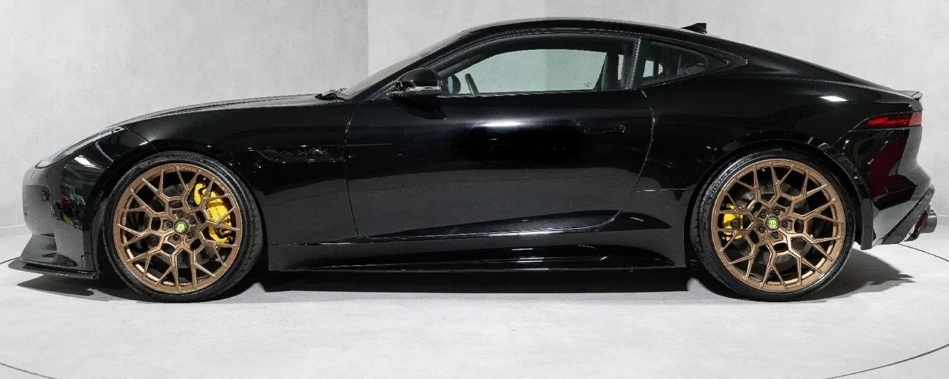
The Chimera’s Roar: The Evolution of the Lister LFT-666
In the high-stakes world of British supercars, few stories are as dramatic as that of Lister. A name steeped in 1950s motorsport glory, it lay dormant for decades before being spectacularly resurrected to create one of the most ferocious machines of the modern era: the Lister LFT-666. This was not a car born from a clean sheet, but rather a magnificently engineered and rebodied monster, a Jaguar F-Type on steroids that blended old-school British bravado with immense, thundering power. Its evolution, though brief, is a fascinating tale of ambition, engineering prowess, and a name reborn.
A Legend Reforged: The Lister Revival
To understand the LFT-666, one must first understand the return of the Lister name. For over thirty years, the company had been a quiet entity, focusing on engineering services and a niche racing program. The catalyst for its rebirth was Lawrence “Law” Whittaker, a charismatic car dealer with a deep passion for the Lister legacy. In 2013, Whittaker acquired the rights to the brand and, with the backing of his family business, set about creating a new flagship car.
The initial creation was the Lister Storm, a bespoke, hand-built supercar that, while impressive, was prohibitively expensive to produce. To create a viable business model, Whittaker and his engineering team, led by the talented Andrew Derry, needed a different approach. They decided to partner with an existing manufacturer to create a ” Continuation” or “Restomod” style car—taking a modern classic and elevating it to Lister specifications.
The chosen donor was the Jaguar F-Type R, a formidable grand tourer powered by a 5.0-litre supercharged V8 producing 542 bhp. The plan was audacious: take this potent Jag, strip it to its chassis, and rebuild it with new bodywork, a new interior, and, most importantly, a massively increased output. This vision would become the Lister LFT-666.
.
THIS might be a great place to get your new car from!
Or for those who are into the “car flipping” business, here’s an excellent resource for you!

.
The Launch Model (2018): A Moniker with Meaning
The car was unveiled at the 2018 British International Motor Show in London, and its name immediately caused a stir. The “666” was a playful but direct reference to its horsepower figure: a colossal 666 brake horsepower. This was a marketing masterstroke, positioning the car as something wickedly fast and rebellious.
Based on the Jaguar F-Type R Coupé, the launch Lister LFT-666 was a complete visual and technical transformation.
- Bodywork: Every exterior panel save for the roof, door skins, and glass was replaced. The F-Type’s elegant curves were replaced with a far more aggressive, muscular aesthetic. A new carbon-fiber front bumper with a massive splitter, widened wings adding 30mm to the front track and 40mm at the rear, new side skirts, and a prominent carbon-fiber rear diffuser gave the car a menacing, race-ready stance. The iconic Lister badge, a green and yellow roundel, was proudly displayed on the front grille.
- Performance: The heart of the car remained the Jaguar AJ126 V8, but it was extensively re-engineered. Lister fitted a high-flow induction system, a new supercharger pulley, a freer-flowing exhaust system with quad tailpipes, and a bespoke ECU remap. The result was an output of 666 bhp and 649 lb-ft of torque, a significant leap from the donor car. This power was sent to the rear wheels through an eight-speed automatic gearbox, promising tyre-shredding acceleration and a classic rear-drive driving experience. 0-60 mph was dispatched in a claimed 3.5 seconds, with a top speed of over 200 mph.
- Interior: The cabin was entirely reupholstered in the finest Bridge of Weir leather, with contrast stitching and embossed Lister logos on the headrests. Aluminium trim pieces, new floor mats, and a plaque detailing the car’s unique build number added a touch of bespoke luxury.
The launch model was offered as both a Coupé and a Convertible, catering to different preferences. Only 99 examples of the LFT-666 were planned, making it an instant collector’s item. The price tag was around £139,000 for the coupe, positioning it against the world’s top-tier supercars.
The “300+ Club” (2019): A Road-Focused Special
Buoyed by the success of the initial launch, Lister quickly announced a limited-run special edition for 2019. This variant, often referred to as the “300+ Club” edition, was created to commemorate Lister’s 1988 Le Mans record-holder, which famously averaged over 199 mph on the Mulsanne Straight. The goal for this new model was to break the 200 mph barrier, but with a focus on road usability rather than outright track aggression.
- Trim Level & Features: The “300+” (referring to its top speed in km/h) was visually distinguished by its unique 20-inch forged alloy wheels, shod with Michelin Pilot Sport 4S tyres specifically chosen for their high-speed stability. It also featured unique “Le Mans” green paintwork with heritage Lister racing stripes and subtle carbon-fibre accents on the side mirrors and rear spoiler.
- Performance Enhancements: While the power output remained at 666 bhp, the chassis was further honed. Lister introduced an adjustable suspension system, allowing the owner to fine-tune the ride height and damping for road or track use. A titanium exhaust system was offered as an option, saving weight and adding an even more visceral soundtrack. Lister claimed this model could achieve a top speed of 208 mph, validating its “300+” moniker.
This model demonstrated Lister’s ability to iterate and offer different flavors of the same core concept, tailoring the car for a slightly different customer.
The LFT-R (2020): The Ultimate Track Weapon
Recognising that some owners would want to push their Lister to the absolute limit, the company developed the ultimate track-focused version: the LFT-R. This was not a separate model but the pinnacle of the LFT-666 trim hierarchy, a package that transformed the car into a pure-bred track machine.
- Aerodynamic Revolution: The LFT-R’s most striking feature was its enormous carbon-fiber rear wing, mounted on lightweight aluminum brackets. This, combined with a more aggressive front splitter and new dive planes, generated significant downforce, dramatically increasing high-speed stability and cornering grip.
- Chassis and Brakes: The suspension was comprehensively upgraded with three-way adjustable coilover dampers, allowing for precise control over compression and rebound. Braking duties were handled by a new set of massive carbon-ceramic discs, clamped by multi-piston callipers, providing immense, fade-free stopping power.
- Exterior and Interior: The bodywork featured additional vents and ducts to cool the brakes and engine. Inside, a full FIA-spec roll cage was fitted, along with carbon-fiber bucket seats and a multi-point racing harness. The luxury was stripped out in favor of pure function, creating an environment focused solely on lap times.
The LFT-R represented the ultimate expression of Lister’s engineering, transforming the elegant F-Type donor into a focused, unapologetic track predator.
The LFT-800 and a Brief Electrifying Experiment
While the LFT-666 was the core of the business, Lister’s ambitions didn’t stop there. In 2019, the company unveiled the LFT-800, an even more extreme version designed to rival the very best from McLaren and Ferrari. This car took the concept to its logical conclusion.
The “800” referred to its target horsepower, achieved through further engine development, including new cylinder heads, a larger supercharger, and upgraded internal components. The bodywork was made even wider and more aggressive, with intricate aerodynamic surfaces honed in CFD simulations. The LFT-800 was the full-blown, no-compromise supercar Lister had always wanted to build.
In a surprising move in 2021, Lister also revealed an electric concept named the “LFT-E”. Based on the same chassis, this prototype swapped the V8 for a pair of electric motors, promising instant torque and an entirely different character. However, the project was short-lived. The immense cost of developing a bespoke EV powertrain and the shift in global markets meant it was not commercially viable for a small-scale manufacturer like Lister. It remains an interesting footnote in the company’s history.
The End of an Era and Future Outlook
Despite the critical acclaim and passionate following, the Lister LFT-666’s journey came to an abrupt end. The automotive landscape, especially for low-volume, internal combustion-engined cars, became increasingly challenging post-2020. The COVID-19 pandemic disrupted supply chains, and rising costs made the business model unsustainable. After building only a handful of the planned 99 cars (exact production numbers are unclear but are estimated to be around 20-25 total LFT-666s built), the company entered administration in 2022.
The brand name was eventually acquired by a new company, Performance 1, who plan to use the Lister heritage for a new line of high-performance projects. While the future of a new LFT-666 seems unlikely, the original cars remain highly sought-after by collectors.
The evolution of the Lister LFT-666 is a story of a phoenix rising from the ashes. It was a car that successfully captured the spirit of its 1950s racing ancestors—raw, powerful, and thrillingly fast—while wrapping it in a modern package. From its audacious 666 bhp launch model to the road-homing “300+” and the track-shredding LFT-R, it was a remarkable machine built by passionate people who dared to challenge the establishment. Though its production run was tragically short, the roar of its supercharged V8 and its unapologetic presence have cemented its place as one of the most iconic and ferocious British cars of the 21st century.