The Daihatsu Gran Max: An Enduring Global Workhorse
On the bustling streets of Jakarta, the quiet regional roads of Japan, or the delivery routes of suburban Australia, there is a common sight: a compact, unpretentious, and relentlessly hard-working commercial vehicle. It might be a small pickup truck loaded with produce or a windowless van darting between businesses. More often than not, this unsung hero of global commerce is the Daihatsu Gran Max. A vehicle designed not for glamour or speed, but for pure, unadulterated utility, the Gran Max has become an indispensable tool for countless small businesses and entrepreneurs around the world. This is the story of its design, its various forms, and its enduring place in the automotive landscape.
A Brief History: The Genesis of a Utility Champion
Daihatsu, a subsidiary of Toyota, has a long and storied history of producing compact and kei-class vehicles, particularly commercial ones like the venerable Hijet. By the mid-2000s, there was a clear market demand for a vehicle that sat between the miniature kei trucks and larger, one-tonne pickups and vans. Businesses needed something with a larger payload and more powerful engine than a Hijet, but with a smaller footprint and better fuel economy than a Toyota Hilux or HiAce.
In response, Daihatsu launched the Gran Max in late 2007. The vehicle was primarily designed and developed by Astra Daihatsu Motor in Indonesia, which would become its main global production hub. This strategic decision was crucial; by developing it in its target market, Daihatsu ensured the Gran Max was perfectly tailored to the demanding conditions of developing economies—rough roads, heavy loads, high humidity, and a need for simple, low-cost maintenance.
Its core design philosophy was “cab-over-engine” (COE), where the driver and passenger sit directly above the front axle and engine. This classic Japanese commercial vehicle layout maximizes the cargo area relative to the vehicle’s overall length, making it exceptionally space-efficient and maneuverable in tight urban environments. From its inception, the Gran Max was also developed as a joint project with Toyota, leading to its rebadging as the Toyota TownAce and, in some generations, the Toyota LiteAce, further expanding its global reach.
.
NO MORE dead batteries with this:

.
Engineering for Reliability: Under the Hood
The success of a commercial vehicle is built on reliability and low running costs. The Gran Max was engineered with this principle at its core. Throughout its production life, it has predominantly used two engine families known for their durability.
Initial Powertrains (2007 – 2020):
- 1.3L K3-VE: This was the base engine option, a 1,297 cc inline-four DOHC engine with VVT-i (Variable Valve Timing with intelligence). It produced approximately 87 horsepower and 115 Nm of torque. While modest in output, it was prized for its fuel efficiency and straightforward mechanical design, making it a popular choice for light-duty urban work.
- 1.5L 3SZ-VE: The more powerful option was the 1,495 cc inline-four DOHC engine, also featuring VVT-i. This engine delivered a healthier 96 horsepower and 134 Nm of torque, providing the necessary grunt for heavier payloads and highway driving. This became the de facto standard for most export markets.
Powertrain Update (2020 – Present):
In a significant update, Daihatsu replaced the long-serving 1.5L 3SZ-VE engine with a more modern and efficient unit from Toyota’s NR engine family.
- 1.5L 2NR-VE: This 1,496 cc inline-four DOHC engine features Dual VVT-i, optimizing both the intake and exhaust valve timing. This results in improved performance, better fuel economy, and lower emissions. Power output increased to approximately 97 horsepower, but more importantly, torque rose to 135 Nm and was available across a wider rev range, enhancing drivability under load. The 1.3L K3-VE engine was discontinued in some markets but remained available in others for entry-level models.
These engines are typically paired with a robust 5-speed manual transmission, the preferred choice for commercial use due to its direct control and durability. A 4-speed automatic transmission has also been available, primarily in the Japanese market (as the TownAce) and as an option in some other regions for minibus models. The vehicle’s construction—a semi-monocoque for the van and a body-on-frame chassis for the pickup—is designed to withstand the rigors of constant, heavy use.
A Tool for Every Trade: Models and Trim Levels
The Gran Max’s true strength lies in its versatility. It is not one vehicle but a platform available in several body styles, each with its own trim levels tailored to specific needs and budgets. While trim designations vary by country, they generally fall into a clear hierarchy of function over form.
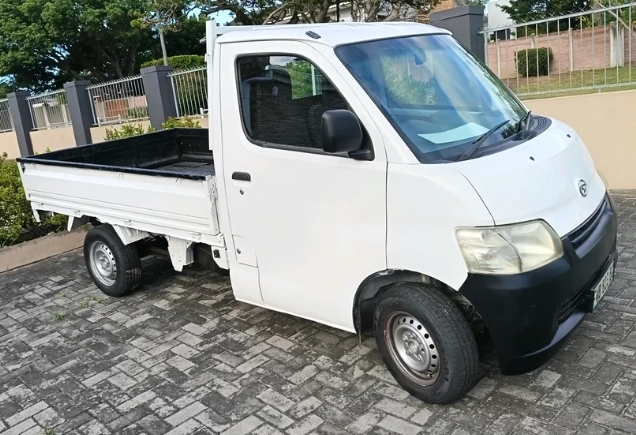
1. Gran Max PU (Pickup)
The pickup is the quintessential workhorse of the lineup, designed for hauling goods, equipment, and materials.
- Standard Bed: A conventional flatbed with fixed sides, offering a simple and cost-effective solution for general cargo.
- 3-Way Dropside Bed: The most versatile option, featuring hinged panels on both sides and the rear that can be dropped down for easy forklift or manual loading from any angle.
- Trim Levels (Example from the Indonesian Market):
- 1.3 Standard / 1.3 3-Way: The most basic configuration, often lacking power steering and air conditioning. It’s a pure utility vehicle for budget-conscious buyers.
- 1.5 Standard / 1.5 3-Way: Offers the more powerful 1.5L engine for those carrying heavier loads.
- 1.5 AC PS (Air Conditioning & Power Steering): This is often the highest trim for the pickup. The addition of these two features transforms the vehicle from a spartan tool into a much more comfortable daily driver, reducing fatigue for operators who spend all day behind the wheel.
2. Gran Max MB (Minibus) / Van
The enclosed van version is aimed at businesses needing secure, weather-protected cargo space or passenger transport.
- Blind Van (BV): This version features panelled sides where the rear windows would be, providing maximum security for cargo and a large, flat surface for company branding and logos. It typically has two front seats and a cavernous, empty rear compartment.
- Minibus: This model is fitted with side windows and rear seating, designed for transporting people. Seating configurations can vary, often with simple bench seats in the rear to maximize passenger count. It is a common base for “Angkot” (public transport minibuses) in Indonesia.
- Trim Levels:
- 1.3 D: The entry-level van, often in Blind Van configuration. It is very basic, with vinyl seats, no AC, and often no power steering. Aimed at fleet and courier services.
- 1.3 F: A step up, this trim might add slightly better interior materials and prepare the vehicle for more passenger-focused conversions.
- 1.5 D PS AC: The most popular and well-equipped minibus trim. With the 1.5L engine, power steering, and air conditioning, it serves as a comfortable shuttle, family vehicle, or a premium delivery van.
It’s important to note that many Gran Max vehicles are sold as basic platforms and then customized by third-party bodybuilders into ambulances, refrigerated vans, food trucks, and mobile shops, showcasing the chassis’s adaptability.
A Global Footprint and Rebadging Strategy
While its heartland is Southeast Asia, the Gran Max is a truly global vehicle. Astra Daihatsu Motor in Indonesia exports it to dozens of countries.
- Japan: In a unique move, the Gran Max was not initially sold under the Daihatsu brand in its home market. Instead, it was supplied on an OEM basis to Toyota as the Toyota TownAce (and previously, the Toyota LiteAce) and to Mazda as the Mazda Bongo (from 2020 onwards). This allowed Toyota and Mazda to fill a gap in their commercial lineup without investing in new development. In 2020, Daihatsu finally introduced the Gran Max under its own name in Japan.
- Malaysia: It is sold as the Daihatsu Gran Max, often popular in “Pasar Malam” (night market) food truck conversions.
- Australia: The vehicle was sold for many years as the Toyota TownAce before being discontinued. It made a return to the Australian market in 2022, this time rebadged as the Toyota LiteAce, catering to the “last mile” delivery boom.
- Other Markets: The Gran Max has found homes across the Philippines, Brunei, and various countries in Africa, Latin America, and the Middle East, prized for its toughness and simplicity.
The Road Ahead: Challenges and Future Outlook
The Daihatsu Gran Max has been in production since 2007, a testament to its “if it ain’t broke, don’t fix it” design. However, the automotive world is changing rapidly, and the Gran Max faces several challenges and opportunities.
1. Safety and Emissions Standards: As global safety standards tighten, the Gran Max will need to evolve. While recent models have incorporated features like ABS brakes, stability control (VSC), and dual airbags in certain markets (like Japan and Australia), these are not yet standard across all trims and regions. The pressure to make these features universal will grow. Similarly, tightening emissions regulations will necessitate further powertrain advancements, potentially leading to hybrid or fully electric versions in the future.
2. The 2023 Safety Scandal: A significant challenge to its reputation emerged in 2023 when Daihatsu admitted to widespread and long-running irregularities in its vehicle safety testing procedures. The Gran Max was one of the models implicated, leading to a temporary halt in production and shipments. While regulators eventually confirmed the vehicle met safety standards and allowed sales to resume, the scandal forced a period of deep reflection for both Daihatsu and its parent company, Toyota, and will likely lead to much stricter internal oversight and a renewed focus on transparent safety engineering.
3. Electrification: The compact commercial segment is ripe for electrification. An electric Gran Max would offer silent, zero-emissions operation ideal for urban deliveries. However, significant hurdles remain, including battery cost, the impact of battery weight on payload capacity, and the lack of robust charging infrastructure in its primary developing markets. A hybrid version may serve as a more practical intermediate step.
Conclusion
The Daihatsu Gran Max is an automotive masterpiece of a different kind. It will never win a design award or a performance race. Its interior is a sea of hard plastic, and its ride is built for durability, not comfort. Yet, its value cannot be overstated. It is a vehicle that empowers small businesses, enables trade, and keeps local economies moving. From its thoughtful design maximizing space and utility to its reliable, easy-to-maintain mechanicals, the Gran Max is a testament to the philosophy of purpose-built engineering. Despite the challenges it faces, its fundamental formula of being affordable, tough, and endlessly adaptable ensures that this humble workhorse will continue to be a familiar and vital presence on the world’s roads for years to come.