Renault Symbioz: Bridging Gaps and Defining the Modern Family SUV
In the intensely competitive and ever-expanding global automotive market, the C-segment SUV remains the undisputed battleground. It is here that manufacturers vie for the hearts, minds, and wallets of modern families, offering a blend of practicality, style, and efficiency. Into this crowded arena steps Renault’s latest contender: the Symbioz. Not merely another addition to the lineup, the Symbioz is a meticulously calculated vehicle, designed with a laser-focus to plug a crucial gap in the brand’s portfolio and embody the very essence of its “Renaulution” strategy. It is a car built not on radical fantasy, but on the real-world demands of space, technology, and economy, carrying a name with a futuristic past into a very pragmatic present.
A Tale of Two Concepts: The Genesis of the Symbioz Name
To understand the 2024 Renault Symbioz, one must first look back to 2017. The name first appeared not on a practical SUV, but on a visionary concept car unveiled at the Frankfurt Motor Show. The 2017 Symbioz concept was a breathtaking glimpse into Renault’s vision for mobility in the year 2030. It was a fully electric, Level 4 autonomous vehicle designed to integrate seamlessly with a smart home. The name, derived from the ancient Greek symbiosis meaning “living together,” was literal. The concept car could drive itself into the living room, becoming an extra, modular space—a mobile office, a cozy nook, or an entertainment pod. It was a daring, almost science-fiction proposition about the dissolving boundaries between vehicle, home, and lifestyle.
While this futuristic concept never entered production, the ethos behind the name—harmony, integration, and living together—was deemed too valuable to discard. Renault repurposed it for a vehicle that, while far more conventional, aims to achieve a different kind of symbiosis: a perfect harmony between a family’s needs and the car’s capabilities. The production Symbioz, therefore, carries the legacy of a forward-thinking idea, channeling it into a product designed for the here and now.
The Production Model: 2024 – Present
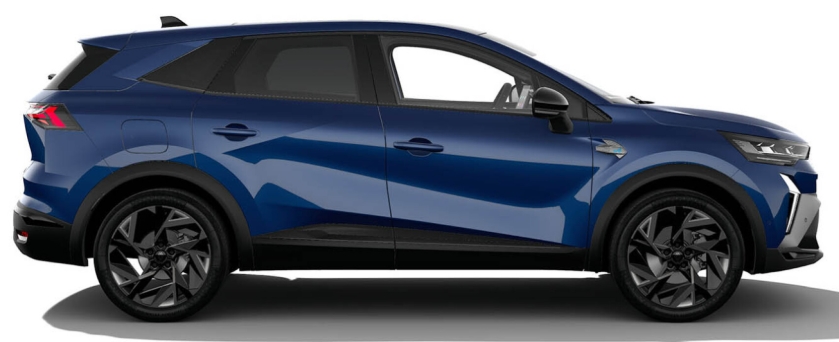
Unveiled in May 2024, the production Renault Symbioz is a C-segment SUV built on the Renault-Nissan-Mitsubishi Alliance’s proven CMF-B platform. This is the same highly versatile architecture that underpins the popular Clio, Captur, and the Dacia Duster. The Symbioz is, in essence, an extended version of the B-segment Captur, stretched to meet the demands of the larger C-segment.
Its positioning within Renault’s SUV lineup is precise and crucial. With a length of 4.41 meters, it sits neatly between the 4.23-meter Captur and the 4.51-meter Austral. This placement resolves a long-standing gap for Renault, offering a vehicle for customers who find the Captur slightly too compact for their growing family but are not yet in the market for the larger, more premium Austral. The Symbioz directly challenges established rivals like the Nissan Qashqai, Kia Niro, Hyundai Kona, and Peugeot 3008.
.
NO MORE dead batteries with this:

.
The Powertrain: E-Tech Full Hybrid 145
At its launch, the Renault Symbioz is offered with a single, highly efficient powertrain: the E-Tech full hybrid 145. This is a system Renault has refined across its model range, and it represents a core pillar of the brand’s electrification strategy. This is not a mild hybrid or a plug-in hybrid; it is a “self-charging” full hybrid system engineered for optimal urban and mixed-driving efficiency.
The system is comprised of:
- A 1.6-litre, four-cylinder naturally aspirated petrol engine producing 94 horsepower.
- A primary electric motor (e-motor) generating 36 kW (49 hp).
- A secondary, smaller High-Voltage Starter Generator (HSG) motor producing 18 kW (24 hp).
- A 1.2 kWh (230V) battery located under the boot floor.
- An intelligent, multi-mode clutchless dog-box automatic transmission.
The combined system output is 145 horsepower. The genius of the E-Tech system lies in its operation. The car always starts in 100% electric mode, providing silent, smooth acceleration. Renault claims that in urban driving, the Symbioz can operate in full-electric mode for up to 80% of the time, leading to fuel savings of up to 40% compared to a conventional petrol engine. The official fuel consumption figures target an impressive 4.6 litres per 100 km (approximately 61.4 mpg) on the WLTP cycle. The complex transmission seamlessly switches between electric, series hybrid (engine charges the battery), and parallel hybrid (engine and motor both drive the wheels) modes to maximize efficiency without any driver intervention.
Design, Practicality, and the Interior Advantage
The exterior design of the Symbioz follows Renault’s new “sensual tech” design language, pioneered by design chief Gilles Vidal. The front end is sharp and modern, featuring a distinctive grille with a pattern that radiates outwards from the central Renault diamond logo. The slim LED headlights and signature daytime running lights create a commanding presence. Its profile is balanced and athletic, avoiding the bulkiness of some rivals, while the rear features sculpted 3D-effect taillights that give the vehicle a wide, planted stance.
However, the Symbioz’s true trump card is its interior packaging and practicality. The decision to stretch the CMF-B platform pays enormous dividends inside. The standout feature, inherited from the Captur, is the sliding rear bench. This bench can slide fore and aft by 16 cm, allowing owners to dynamically configure the interior space.
This simple mechanism creates two distinct scenarios:
- Maximum Legroom: With the bench slid all the way back, rear passengers enjoy a generous 221 mm of knee room, a figure that rivals vehicles in the segment above.
- Maximum Boot Space: When slid fully forward, the boot capacity becomes a class-leading 624 litres. This is a cavernous space, larger than that of many bigger and more expensive SUVs.
Even with the bench in its rearmost position, the boot still offers a highly competitive 492 litres. With the 60:40 split-folding rear seats laid flat, the total load capacity expands to an immense 1,582 litres, creating a completely flat floor for easy loading of bulky items. This flexibility is the Symbioz’s unique selling proposition, making it arguably one of the most practical and versatile vehicles in its class.
Models and Trim Levels Offered
At launch, the Renault Symbioz is available in three distinct trim levels, each designed to cater to a different customer preference.
1. Techno The Techno trim serves as the entry point to the Symbioz range but is generously equipped. It is designed for the pragmatic buyer who wants all the essential modern features without paying for superfluous extras. Key features typically include:
- 18-inch alloy wheels.
- The 10.4-inch OpenR Link vertical touchscreen infotainment system.
- A 10-inch digital driver’s display.
- Automatic climate control.
- Rear-view camera and parking sensors.
- A comprehensive suite of safety systems, including automatic emergency braking, lane-keeping assist, and traffic sign recognition.
- Sliding rear bench.
2. Esprit Alpine This trim level injects a dose of sporty and dynamic flair into the Symbioz. Drawing inspiration from Renault’s performance brand, Alpine, it offers a distinct visual package for those who want their family car to stand out. Differentiating features include:
- Larger 19-inch ‘Chrono’ diamond-cut alloy wheels.
- An exclusive matte shadow grey blade in the front bumper and satin grey exterior trim accents.
- Esprit Alpine badging on the front wings.
- The interior features signature blue stitching on the seats, steering wheel, and door panels.
- Upholstery combining recycled textile with a sustainable suede-like material.
- A perforated-pattern steering wheel with red, white, and blue stitching.
3. Iconic Sitting at the top of the range, the Iconic trim is focused on comfort, technology, and luxury. It bundles in all the best features Renault has to offer, creating a premium experience. Key additions over the Techno and Esprit Alpine trims include:
- The innovative Solarbay panoramic glass roof. Using Polymer Dispersed Liquid Crystal (PDLC) technology, the roof can turn from fully transparent to opaque in segments with the touch of a button or via Google Assistant voice command. This eliminates the need for a physical sunblind, saving 30 mm of headroom and reducing weight.
- Hands-free power tailgate.
- Heated front seats and steering wheel.
- 360-degree around-view monitor.
- Hands-free parking system.
- An upgraded Harman Kardon premium sound system.
- Enhanced ADAS (Advanced Driver-Assistance Systems), potentially including adaptive cruise control with stop & go functionality.
Technology and Future Outlook
The technological heart of the Symbioz cabin is the OpenR Link infotainment system. Powered by Android Automotive 12, it integrates Google services natively, including Google Maps for navigation, Google Assistant for voice control, and the Google Play store for downloading apps like Spotify and Waze. The system is renowned for its speed, intuitive smartphone-like interface, and seamless connectivity.
The future for the Symbioz appears stable and well-defined. By focusing solely on the E-Tech 145 hybrid powertrain, Renault is making a clear statement about its commitment to accessible and practical electrification. It avoids the cost and complexity of offering multiple engine types, streamlining production and simplifying the choice for consumers. While the CMF-B platform can accommodate other powertrains, it is unlikely the Symbioz will see a diesel or pure petrol version in most markets. A fully electric variant is also improbable, as that role is now filled by the dedicated C-segment Scenic E-Tech Electric, which is built on a different, EV-specific platform.
The Symbioz is Renault’s strategic chess move. It’s a vehicle born from market analysis, not artistic whim. It represents the maturation of the brand’s hybrid technology and its understanding of what the modern C-segment buyer truly values: not outright power or off-road prowess, but maximum interior space, clever versatility, low running costs, and user-friendly technology, all wrapped in a stylish, contemporary package. By living together with the needs of the family, the Renault Symbioz is poised to become a formidable and highly relevant player in the most important automotive segment of all.