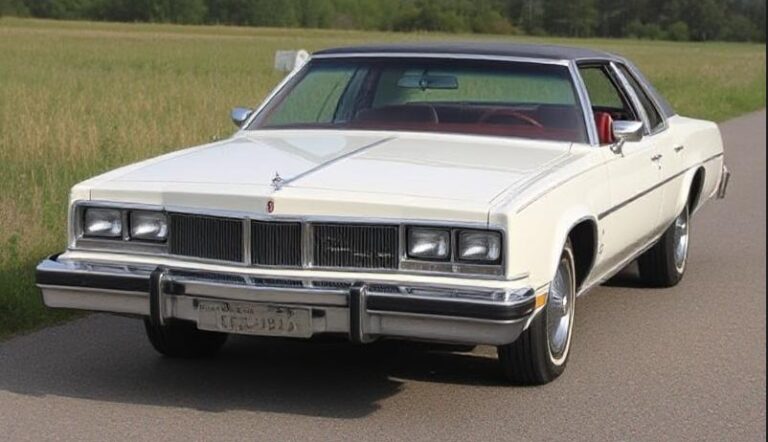
The EH Holden: Australia’s Favorite Car and a Golden Moment in Motoring History
In the long and storied tapestry of Australian automotive history, few threads are as vibrant and widely celebrated as the Holden EH. For a brief, glorious period between August 1963 and September 1965, the EH was not merely a car; it was a cultural phenomenon. It was the vehicle that captured the spirit of a nation on the cusp of a new era of prosperity and ambition. More than any car before or since, the EH Holden became the quintessential Australian family car, an icon of the open road, and the undisputed sales champion of its day. Its story is one of bold design, unprecedented success, and a legacy that continues to resonate with enthusiasts more than half a century later.
A New Era for a New Holden
To understand the impact of the EH, one must first appreciate the context from which it emerged. The preceding Holden EH, known affectionately as the “Old Holden” or “Greyhound,” had been a reliable but archaic vehicle, a design whose roots traced back to the 1948 Holden 48-215. The Australian public, growing in wealth and confidence, was ready for something modern, something that reflected the changing face of the nation.
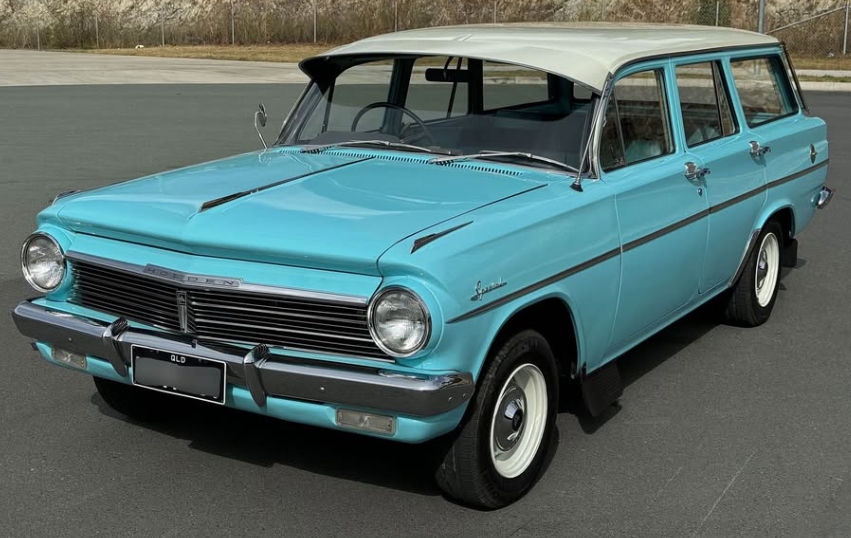
Holden’s parent company, General Motors, had been developing a new, more robust chassis and body platform for its global operations. This platform underpinned the newly released Holden EH, representing a monumental leap forward. Launched on August 20, 1963, the EH was larger, wider, and possessed a far more contemporary aesthetic than its predecessor. Its styling, often referred to as the “Office Block” look, featured sharp, clean lines, a prominent grille, and a more formal, upright stance. This design, while undeniably American-influenced, had a robust and handsome presence that appealed directly to the Australian sensibility.
The most significant mechanical upgrade was the introduction of the new “Red” engine. The venerable 132 cubic inch (2.15-litre) “Grey” motor was replaced by a larger, more powerful 145 cubic inch (2.38-litre) six-cylinder engine. Dubbed the “Red” due to the color of its rocker cover, this new engine was quieter, more refined, and delivered significantly more torque, making the new car a far more capable and relaxing vehicle to drive, especially when laden with a family and their belongings.
The Model Line-up: Simplicity and Choice
The initial EH range launched with a straightforward but well-defined hierarchy, catering to different budgets and needs. The models were:
- Holden Standard: The entry-point to the EH range. Spartan but functional, it was the workhorse of the lineup, aimed squarely at the family buyer on a budget, taxis, and commercial users.
- Holden Special: The middle child and, arguably, the sweet spot in the range. The Special added a host of desirable features over the Standard, including chrome window surrounds, a horn ring, an electric clock, a two-spoke steering wheel, and more substantial interior trim. It represented the aspirational norm for the average Australian family.
- Holden Premier: The top-of-the-line model. The Premier was the luxury offering, featuring a deluxe interior with cloth and vinyl trim, a two-spoke steering wheel with a horn pad, bucket seats (optional on some), and additional chrome exterior trim, including a side spear. It was designed to compete with more upmarket sedans and offered a touch of elegance.
Alongside the sedans and wagons, Holden continued its commitment to the commercial sector. A Utility and a Panel Van were available in both Standard and Special trim levels, becoming instant favorites with tradesmen and, soon, a burgeoning youth culture.
The body styles offered across these models included a four-door Sedan and a highly practical four-door Station Wagon. The Station Wagons were particularly popular, cementing the EH’s role as the family holiday vehicle.
.
THIS might be a great place to get your new car from!
Or for those who are into the “car flipping” business, here’s an excellent resource for you!

.
The Sales Tsunami and the S Series Update
The Australian public’s response to the EH was nothing short of sensational. On the first day of sales, Holden received a staggering 11,417 orders. Within two months, the order book had swelled to over 36,000, and the factory was working around the clock to keep up with demand. The EH smashed all previous Australian car sales records, becoming the first car to sell over 100,000 units in a single year. In its 26-month lifespan, a total of 255,991 EH Holdens were built, a figure that remains one of the highest in Australian history. The EH wasn’t just a success; it was a national obsession.
Production of the initial “EJ-series” (the internal code for the first version of the EH) ran from August 1963 to January 1964. In February 1964, a running change introduced the “S” series, often referred to as the EH S. The S series was an early facelift and technical update. The most noticeable change was the addition of small gills or vents on the rear pillar of the sedans, a styling feature that became a key identifier for this model. Mechanical improvements included a redesigned clutch and, for the first time, an optional front anti-roll bar, which significantly improved handling. The S series also saw the introduction of the Holden Special 6 (often called the “Special 6”). This was a unique model that effectively combined the base Standard model’s body and interior with the more powerful engine and upgraded drivetrain of the Special, offering a “poor man’s performance” option.
The SH and SK: The Evolving Icons
As the EH continued its phenomenal run, Holden introduced further refinements.
The SH Series (February 1965): The SH represented another significant update. Its most famous and sought-after feature was the introduction of the “Hydra-Matic” automatic transmission as a factory option. This was a game-changer, making driving in heavy traffic far more accessible and appealing to a wider audience. The SH also featured a revised grille with a finer mesh pattern and clear-lens indicators on the front guards.
The SH series is home to two of the most legendary models in the entire EH lineage:
- The Holden S4: This was the factory’s first foray into true performance motoring. To celebrate its success in touring car racing, Holden developed the S4. Only 150 were produced (some sources say 120) for homologation purposes. The S4 was a Special trim car, fitted with a specially prepared high-compression “Red” engine, a free-flowing exhaust, and front disc brakes. Finished exclusively in “Rapier Red,” it is now one of the most prized and valuable EH models.
- The Holden Premier S4: This was the top-of-the-line luxury model, but it was the engine that made it special. In a move that shocked many, Holden offered the high-performance S4 engine as an option on the Premier. This created the ultimate “Q-car” – a luxurious family sedan with the heart of a racer.
The SK Series (July 1965): The SK was the final and briefest evolution of the EH. It was largely a cosmetic update, featuring a revised grille design with horizontal bars and a “Holden” script on the bonnet. There were also minor interior trim changes. The SK marked the twilight of the EH model, as the automotive world was already looking ahead to its successor.
Beyond the Standard: The Special Variants
While the factory was producing the mainstream models, a host of special performance vehicles were built by Holden’s Special Vehicles department for racing and for private customers.
- HK Monaro GTS 327: Although the EH had ended production by the time the HK Monaro was released, the EH platform was crucial for the Monaro’s racing success. Drivers like Norm Beechey and Peter Manton campaigned EH-based sedans that dominated the 1964 and 1965 touring car championships. The raw power and robust nature of the EH platform made it the perfect starting point for these race-winning machines.
- Holden DeLuxe: A very rare, low-production model that sat between the Special and the Premier, offering a blend of features from both.
- Tasman and New Zealand Variants: In New Zealand, the EH was sold as the “Holden Standard 217” and “Holden Special 217” (the number denoting the engine capacity in cubic inches). Special performance versions were built by tuners like Goggomobil, creating some of the fastest sedans in the southern hemisphere.
The End of an Era and Lasting Legacy
By mid-1965, the automotive world was moving on. The EH’s chassis, while a huge improvement, was still based on a 1950s GM platform. Ford had released its sleek and modern XR Falcon, and Holden needed to respond. In September 1965, the EH made way for the all-new Holden HR. The HR was a more advanced car, featuring a full-cooled cooling system (the EH still used a partially evaporative system), a lower roofline, and more modern styling.
The future of the classic Australian-made Holden sedan has, of course, now been consigned to history. The company ceased local production in 2017, marking the end of an era that the EH did so much to define.
However, the legacy of the EH Holden is immortal. It represents a golden moment when a car company perfectly understood and served its home market. The EH was not just a product; it was a partner in the Australian lifestyle. It took families to the beach, carried tradies’ tools, won races, and provided a reliable and comfortable ride for millions. Today, it is a prized classic, meticulously restored and displayed at car shows across the country, a rolling testament to a time when Holden was truly “Australia’s Favorite Car.”