The Evolution of the BAIC Weiwang 205 and 306: The Foundation of China’s Budget Microvan Market
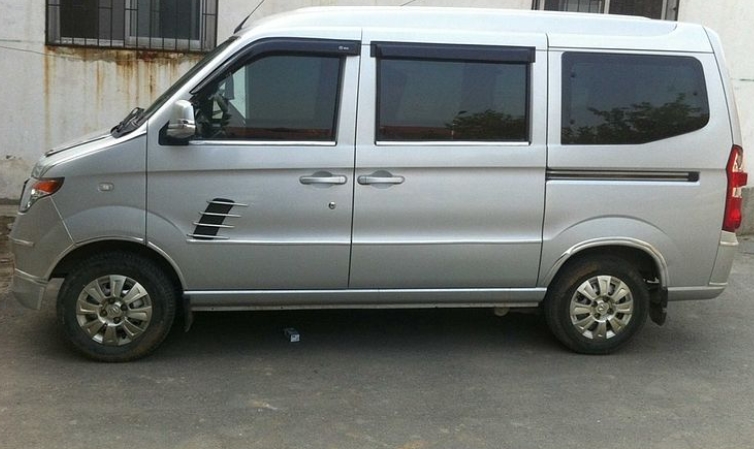
The BAIC Weiwang 205 and 306 were among the earliest vehicles introduced under the Weiwang brand, a division created by Beijing Automotive Industry Corporation (BAIC) to compete in China’s fast-growing market for compact vans and low-cost family vehicles. Introduced during the early 2010s, these microvans became important products for BAIC as the company expanded beyond traditional passenger cars and into practical commercial transportation.
Designed primarily for small businesses, tradespeople, and large families in developing urban and rural areas, the Weiwang 205 and 306 emphasized affordability, durability, and interior space rather than luxury or high performance. While relatively basic by global automotive standards, these vehicles played a major role in helping BAIC establish the Weiwang name across China.
The Birth of the Weiwang Brand
BAIC officially launched the Weiwang brand in March 2011. The company created the sub-brand specifically to target the rapidly growing market for compact minivans and microvans, segments dominated at the time by manufacturers such as Wuling, Changan, and Dongfeng.
The Weiwang name roughly translates to “prestige and prosperity,” reflecting BAIC’s ambitions for the new division. The first vehicle introduced under the brand was the Weiwang 306 microvan.
At the time, China’s economy was rapidly expanding, and demand for inexpensive utility vehicles was increasing throughout smaller cities and rural regions. Microvans were especially popular because they could serve both commercial and personal transportation needs at a low cost.
.

.
Introduction of the Weiwang 306 (2011)
The Weiwang 306 entered production in 2011 as the very first Weiwang-branded vehicle. It was designed as a traditional Chinese “mianbaoche,” or bread-loaf van, a nickname commonly used for box-shaped compact vans throughout China.
Production Years
- 2011–2016
Vehicle Class
- Microvan
- Compact commercial van
Body Style
- Five-door van
Layout
- Mid-engine, rear-wheel drive
The rear-wheel-drive layout was especially useful for cargo hauling and commercial applications, giving the 306 good load-carrying capability despite its compact dimensions.
Design and Engineering
The Weiwang 306 featured a tall, upright design intended to maximize passenger and cargo space. Although inexpensive, the vehicle included practical engineering solutions that made it useful for small businesses and families alike.
Dimensions
- Wheelbase: 106.3 inches
- Length: 158.7 inches
- Width: 64.4 inches
- Height: 75.1 inches
The vehicle’s boxy shape allowed for impressive interior cargo space, with maximum cargo capacity reaching approximately 176.9 cubic feet.
Engine and Transmission
The 306 used a single gasoline engine option throughout most of its production:
- 1.3-liter inline-four gasoline engine
- Approximately 81 horsepower
- 102 pound-feet of torque
- Five-speed manual transmission
The engine emphasized fuel economy and simplicity over outright performance.
Weiwang 306 Trim Levels
The Weiwang 306 was offered in several trim levels during production. In China, these were commonly marketed as:
Standard Trim
The entry-level version included:
- Steel wheels
- Vinyl or cloth seating
- Basic ventilation system
- Sliding side doors
- Simple instrument panel
These models primarily targeted commercial operators.
Charming Trim
Mid-level variants added:
- Improved seat materials
- Better dashboard trim
- Radio system
- Power steering
- Additional storage compartments
Luxury Trim
Higher-end trims included:
- Air conditioning
- Enhanced interior trim
- Body-colored bumpers
- Improved audio system
- Additional comfort features
Even the top trims remained affordable compared with larger MPVs and passenger cars.
The Weiwang 307 Extended Variant
BAIC later introduced the Weiwang 307, an extended-wheelbase derivative of the 306 designed for buyers needing additional cargo or passenger room.
Key Features of the 307
- Longer rear body section
- Increased cargo volume
- Greater passenger capacity
- Commercial-oriented configurations
The 307 became popular among delivery operators and regional transport businesses.
Introduction of the Weiwang 205 (2012)
Following the success of the 306, BAIC introduced the Weiwang 205 in late 2012. The 205 was based on the same platform as the 306 but featured slightly smaller dimensions and lower pricing.
Production Years
- 2012–2017
Vehicle Class
- Microvan
Body Style
- Five-door van
Layout
- Mid-engine, rear-wheel drive
The 205 was aimed at buyers seeking an even more affordable and compact alternative to the 306.
Design and Specifications of the 205
Although mechanically related to the 306, the 205 featured revised styling and more compact dimensions.
Dimensions
- Wheelbase: 98.4 inches
- Length: 153.3 inches
- Extended version: 158.3 inches
- Width: 63.0 inches
- Height: 73.9 inches
Its smaller size made the vehicle easier to maneuver in crowded urban environments while still providing generous cargo space.
Engine Options
Unlike the 306, the 205 offered two engine choices:
1.0-Liter Inline-Four
- Approximately 61 horsepower
- Designed for fuel efficiency and urban use
1.3-Liter Inline-Four
- Approximately 81 horsepower
- Better suited for heavier loads and rural driving
Both engines were paired with a five-speed manual transmission.
Weiwang 205 Trim Levels
The 205 lineup mirrored the trim structure of the 306, although equipment levels varied slightly by year and region.
Base Trim
Included:
- Steel wheels
- Manual windows
- Basic cloth seats
- Minimal dashboard equipment
Standard Trim
Added:
- Air conditioning
- Improved audio system
- Power steering
- Better seat upholstery
Luxury Trim
Higher-end versions offered:
- Enhanced cabin trim
- Additional storage compartments
- Chrome exterior accents
- Improved interior finishes
An extended-wheelbase version was also available, increasing cargo capacity for commercial buyers.
Market Success and Competition
The Weiwang 205 and 306 entered one of the most competitive automotive segments in China. Rival manufacturers included:
- Wuling
- Changan
- Dongfeng
- FAW
Despite intense competition, BAIC managed to establish the Weiwang lineup as a credible alternative due to competitive pricing and practical engineering.
Pricing for the 205 ranged from approximately $4,100 to $5,600 depending on trim and wheelbase configuration, while the larger 306 generally cost slightly more.
Commercial and Family Use
One reason for the popularity of the 205 and 306 was their flexibility. These vehicles served a wide range of purposes:
- Rural passenger transportation
- Cargo delivery
- Small business operations
- Taxi and shuttle services
- Family transportation
Their low operating costs and simple mechanical designs made them especially attractive in smaller Chinese cities and developing regions.
Decline and End of Production
By the mid-2010s, consumer preferences in China were changing rapidly. Buyers increasingly preferred compact SUVs, crossovers, and more refined MPVs over traditional microvans.
As safety regulations and consumer expectations increased, basic microvans like the 205 and 306 became less competitive.
End of Production
- Weiwang 306: discontinued in 2016
- Weiwang 205: discontinued in 2017
BAIC gradually shifted focus toward more modern MPVs and crossover-inspired vehicles such as the Weiwang M20 and M50F.
Legacy and Future Outlook
The Weiwang 205 and 306 remain important vehicles in the history of BAIC and China’s automotive industry. They represented the early phase of China’s domestic automotive expansion, when manufacturers focused on delivering inexpensive transportation solutions to millions of first-time buyers.
These vehicles also demonstrated several key trends:
- Growth of China’s commercial vehicle market
- Expansion of domestic automotive brands
- Increasing demand for affordable family transportation
- Transition from basic utility vans to more refined MPVs
Today, BAIC’s priorities have shifted heavily toward SUVs, electric vehicles, and intelligent mobility technologies. The Weiwang brand itself has become less prominent as the company reorganized its lineup and modernized its product strategy.
Nevertheless, the Weiwang 205 and 306 remain significant examples of the practical, low-cost vehicles that helped motorize China’s rapidly growing middle and working classes during the early 2010s. Their influence can still be seen in the development of affordable MPVs and commercial vans produced by Chinese automakers today.