The Evolution of the Chery E5: From Budget Compact Sedan to Global Legacy Model
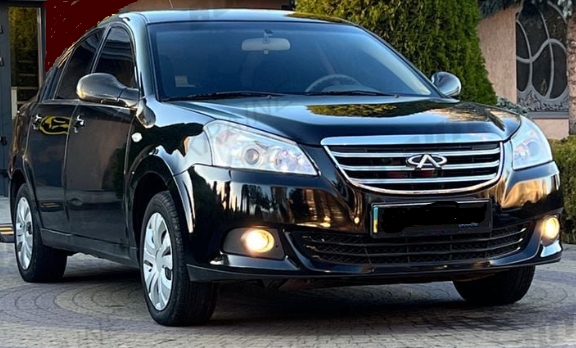
The Chery E5 represents a key phase in the growth of China’s modern automotive industry. Produced between 2011 and 2016, the E5 was designed as an affordable, practical compact sedan that built upon earlier Chery models while introducing incremental improvements in design, performance, and global reach. Although its lifecycle was relatively short, the E5 played an important role in transitioning Chery from basic budget vehicles to more refined and internationally competitive products.
Origins and Historical Context
To fully understand the Chery E5, it is important to consider its predecessor, the Chery A5, which was produced from 2006 to 2010. The A5 served as Chery’s early attempt to compete in the global compact sedan segment, offering simple engineering and low-cost manufacturing.
By the late 2000s, Chery recognized the need to modernize its lineup. The result was the E5, introduced in 2011 as a direct successor. Built on an updated version of the A5 platform, the E5 retained the same fundamental structure but introduced improved styling, better materials, and updated technology.
The E5 was positioned as a C-segment compact sedan, targeting both domestic Chinese buyers and export markets.
.
THIS is GOOD stuff if your car is in need:

.
First Generation and Launch (2011–2012)
Production Years:
2011–2012 (initial launch phase)
The Chery E5 debuted in April 2011 and entered mass production shortly afterward.
Key Specifications at Launch
- Layout: Front-engine, front-wheel drive
- Body style: 4-door sedan
- Platform: Derived from Chery A5
- Wheelbase: ~102.4 inches
- Length: ~180.3 inches
Engine Options
At launch, the E5 offered:
- 1.5-liter inline-four (SQR477F) producing about 107 horsepower
- 1.8-liter inline-four (SQR481FC) producing about 130 horsepower (export markets)
Transmission Options
- 5-speed manual
- CVT automatic
Trim Levels (2011–2012)
Chery structured the E5 lineup into several trims, typically including:
- Base / Standard
- Comfort
- Luxury / Elite
These trims varied in:
- Interior quality
- Infotainment systems
- Safety features such as airbags and ABS
In many export markets, trim naming was simplified or localized depending on the distributor.
Expansion and Market Growth (2012–2014)
Production Years:
2012–2014 (core production phase)
Following its initial release, the Chery E5 expanded into multiple markets, including:
- Middle East
- Eastern Europe
- South America
It was often rebadged under different names, including:
- Vortex Estina FL-C (Russia)
- MVM 550 (Iran)
- Speranza Envy (Egypt)
This global strategy allowed Chery to maximize the platform’s reach.
Engine and Performance Updates
During this phase, the engine lineup remained largely unchanged but was refined for:
- Improved fuel efficiency
- Better emissions compliance
The 1.5L engine became the most common configuration due to its affordability and efficiency.
Trim Levels (2012–2014)
The trim lineup expanded slightly, often including:
- Standard
- Comfort
- Luxury
- Flagship (in select markets)
Higher trims added:
- Alloy wheels
- Touchscreen infotainment (in later years)
- Rear parking sensors
- Improved upholstery
Market Reception
The E5 was generally well received for:
- Low purchase price
- Simple mechanical reliability
- Spacious interior relative to its class
However, it faced criticism for:
- Outdated platform
- Basic safety features compared to competitors
Premium Variant: Riich G3 (2012–2015)
A notable development in the E5’s evolution was the introduction of a more upscale version under Chery’s now-defunct premium brand.
Model:
Riich G3
The Riich G3 was essentially a redesigned and upgraded E5, featuring:
- More refined exterior styling
- Improved interior materials
- Additional comfort features
Trim Structure (Riich G3)
- Standard
- Comfort
- Luxury
- Executive
Although the Riich brand was short-lived, the G3 demonstrated Chery’s attempt to move upmarket.
Mid-Cycle Improvements (2014–2016)
Production Years:
2014–2016 (final phase)
By the mid-2010s, the E5 began showing its age, especially as competitors introduced more modern designs and technology.
Key Updates
- Minor exterior refinements
- Improved interior materials
- Enhanced reliability in later model years
According to owner and reliability data, later models (2014–2016) were generally more dependable than early versions.
Final Trim Levels (2014–2016)
Toward the end of its production run, the E5 lineup stabilized into:
- Base
- Comfort
- Luxury
- Flagship
Higher trims often included:
- Leather seats
- Enhanced infotainment
- Additional safety features
End of Production (2016)
The Chery E5 was discontinued in 2016, after approximately five years of production.
Successor
It was replaced by the Chery Arrizo 5, which introduced:
- A completely new platform
- Modern styling
- Improved safety and technology
The Arrizo series marked a significant step forward for Chery, moving beyond the limitations of the E5’s aging architecture.
Technical Overview
Throughout its lifecycle, the Chery E5 maintained consistent core specifications:
- Class: Compact sedan
- Layout: Front-engine, front-wheel drive
- Engines:
- 1.5L inline-four
- 1.8L inline-four
- Transmissions:
- 5-speed manual
- CVT
- Platform: Derived from Chery A5
This consistency helped keep production costs low and reliability relatively stable.
Design Philosophy and Market Position
The E5 was designed with a clear objective: affordable mobility.
Key Design Goals
- Low manufacturing cost
- Ease of maintenance
- Practical interior space
- Acceptable fuel efficiency
Market Position
The E5 competed in the entry-level compact sedan segment, targeting:
- First-time buyers
- Fleet operators
- Export markets
Strengths and Weaknesses
Strengths
- Affordable pricing
- Simple and reliable mechanical components
- Wide availability in global markets
- Multiple trim levels to suit different budgets
Weaknesses
- Outdated platform compared to newer rivals
- Limited advanced safety features
- Modest performance
Despite these drawbacks, the E5 remained competitive due to its value proposition.
Role in Chery’s Global Expansion
The Chery E5 played a crucial role in the company’s international growth strategy.
By exporting the E5 under different names, Chery was able to:
- Establish a presence in emerging markets
- Build brand recognition
- Gain experience in global manufacturing and distribution
The model’s widespread rebadging demonstrated its adaptability.
Future Outlook and Legacy
Although the Chery E5 is no longer in production, its influence continues.
Legacy Contributions
- Helped transition Chery from basic to more refined vehicles
- Served as a bridge between early models and the Arrizo lineup
- Demonstrated the viability of global platform sharing
Evolution Beyond the E5
Modern Chery vehicles, including newer sedans and electric models, benefit from:
- Improved engineering
- Advanced safety systems
- Modern infotainment and connectivity
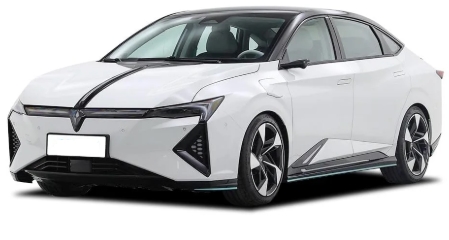
Interestingly, the “E5” name has been reused in recent years for an electric SUV in some markets, though it is unrelated to the original sedan.
The evolution of the Chery E5 can be summarized across its lifecycle:
- 2011–2012: Initial launch with basic trims and Mitsubishi-influenced engineering
- 2012–2014: Expansion into global markets with additional trims and variants
- 2012–2015: Introduction of the premium Riich G3 variant
- 2014–2016: Final refinements and stabilization of the lineup
- 2016: Discontinuation and replacement by the Arrizo 5
Over its production run, the E5 offered:
- Multiple engine options (1.5L and 1.8L)
- Manual and CVT transmissions
- Up to four primary trim levels, depending on market
The Chery E5 was not revolutionary, but it was important. It represented a transitional model that helped Chery refine its products, expand globally, and prepare for a more competitive future. Today, it stands as a foundational vehicle in the evolution of one of China’s most prominent automakers.