The Evolution of the DeSoto Firesweep: Chrysler’s Entry into the Mid-Price Performance Era
The DeSoto Firesweep represents one of the most interesting chapters in the history of the DeSoto automobile brand. Produced for only a short period—from 1957 to 1959—the Firesweep was designed as the entry-level DeSoto, positioned below the Firedome, Fireflite, and Adventurer models. Though its lifespan was brief, the Firesweep played an important role in the strategic lineup of Chrysler Corporation during a period of bold styling innovation and fierce competition among American automakers.
Developed during the era of dramatic tailfins, sweeping chrome, and high-powered V8 engines, the Firesweep embodied the optimism and flamboyant design language of late-1950s America. Its creation was closely tied to the revolutionary design philosophy known as the Forward Look, championed by designer Virgil Exner.
This article explores the origins, development, model variations, trim levels, and eventual discontinuation of the Firesweep, as well as its legacy in the collector-car world.
Origins of the Firesweep
By the mid-1950s, Chrysler Corporation operated multiple automotive divisions to target different market segments. DeSoto traditionally occupied the upper-mid price range, positioned between the more affordable Dodge and the upscale Chrysler models.
However, as competition intensified in the mid-1950s—particularly from General Motors divisions like Pontiac and Oldsmobile—DeSoto needed a lower-priced offering to attract new buyers. Chrysler’s solution was to create the Firesweep, a model that would blend DeSoto styling and branding with a more economical platform.
Introduced for the 1957 model year, the Firesweep differed from other DeSotos in a significant way: it was based largely on the Dodge chassis and body shell rather than the larger DeSoto platform. This approach allowed Chrysler to keep costs down while expanding DeSoto’s market reach.
The Firesweep still featured DeSoto-specific front and rear styling, unique trim, and branding, allowing it to maintain the division’s identity despite its shared engineering.
.
THIS could come in handy for your auto garage (and everywhere else!):

.
1957: Introduction of the Firesweep
The 1957 model year marked a turning point for Chrysler styling. Under Virgil Exner’s guidance, the company launched the Forward Look, a dramatic design philosophy emphasizing low profiles, long tailfins, and futuristic lines.
The new Firesweep benefited greatly from this bold styling. Even as the entry-level DeSoto, it looked modern and distinctive.
Engines and Performance
The 1957 Firesweep was powered by a 325-cubic-inch V8 engine (a polyspherical-head engine sometimes called the “Poly V8”), producing approximately 245 horsepower.
Transmission options included:
- 3-speed manual transmission
- 3-speed manual with overdrive
- TorqueFlite automatic transmission
This engine provided respectable performance for a mid-price car of the era.
1957 Firesweep Models and Trim Levels
The Firesweep lineup in 1957 included several body styles:
- Firesweep 4-Door Sedan
- Firesweep 2-Door Sedan
- Firesweep Sportsman (2-Door Hardtop)
- Firesweep 4-Door Hardtop
The Sportsman hardtop was particularly popular due to its sleek pillarless design, a hallmark of 1950s American cars.
While DeSoto trim structures were simpler than some competitors, buyers could choose from various interior materials, chrome trim packages, and optional equipment such as:
- Power steering
- Power brakes
- Power windows
- Push-button automatic transmission controls
The 1957 model year was strong for DeSoto overall, with styling widely praised across the industry.
1958: Refinement and New Options
For the 1958 model year, the Firesweep received several updates as Chrysler attempted to maintain competitiveness during an economic downturn that significantly affected car sales.
Externally, the car retained the dramatic tailfins and wide grille that defined the Forward Look aesthetic, though trim details and badging were revised.
New Engine
The biggest change was the introduction of a 350-cubic-inch V8 engine, producing approximately 280 horsepower. This engine improved performance and aligned the Firesweep with the growing horsepower race among American automakers.
1958 Firesweep Models and Trim Levels
The 1958 lineup expanded slightly and included:
- Firesweep 2-Door Sedan
- Firesweep 4-Door Sedan
- Firesweep Sportsman (2-Door Hardtop)
- Firesweep 4-Door Hardtop
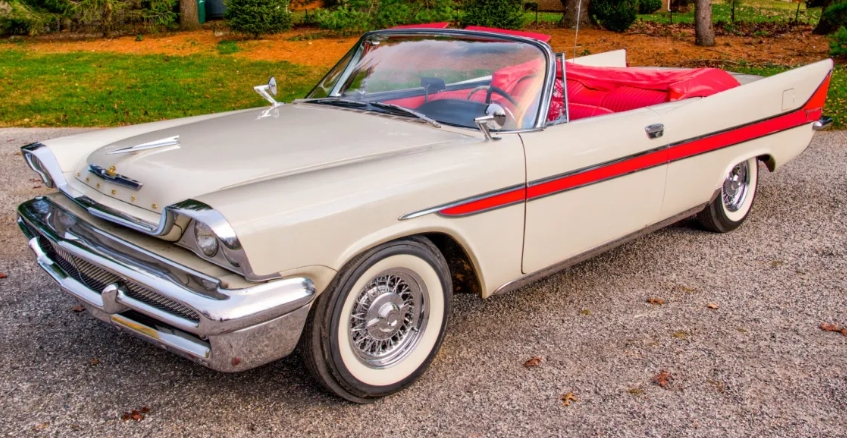
- Firesweep Convertible
The addition of the convertible added excitement to the entry-level lineup, giving buyers a stylish open-air option at a lower price point than higher DeSoto models.
Interior upgrades included improved upholstery options and additional chrome accents. However, the 1958 recession severely impacted automobile sales across the industry, and DeSoto was particularly affected.
Despite improvements to the Firesweep, overall DeSoto sales dropped dramatically during this period.
1959: The Final Year
The 1959 Firesweep represented the final evolution of the model. Chrysler continued to refine the design while simplifying the lineup.
Styling Changes
The 1959 version featured:
- Revised front grille design
- More restrained tailfins
- Updated side trim
- New interior materials
The overall look was slightly less flamboyant than earlier versions, reflecting changing design trends.
Engine Upgrade
The 1959 Firesweep was equipped with a 361-cubic-inch V8 engine, producing around 295 horsepower. This engine significantly boosted performance compared to earlier models.
1959 Firesweep Models and Trim Levels
The final lineup included:
- Firesweep 2-Door Sedan
- Firesweep 4-Door Sedan
- Firesweep Sportsman (2-Door Hardtop)
- Firesweep 4-Door Hardtop
- Firesweep Convertible
Although mechanically solid and stylish, sales continued to decline.
Market Challenges and the Decline of DeSoto
The Firesweep’s introduction was intended to broaden DeSoto’s appeal, but several factors ultimately worked against the brand.
Internal Competition
Because the Firesweep shared so much with Dodge models, it sometimes competed directly with lower-priced Dodges, reducing the incentive for buyers to choose a DeSoto.
Changing Market Conditions
The late 1950s saw major shifts in consumer preferences:
- Growing interest in compact cars
- Economic uncertainty
- Increased competition from General Motors and Ford
These factors made it increasingly difficult for mid-tier brands like DeSoto to survive.
Brand Identity Problems
DeSoto struggled with a lack of clear identity within Chrysler’s brand hierarchy. With Plymouth and Dodge covering the lower segments and Chrysler occupying the premium tier, DeSoto often seemed redundant.
The End of the Firesweep and DeSoto
The Firesweep was discontinued after the 1959 model year, though the DeSoto brand itself lingered briefly.
In 1961, Chrysler Corporation officially ended production of DeSoto, marking the end of a division that had existed since 1928.
Several factors contributed to the decision:
- Declining sales
- Overlapping product lines
- Corporate restructuring within Chrysler
The demise of DeSoto made the Firesweep one of the final attempts to revive the brand.
Design Legacy
Although short-lived, the Firesweep remains a fascinating example of late-1950s automotive design.
Key characteristics include:
- Dramatic tailfins
- Sweeping side trim
- Wide chrome grilles
- Push-button automatic transmission controls
These features reflected the futuristic optimism of the Forward Look era.
The influence of Virgil Exner cannot be overstated. His design philosophy transformed Chrysler vehicles during the late 1950s and helped the company briefly surpass competitors in styling innovation.
Collectibility Today
Today, the DeSoto Firesweep is considered a desirable collector car among enthusiasts of classic American automobiles.
Several factors contribute to its appeal:
Rarity
Because the Firesweep was produced for only three years and DeSoto itself disappeared shortly afterward, surviving examples are relatively rare.
Distinctive Styling
Collectors appreciate the car’s:
- Tailfins
- chrome detailing
- bold two-tone paint options
These elements perfectly capture the style of the late 1950s.
Historical Significance
The Firesweep represents an important moment in Chrysler history—when the company experimented with platform sharing and brand repositioning.
Restoration and Ownership
Restoring a Firesweep can be challenging due to limited parts availability. However, mechanical components are often easier to source than trim pieces because of the car’s relationship with Dodge models.
Common restoration challenges include:
- locating original chrome trim
- repairing tailfin panels
- sourcing interior fabrics
Despite these obstacles, dedicated collector communities continue to preserve these vehicles.
Classic car shows and enthusiast clubs often feature restored Firesweeps, celebrating their unique place in automotive history.
Future Outlook
Interest in 1950s American cars has grown steadily among collectors, particularly among younger enthusiasts drawn to bold styling and historical significance.
This trend may benefit vehicles like the DeSoto Firesweep, which remain relatively affordable compared with more famous classics from the same era.
As restoration knowledge improves and collector awareness increases, the Firesweep’s reputation may continue to grow.
The DeSoto Firesweep stands as a fascinating example of Chrysler’s attempt to adapt to changing market conditions during the late 1950s. Introduced in 1957 as an entry-level DeSoto, the Firesweep combined Dodge engineering with distinctive DeSoto styling and the dramatic influence of the Forward Look design philosophy.
Although the model lasted only three years, it offered multiple body styles, powerful V8 engines, and bold styling that captured the spirit of its era. Ultimately, economic pressures and brand overlap led to its demise, along with the eventual disappearance of the DeSoto brand itself.
Today, the Firesweep remains a reminder of a time when American automobiles embraced dramatic design and powerful performance—an era when innovation and style defined the road.