The Evolution of the DFSK K07: The Compact Van That Helped Build DFSK’s Global Presence
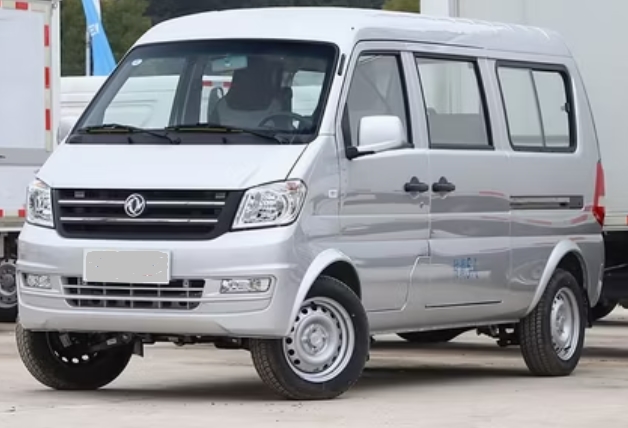
The DFSK K07 is one of the most important vehicles ever produced by DFSK Motor, the Chinese automotive joint venture formed by Dongfeng Motor Corporation and Chongqing Sokon Industry, now known as Seres Group. Introduced during the mid-2000s, the K07 became a key part of DFSK’s rise as a global manufacturer of affordable commercial vehicles and compact transportation products.
Known for its simple engineering, low operating costs, and versatility, the K07 evolved from a basic microvan into a family of passenger vans, cargo vans, utility trucks, and export-market work vehicles sold across Asia, South America, the Middle East, Africa, and parts of Europe.
Although never officially sold in large numbers in the United States, the DFSK K07 became one of the most recognizable Chinese microvans worldwide and played a major role in establishing DFSK’s international reputation.
Origins of the DFSK K07
The DFSK K07 traces its origins to the creation of DFSK Motor itself. DFSK was established in 2003 as a joint venture between Dongfeng Motor and Chongqing Sokon Industry. The company’s goal was to produce inexpensive commercial vehicles and compact transportation products for China’s rapidly expanding economy.
At the time, demand for affordable transportation was exploding in both urban and rural China. Small businesses, tradespeople, delivery operators, and families needed practical low-cost vehicles capable of carrying passengers and cargo.
The K07 was developed specifically to meet this demand.
The DFSK K07 officially entered production in 2005 as part of the broader DFSK K-Series lineup.
The vehicle was heavily influenced by traditional Japanese kei vans and compact commercial vans, especially designs similar to older Suzuki and Daihatsu microvans. However, DFSK adapted the concept for Chinese manufacturing and emerging export markets.
.

.
First-Generation DFSK K07 (2005–2015)
The original DFSK K07 debuted as a compact rear-wheel-drive microvan designed primarily for utility and commercial use.
The vehicle featured:
- Boxy body styling
- Sliding side doors
- Compact dimensions
- Rear-engine layout
- Simple mechanical components
- Manual transmission only
The K07 measured approximately:
- 149.4 inches long
- 61.4 inches wide
- 75.8 inches tall
- 99-inch wheelbase
The compact dimensions made the van ideal for crowded city streets and narrow rural roads.
Early Engines and Powertrains
The first-generation K07 used small gasoline-powered four-cylinder engines focused on fuel economy and low operating costs.
Engine options included:
- 1.0-liter inline-four gasoline engine
- 1.3-liter inline-four gasoline engine
All models used:
- Rear-wheel drive
- Five-speed manual transmission
Performance was modest, but the K07 prioritized practicality over speed.
2005–2010 Trim Levels and Variants
During its early production years, the K07 was offered in several body styles and trim levels depending on market and intended use.
Passenger Van Models
- DFSK K07 Standard
- DFSK K07 Basic
- DFSK K07 Deluxe
Commercial Variants
- DFSK K05 Panel Van
- DFSK K06 Cargo Van
- DFSK K07 Box Truck
Seating Configurations
- 7-seat passenger van
- 8-seat passenger van
- 9-seat passenger van
The K07 became popular because buyers could use it for:
- Taxi service
- Cargo delivery
- Rural transportation
- Family use
- Commercial fleets
Prices in China reportedly ranged from approximately $3,900 to $5,200 U.S. dollars equivalent depending on trim level and configuration.
Export Market Expansion
One of the most important aspects of the K07’s evolution was its global expansion.
DFSK aggressively exported the vehicle throughout:
- South America
- Southeast Asia
- Africa
- Eastern Europe
- The Middle East
In several countries, the vehicle was rebadged under different names.
International names included:
- DFM Ministar
- DFSK K17
- Dongfeng Sokon K07
In Chile and parts of South America, the van became especially popular under the DFM Ministar branding.
The K07’s affordability made it attractive in developing markets where buyers needed inexpensive commercial transportation.
DFSK K07 II Update
As competition increased, DFSK introduced an updated version called the DFSK K07 II during the late 2000s.
The facelift introduced:
- Revised front grille
- Updated headlights
- Improved interior materials
- Better seating comfort
- Minor suspension improvements
Mechanically, however, the vehicle remained largely unchanged. DFSK intentionally kept the engineering simple to preserve affordability and ease of maintenance.
The New K07 (Xin K07) – 2013 Update
The biggest transformation in the K07’s history occurred in 2013 with the introduction of the “New K07,” also known as the Xin K07.
Unlike the original commercial-focused model, the New K07 was positioned more toward family and compact MPV buyers.
The redesigned model introduced:
- Hinged side doors replacing sliding doors
- Improved crash protection
- More modern front-end styling
- Larger cabin space
- Improved ride quality
- Enhanced interior comfort
The New K07 debuted in October 2013 and was sold alongside the older 2005 version rather than replacing it entirely.
This strategy allowed DFSK to continue serving budget commercial buyers while also targeting more private consumers.
New K07 Trim Levels
- New K07 Standard
- New K07 Comfort
- New K07 Luxury
The updated vehicle featured more passenger-oriented amenities including:
- Air conditioning
- Power windows
- Improved dashboard design
- Enhanced sound insulation
Second-Generation K07S (2015–Present)
The second major evolution of the vehicle arrived in 2015 with the launch of the DFSK K07S.
The K07S represented a substantial redesign over the original model.
Major improvements included:
- Larger body dimensions
- More modern front fascia
- Improved structural rigidity
- Better interior packaging
- Enhanced fuel economy
- Improved suspension tuning
The K07S measured approximately:
- 160.2 inches long
- 61.4 inches wide
- 75.2 inches tall
- 108.7-inch wheelbase
Compared with the original K07, the newer model offered significantly more interior room.
2015–Present K07S Trim Levels
The K07S lineup expanded considerably depending on market.
Passenger Models
- K07S Basic
- K07S Comfort
- K07S Luxury
- K07S Family Edition
Cargo and Utility Models
- K05S Cargo Van
- K07S Panel Van
- K07S Commercial Utility
International Variants
- Sokon Fulwin
- Giotti Victoria Gladiator
- DFSK Supercab
The K07S also introduced:
- Improved 1.0-liter and 1.2-liter engines
- Better fuel efficiency
- More refined interior materials
- Updated safety systems
Pickup and Commercial Derivatives
The K07 platform evolved into an entire family of utility vehicles.
These included:
- DFSK K01 single-cab pickup
- DFSK K02 crew-cab pickup
- DFSK K02L long-wheelbase pickup
These derivatives shared many components with the K07, reducing manufacturing costs and simplifying maintenance.
Certain electric commercial versions were also introduced in overseas markets.
Consumer Reception
The DFSK K07 was generally well received in markets where affordability and simplicity were priorities.
Owners frequently praised:
- Low purchase price
- Easy maintenance
- Good cargo space
- Mechanical simplicity
- Fuel economy
However, criticism often focused on:
- Limited safety technology
- Basic interior quality
- Modest performance
- Sparse comfort features
In many developing countries, though, the K07 earned a reputation as dependable low-cost transportation.
Online automotive communities often compared the K07 to older Japanese microvans because of its straightforward engineering and compact design.
Manufacturing and Global Operations
The DFSK K07 has primarily been manufactured in China through DFSK’s Chongqing production facilities.
The vehicle’s relatively simple construction helped DFSK keep production costs low while maintaining high-volume manufacturing capability.
Certain overseas assembly operations and licensing agreements also existed in:
- Iran
- Indonesia
- Pakistan
- South America
These international operations helped DFSK expand its global footprint.
Future Outlook
As of 2026, the DFSK K07 and K07S remain in production in selected markets.
Although the vehicle faces growing competition from:
- Electric vans
- Modern compact MPVs
- Low-cost crossovers
the K07 still fills an important role in many developing markets where affordability and utility remain top priorities.
Future developments may include:
- Expanded electric variants
- Updated emissions compliance
- Improved safety systems
- Modernized interiors
- Additional export-market versions
The DFSK K07 ultimately became far more than simply a low-cost microvan. It helped establish DFSK as a global commercial vehicle manufacturer and demonstrated how Chinese automakers could successfully compete in international markets through affordability, practicality, and mechanical simplicity.