The Evolution of the Huansu S2 and S3: BAIC’s Affordable SUV Revolution
The Huansu S2 and Huansu S3 were among the most important vehicles produced under the Huansu brand, a division of China’s BAIC Group. Introduced during the rapid expansion of China’s crossover and SUV market in the mid-2010s, the S2 and S3 helped establish Huansu as a competitive manufacturer of low-cost sport utility vehicles aimed at budget-conscious families and younger buyers.
Although the Huansu brand itself eventually disappeared from the market, the S2 and S3 remain notable examples of how Chinese automakers rapidly evolved during the 2010s. These vehicles combined practical packaging, inexpensive pricing, and modern SUV styling at a time when consumer demand for crossovers was growing dramatically across China.
Origins of the Huansu Brand
Huansu was launched in 2014 as a sub-brand of BAIC Group through Beiqi Yinxiang Automobile, a joint venture between Beijing Auto Industry Corporation and Yinxiang Motorcycle Group. The brand focused primarily on affordable SUVs and multi-purpose vehicles designed for the domestic Chinese market.
Unlike BAIC’s more premium Senova division, Huansu targeted buyers seeking practical transportation with SUV styling at very low prices. The company quickly expanded its lineup with vehicles such as the S2, S3, S5, S6, and several MPVs. The S2 and S3 became two of the brand’s most recognizable products.
.
NO MORE dead batteries with this:

.
Huansu S2: Introduction and Development
The Huansu S2 debuted at the 2014 Beijing Auto Show and officially entered production later that year. Production continued from 2014 through 2020.
The S2 was designed as a compact five-seat SUV with a front-engine, rear-wheel-drive layout, an unusual configuration for affordable compact crossovers of the time. It was intended to provide SUV practicality while maintaining low operating costs and simple mechanical engineering.
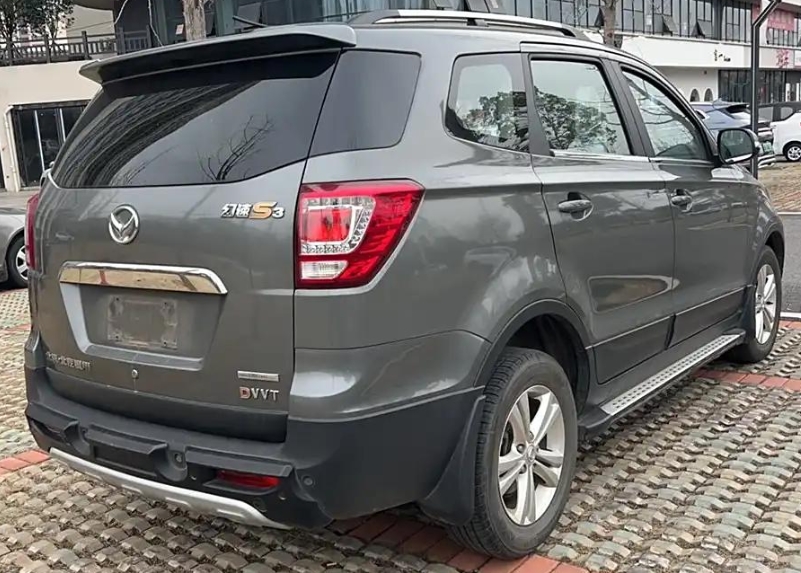
The vehicle was closely related to the larger Huansu S3. In many ways, the S2 was essentially the shorter five-seat version of the seven-seat S3. Both vehicles shared major components, platforms, and engines.
Production Years: Huansu S2
- 2014
- 2015
- 2016
- 2017
- 2018
- 2019
- 2020
Huansu S3: Introduction and Expansion
The Huansu S3 also debuted during 2014 and entered production the same year. It remained in production until 2020.
Unlike the S2, the S3 featured a seven-seat layout, making it attractive to larger families and buyers in smaller Chinese cities where affordable people-carrying SUVs were especially popular.
The S3 quickly became one of Huansu’s best-selling vehicles. Its combination of low pricing, SUV styling, and seven-passenger capacity helped it stand out in China’s competitive entry-level SUV market.
Production Years: Huansu S3
- 2014
- 2015
- 2016
- 2017
- 2018
- 2019
- 2020
Styling and Design Evolution
Both the S2 and S3 followed similar styling themes. The vehicles featured tall rooflines, upright front fascias, chrome-accented grilles, and large headlights intended to imitate more expensive SUVs from international manufacturers.
The original 2014 versions used relatively simple front-end styling. However, the Huansu S2 received a facelift for the 2015 model year. The updated version featured redesigned headlights, a revised grille, and a more aggressive front bumper intended to align the vehicle with newer Huansu models.
The S3 later adopted similar design updates as Huansu modernized its lineup.
Inside, both vehicles emphasized practicality over luxury. The dashboards used straightforward layouts with analog gauges and simple infotainment systems. Higher trims later added touchscreen displays, upgraded trim materials, and improved connectivity features.
Engines and Mechanical Specifications
The Huansu S2 and S3 shared the same engine lineup throughout most of their production lives. Both vehicles used naturally aspirated gasoline engines paired exclusively with manual transmissions.
Engines Offered
1.5-Liter Inline-Four
- Approximately 113 horsepower
- Most common engine across both models
- Standard engine during launch years
1.8-Liter Inline-Four
- Approximately 138 horsepower
- Added later in production
- Initially available only on the S3 before expanding to the S2
Transmission
- 5-speed manual transmission
No automatic transmission was widely offered, which helped keep costs low.
Layout
- Front-engine
- Rear-wheel drive
This rear-wheel-drive layout distinguished the S2 and S3 from many competitors that used front-wheel drive.
Dimensions and Body Variants
Huansu S2
The S2 was the smaller five-seat version of the lineup.
Key dimensions included:
- Length: approximately 167 inches
- Wheelbase: approximately 101 inches
Huansu S3
The S3 was longer and designed with three rows of seating.
Key dimensions included:
- Length: approximately 167 inches
- Wheelbase: approximately 106 inches
Huansu S3L
Huansu later introduced the S3L, an extended-wheelbase version of the S3 featuring revised styling and additional interior space. The S3L included redesigned front and rear fascias and a longer body for improved passenger comfort.
The S3L eventually became the basis for the later Ruixiang X3 after the Huansu brand declined.
Trim Levels and Models
Complete English-language documentation of every trim level is limited because the vehicles were sold primarily in China. However, numerous trim variations and equipment packages were available during production.
Huansu S2 Trim Levels and Variants
Known S2 configurations included:
- Basic manual trim
- Comfort trim
- Luxury trim
- 1.5L variants
- 1.8L variants
- Facelifted 2015 models
Equipment varied by market year and included features such as:
- Cloth or upgraded upholstery
- Alloy wheels
- Touchscreen infotainment
- Rear parking sensors
- Roof rails
- Air conditioning
- Power accessories
Huansu S3 Trim Levels and Variants
The S3 lineup included:
- Standard seven-seat model
- Comfort trim
- Luxury trim
- 1.5L variants
- 1.8L variants
- S3L long-wheelbase model
Higher-end versions added:
- Larger infotainment screens
- Improved interior trim
- Additional chrome exterior accents
- Enhanced audio systems
- Better seating materials
Because Huansu frequently updated trim naming conventions in the Chinese market, exact translations varied between sources and model years.
Sales Success and Market Performance
The Huansu S3 became one of the brand’s most successful vehicles. Sales reached more than 164,000 units during 2015, making it one of China’s best-selling domestic SUVs at the time.
The S2 achieved more modest sales numbers but still contributed significantly to Huansu’s early growth. The lower-priced S2 appealed mainly to buyers seeking compact urban transportation.
The success of the S3 demonstrated the enormous demand for inexpensive seven-seat SUVs in China during the mid-2010s.
Decline of the Huansu Brand
Despite early success, Huansu faced increasing challenges after 2017. Competition in China’s SUV market intensified as manufacturers such as Geely, Changan, Haval, and Chery introduced newer and more technologically advanced vehicles.
Sales of the S2 and S3 declined steadily between 2018 and 2020. Financial difficulties within Beiqi Yinxiang Automobile also contributed to production slowdowns and brand instability.
By 2020, production of both the S2 and S3 had effectively ended. The Huansu brand itself gradually disappeared from the market.
Legacy and Future Outlook
Although the Huansu brand no longer operates as a major automotive manufacturer, the S2 and S3 played an important role in China’s automotive development. These vehicles reflected the rapid rise of affordable Chinese SUVs and demonstrated how domestic manufacturers adapted to changing consumer preferences.
The S3’s platform later evolved into the Ruixiang X3, showing that the engineering behind the vehicle continued under newer branding.
Today, the Huansu S2 and S3 remain common used vehicles in parts of China and several export markets. Their affordability, simple mechanical design, and practical interiors continue to make them attractive in secondary markets.
In retrospect, the Huansu S2 and S3 represented a significant chapter in the evolution of China’s modern automotive industry. They helped introduce affordable crossover ownership to thousands of buyers while showcasing the rapid transformation of Chinese vehicle manufacturing during the 2010s.