The Evolution of the Maple Marindo: Shanghai Maple’s Compact Sedan Experiment
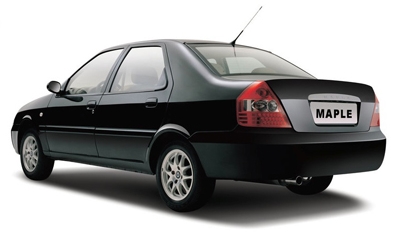
The Maple Marindo was one of the more unusual compact sedans to emerge from China during the early 2000s. Built by Geely Auto through its Shanghai Maple subsidiary, the Marindo represented an ambitious effort to create a modern, affordable compact car for both domestic Chinese buyers and export markets. Although the model never achieved major international success, it played an important role in the growth of Geely and in the development of China’s modern automotive industry.
Produced from 2004 through 2010, the Maple Marindo evolved through several related versions, including the Haiyu, Haishang, Hysoul, Haifeng, and Haixuan. Throughout its production run, the vehicle was offered in sedan and hatchback forms with multiple engine choices and trim packages aimed at value-conscious buyers. The Marindo family also reflected the rapid evolution of Chinese automotive design during the 2000s, when manufacturers frequently borrowed styling cues from European and American vehicles while attempting to establish their own identity.
Origins of Shanghai Maple
Shanghai Maple Automobile was founded as a subsidiary brand under Geely during the early years of China’s expanding automotive market. Geely sought to create separate marques for different market segments, and Shanghai Maple was intended to provide economical passenger vehicles with slightly more youthful styling.
The Maple lineup was based heavily on existing Geely engineering and older licensed platforms. During the early 2000s, many Chinese automakers relied on modified versions of older Japanese and European designs because developing entirely new platforms from scratch was prohibitively expensive. The Maple Marindo emerged from this environment as a compact family sedan intended to compete with inexpensive domestic rivals from Chery, BYD, and FAW.
The Marindo was essentially the sedan counterpart to the Maple Hisoon hatchback platform. Its engineering was simple and inexpensive, but the vehicle provided transportation for a growing Chinese middle class during a period of rapid economic expansion.
.

.
Introduction of the Maple Haiyu (2004–2005)
The earliest member of the Marindo family appeared in 2004 as the Maple Haiyu 303 sedan. The Haiyu served as the foundation for later Marindo variants and established the platform’s overall design and dimensions.
The original Haiyu featured:
- A compact four-door sedan body
- Front-engine, front-wheel-drive layout
- Five-speed manual transmission
- 1.5-liter inline-four engine
- Basic economy-oriented interior equipment
The styling was conservative but functional. Compared with many Chinese vehicles from the late 1990s, the Haiyu looked relatively modern, with smoother body lines and improved proportions. The wheelbase measured approximately 100 inches, providing reasonable interior room for compact-car buyers.
In 2005, the lineup expanded to include both sedan and hatchback versions. The sedan was marketed as the MA 303, while the hatchback version carried the AA 205 designation. Trim configurations remained simple because Shanghai Maple focused on affordability rather than luxury features. Available trim levels generally consisted of:
- Standard/Base
- Comfort
- Deluxe
Equipment varied by market, but higher trims commonly added upgraded cloth upholstery, power windows, improved audio systems, and alloy wheels.
The earliest Haiyu models were powered primarily by a 1.3-liter or 1.5-liter gasoline engine. These engines emphasized fuel economy over performance and typically produced between 85 and 95 horsepower.
The Maple Haishang and Hysoul (2005–2007)
Shanghai Maple introduced a more upscale evolution of the platform in 2005 called the Haishang 305. Export markets later received the model under the name “Hysoul,” while some regions also used the Marindo designation.
The Haishang represented a major styling update over the original Haiyu. Designers revised the:
- Front fascia
- Hood
- Fenders
- Rear lighting
- Bumpers
The front-end styling drew noticeable inspiration from the contemporary Audi A4, while other elements resembled European compact sedans of the era. Chinese automakers during the 2000s frequently adapted styling themes from established global manufacturers, and the Haishang was a clear example of this trend.
The Haishang also introduced a larger 1.8-liter inline-four engine. This engine provided improved acceleration and highway performance compared with the earlier 1.5-liter units. Output varied slightly by market but generally approached 115 horsepower.
Haishang Trim Levels
The Haishang and Hysoul were typically offered in several trim levels, including:
- Standard
- Comfort
- Luxury
- Executive
Higher trims added features such as:
- Leather seating surfaces
- Air conditioning
- Power mirrors
- CD audio systems
- Woodgrain-style interior trim
- Improved sound insulation
These additions reflected the increasing expectations of Chinese buyers during the mid-2000s as the domestic automotive market became more competitive.
The Haishang gained additional visibility when it appeared at the 2005 Frankfurt Motor Show alongside several Geely products. This appearance demonstrated Geely’s growing international ambitions and its desire to position Chinese automobiles on the global stage.
The Maple Haixuan Hatchback
Another derivative of the Marindo platform was the Maple Haixuan hatchback, introduced for the 2006 model year. The Haixuan shared much of its front-end design with the Hysoul and Haishang sedans but adopted a five-door hatchback configuration aimed at younger buyers.
The Haixuan used a 1.5-liter inline-four engine producing approximately 94 horsepower. Although performance remained modest, the hatchback offered improved practicality thanks to its larger cargo opening and fold-down rear seats.
Available trims for the Haixuan generally included:
- Base
- Comfort
- Sport
- Deluxe
Sport-oriented versions occasionally featured:
- Rear spoilers
- Alloy wheels
- Sportier interior accents
- Revised suspension tuning
The Haixuan reflected the growing popularity of compact hatchbacks in China during the mid-2000s, especially among urban buyers seeking affordable transportation with flexible cargo space.
The Maple Haifeng / Marindo (2007–2010)
The final and most developed evolution of the platform was the Maple Haifeng, which many export markets identified directly as the Maple Marindo.
Introduced after the Hysoul, the Haifeng received another comprehensive exterior redesign. Changes included:
- New rear quarter panels
- Revised trunk lid
- Updated front and rear bumpers
- Redesigned taillights
- Modified rear styling
The rear design was heavily influenced by the first-generation Cadillac CTS, giving the Haifeng a more angular and upscale appearance than previous Maple sedans. Although critics often noted the resemblance to foreign vehicles, the Haifeng nonetheless represented an improvement in visual sophistication compared with earlier Maple products.
Engines and Mechanical Specifications
The Haifeng and Marindo variants typically offered:
| Engine | Configuration | Estimated Output |
|---|---|---|
| 1.5L MR479QA | Inline-four | Approximately 94 hp |
| 1.8L JL481Q | Inline-four | Approximately 113 hp |
All versions used a five-speed manual transmission. Automatic transmissions were not widely available, reflecting the budget-oriented nature of the car.
The suspension setup consisted of:
- Front independent suspension
- Rear torsion-beam arrangement
- Front disc brakes
- Rear drum brakes
Although technically simple, the mechanical package was inexpensive to maintain and reasonably durable for everyday commuting.
Haifeng / Marindo Trim Levels
By the late 2000s, Shanghai Maple offered a wider range of trim levels to remain competitive. Common trims included:
- Base
- Comfort
- GL
- GLS
- Luxury
- Executive
Depending on trim level and market, buyers could receive:
- ABS braking
- Airbags
- Power steering
- Air conditioning
- Leather upholstery
- Sunroof
- Alloy wheels
- Power windows and locks
- Improved audio systems
Despite these upgrades, the Marindo remained positioned as a low-cost compact sedan rather than a premium vehicle.
Production Years and Complete Model Timeline
The Maple Marindo family evolved continuously between 2004 and 2010. The major versions included:
| Model | Years Produced | Body Style |
|---|---|---|
| Maple Haiyu 303 | 2004–2007 | Sedan |
| Maple MA 303 | 2005–2007 | Sedan |
| Maple AA 205 | 2005–2007 | Hatchback |
| Maple Haishang 305 | 2005–2008 | Sedan |
| Maple Hysoul | 2005–2008 | Sedan |
| Maple Haixuan | 2006–2008 | Hatchback |
| Maple Haifeng / Marindo | 2007–2010 | Sedan |
Production officially ended in 2010 as Geely consolidated its brands and shifted toward newer vehicle platforms with improved safety, engineering, and design quality.
Market Reception
The Maple Marindo never became a global success story, but it served an important purpose in China’s domestic automotive expansion. Buyers appreciated its:
- Low purchase price
- Inexpensive maintenance
- Practical dimensions
- Simple mechanical design
However, the vehicle also faced criticism for:
- Limited crash protection
- Outdated engineering
- Weak refinement
- Styling similarities to foreign vehicles
During the late 2000s, Chinese automakers rapidly improved product quality, and the Marindo increasingly struggled against newer rivals offering better technology and more modern safety systems.
Legacy and Historical Importance
Although the Maple Marindo is relatively obscure today, it occupies an important place in Geely’s history. Vehicles like the Marindo helped generate the revenue and manufacturing experience that later allowed Geely to expand globally.
Geely eventually became one of China’s most successful automakers, acquiring Volvo Cars in 2010 and developing internationally competitive products during the following decade. The Marindo therefore represents an early developmental step in the transformation of Chinese automobiles from low-cost domestic products into globally recognized vehicles.
The Marindo also illustrates the broader evolution of China’s automotive industry during the 2000s:
- Rapid industrial growth
- Increased domestic ownership
- Expanding export ambitions
- Improving engineering standards
- Transition from imitation to innovation
Future Outlook
The Maple Marindo itself has no direct successor because the Shanghai Maple brand was eventually phased out. However, its influence survives within Geely’s later compact sedans and hatchbacks.
Today, surviving Marindo models are uncommon outside China, though a small enthusiast community still preserves them as examples of early modern Chinese automotive development. As interest in Chinese automotive history grows, vehicles like the Marindo may eventually gain recognition among collectors interested in emerging-market automobiles.
While it was never a world-class compact sedan, the Maple Marindo played a meaningful role during a transitional era for China’s car industry. Its evolution from the basic Haiyu to the more refined Haifeng mirrored the rapid advancement of Chinese automotive manufacturing itself.