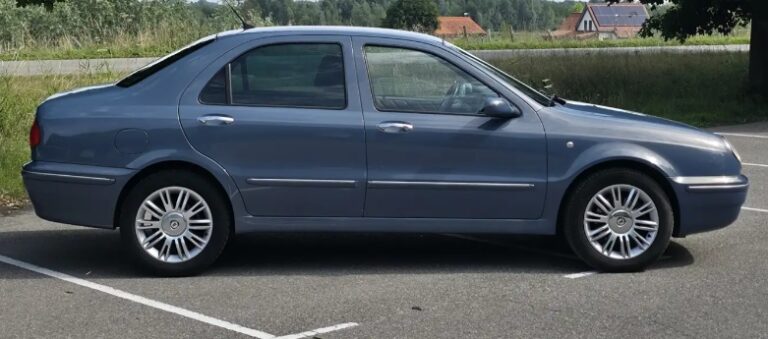
The Evolution of the Maple C51: Shanghai Maple’s Budget Sedan for a Growing Chinese Auto Market
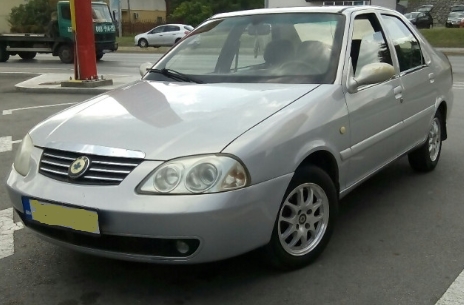
The Maple C51 was one of the lesser-known compact sedans produced during the rapid expansion of China’s automotive industry in the 2000s. Manufactured by Shanghai Maple Automobile, a subsidiary associated with Geely Auto, the C51 represented a practical and inexpensive family sedan designed primarily for domestic Chinese buyers. Although it never achieved significant international recognition, the model became part of an important transitional era in Chinese automotive manufacturing, when local automakers were moving from basic transportation products toward more competitive modern vehicles.
Produced from 2005 through 2016, the Maple C51 remained in production longer than many other Shanghai Maple vehicles. The sedan emphasized affordability, low operating costs, and mechanical simplicity rather than luxury or high performance. Throughout its production life, the C51 was offered mainly as a four-door compact sedan with modest trim variations and a single naturally aspirated gasoline engine.
While the Maple brand itself eventually disappeared, the C51 remains a noteworthy example of the early efforts by Geely and Shanghai Maple to establish themselves in the rapidly growing Chinese passenger-car market.
Origins of the Maple Brand
Shanghai Maple Automobile was founded in 2000 as a Chinese automobile manufacturer operating under the broader Geely corporate structure. The Maple brand was intended to target budget-conscious consumers with inexpensive compact cars and sedans.
During the early 2000s, China’s automotive industry expanded at an extraordinary pace. Millions of first-time buyers entered the market, creating demand for affordable transportation. Domestic manufacturers such as Chery, BYD, FAW, and Geely competed aggressively in the low-cost segment, often using simple engineering and older licensed technologies to keep prices low.
Shanghai Maple became one of Geely’s experimental sub-brands. Many Maple vehicles were derived from existing Geely platforms and components, allowing the company to reduce development costs while rapidly expanding production capacity. The Maple C51 emerged during this period as a compact sedan focused on practicality and value.
.

.
Introduction of the Maple C51 (2005)
The Maple C51 entered production in 2005 as a compact four-door sedan. The vehicle was designed around straightforward engineering principles that prioritized reliability and affordability over advanced technology.
The C51 featured:
- Front-engine, front-wheel-drive layout
- Four-door sedan body style
- Five-passenger seating
- Five-speed manual transmission
- Naturally aspirated inline-four gasoline engine
Dimensionally, the C51 fit squarely within the compact sedan category. The wheelbase measured approximately 100 inches, while the overall length was roughly 175 inches. This gave the car enough interior room for family use while remaining maneuverable in crowded urban environments.
Stylistically, the C51 reflected the conservative design trends common among Chinese economy cars of the mid-2000s. The exterior used simple body lines, a modest grille design, and compact proportions intended to appeal to buyers seeking practical transportation rather than sporty styling.
Unlike some other Maple vehicles that underwent multiple facelifts and renamings, the C51 remained relatively consistent throughout its production run.
Mechanical Specifications
The Maple C51 used a single primary powertrain configuration during most of its production history.
Engine
The sedan was powered by a 1.5-liter JL479QA inline-four gasoline engine producing approximately 95 horsepower and 94 lb-ft of torque. The engine featured:
- Double overhead camshaft (DOHC) design
- Multi-point fuel injection
- Four valves per cylinder
- Naturally aspirated induction
Power output was modest, but the engine emphasized fuel efficiency and low maintenance costs. Top speed was approximately 99 mph, which was sufficient for normal highway driving in China and export markets.
Transmission
All major versions of the C51 used a five-speed manual transmission. Automatic transmissions were generally unavailable, helping Shanghai Maple keep production costs low.
Suspension and Chassis
The suspension system consisted of:
- Front MacPherson strut independent suspension
- Rear torsion-beam semi-independent suspension
Braking included:
- Front ventilated disc brakes
- Rear drum brakes
The chassis setup prioritized simplicity and durability rather than sporty handling characteristics. Hydraulic power steering was standard on most versions.
Trim Levels and Equipment
Unlike many modern compact sedans with numerous specialized trims, the Maple C51 maintained a relatively simple lineup throughout its production years.
The primary trim levels generally included:
| Trim Level | Key Features |
|---|---|
| Base | Manual windows, cloth seats, basic audio system |
| Standard | Power steering, improved interior materials |
| Comfort | Air conditioning, power windows, upgraded stereo |
| Deluxe | Alloy wheels, improved upholstery, ABS braking |
| Luxury | Additional interior trim upgrades and convenience features |
Because Shanghai Maple focused heavily on affordability, even the higher trims remained relatively basic compared with Japanese, Korean, or European competitors.
Base Trim
The entry-level C51 targeted first-time car buyers and fleet operators. Standard equipment commonly included:
- Cloth upholstery
- Manual transmission
- Steel wheels
- Basic dashboard instrumentation
- Simple radio system
These versions prioritized affordability above all else.
Comfort and Deluxe Trims
Mid-level trims added several comfort-oriented upgrades, including:
- Air conditioning
- Power windows
- Central locking
- Improved fabric seats
- Better sound insulation
These trims became increasingly popular as Chinese consumers demanded more features during the late 2000s.
Luxury Trim
The highest trim levels occasionally included:
- Alloy wheels
- Faux wood interior trim
- Leather-style seating surfaces
- Enhanced audio systems
- ABS braking systems
Even so, the C51 remained clearly positioned as an economy vehicle rather than a premium sedan.
Production Years and Model Timeline
The Maple C51 maintained a remarkably long production run for a low-cost Chinese sedan.
| Model | Years Produced | Body Style |
|---|---|---|
| Maple C51 Base | 2005–2016 | Sedan |
| Maple C51 Standard | 2005–2016 | Sedan |
| Maple C51 Comfort | 2006–2016 | Sedan |
| Maple C51 Deluxe | 2007–2016 | Sedan |
| Maple C51 Luxury | 2008–2016 | Sedan |
Production officially ended in 2016, several years after the Maple brand itself had effectively disappeared from mainstream global markets.
Market Position and Competition
The Maple C51 competed in China’s extremely competitive entry-level sedan segment. Rivals included vehicles from:
- Chery
- FAW
- BYD
- Great Wall
- Lifan
The C51’s primary advantages were:
- Low purchase price
- Inexpensive maintenance
- Simple mechanical components
- Reasonable fuel economy
However, the vehicle also faced several limitations:
- Outdated engineering
- Limited safety technology
- Weak crash-test performance
- Minimal refinement
- Limited export appeal
By the early 2010s, Chinese automakers had begun rapidly improving vehicle quality, and the aging C51 increasingly struggled against newer models with more advanced designs and features.
Export Markets
Although the Maple C51 was designed mainly for China, some units reached limited export markets in regions including:
- Eastern Europe
- Southeast Asia
- Parts of the Middle East
- South America
In these markets, the vehicle was valued primarily for its affordability. However, the model never achieved widespread international sales because it faced strong competition from used Japanese and Korean vehicles that offered better reliability and stronger brand recognition.
Safety and Reliability
Safety standards during the early years of Chinese automobile manufacturing were often below those of Western and Japanese competitors. The Maple C51 reflected this reality.
Basic safety equipment included:
- Seatbelts
- Reinforced passenger cabin
- Anti-lock braking systems on some trims
However, many early versions lacked:
- Side airbags
- Electronic stability control
- Modern crash structures
Reliability was generally considered acceptable for basic transportation purposes. Owners often praised the C51’s mechanical simplicity and inexpensive repair costs, though long-term durability varied depending on maintenance and driving conditions.
The End of the Maple Brand
As Geely expanded internationally and improved the sophistication of its vehicles, the company gradually phased out older sub-brands such as Shanghai Maple.
By the early 2010s, Geely focused increasingly on:
- Improved engineering quality
- Modern safety systems
- International partnerships
- Global exports
The acquisition of Volvo Cars in 2010 dramatically accelerated Geely’s transformation into a global automaker. Compared with Geely’s newer vehicles, the aging Maple C51 appeared outdated both technologically and stylistically.
Eventually, the Maple name disappeared entirely as Geely consolidated its operations under a more unified corporate strategy.
Historical Importance
Although the Maple C51 is rarely discussed outside automotive enthusiast circles, it remains historically significant as part of China’s automotive industrial growth.
The C51 represented:
- Early mass-market Chinese automobile production
- The rise of affordable domestic transportation
- Geely’s early manufacturing expansion
- China’s transition from imitation to innovation
Vehicles such as the C51 helped Chinese automakers gain manufacturing experience, build supplier networks, and establish nationwide dealership systems. Those foundations later enabled companies like Geely to compete internationally.
Future Outlook
The Maple C51 has no direct successor, and surviving examples are increasingly rare outside China. However, interest in early Chinese automobiles has grown among collectors and historians interested in the development of China’s automotive industry.
While the C51 was never a groundbreaking sedan, it played an important supporting role during a transformative period in automotive history. Today, Geely produces sophisticated global vehicles with advanced technology and modern safety systems, but models like the Maple C51 were part of the foundation that made that evolution possible.
The C51 therefore stands as a modest but meaningful chapter in the story of China’s emergence as one of the world’s largest automotive manufacturing powers.