The Evolution of the Noble M400: Britain’s Brutal Lightweight Supercar
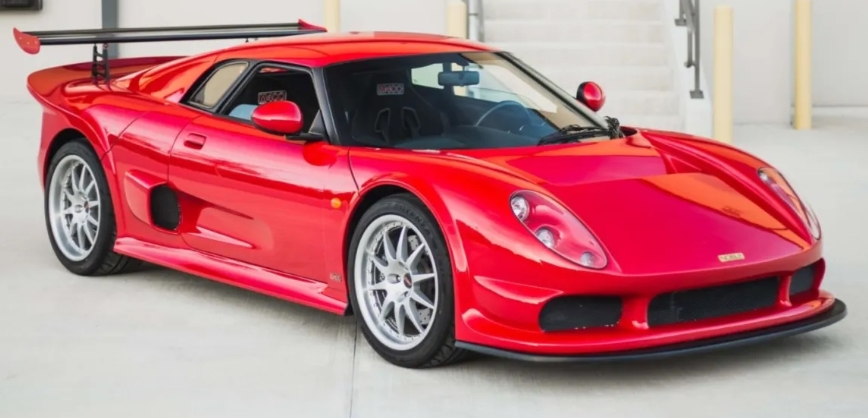
The Noble M400 is widely regarded as one of the most extreme analog supercars of the early 21st century. Built by British manufacturer Noble Automotive, the M400 emerged from the earlier Noble M12 platform but evolved into a more powerful, track-focused machine designed to rival exotic supercars costing far more. Produced primarily between 2004 and 2007, the M400 gained a reputation for uncompromising performance, minimal driver aids, and remarkable power-to-weight efficiency.
Despite relatively low production numbers, the M400 became one of Noble’s most celebrated vehicles and remains an icon among enthusiasts who value pure driving dynamics. Its story reflects the philosophy of Noble itself: lightweight engineering, minimal complexity, and maximum performance.
Origins of Noble Automotive and the M400 Concept
The story of the M400 begins with British engineer and entrepreneur Lee Noble. After earlier ventures in sports-car design during the 1990s, Noble founded Noble Automotive in 1999 with the goal of building high-performance sports cars that focused on handling and driver involvement rather than luxury or electronic driver aids.
The company’s first major success was the Noble M12, a mid-engine sports car that debuted in 2000. The M12 used a lightweight tubular steel chassis and a twin-turbocharged Ford V6 engine, creating a highly competitive sports car capable of supercar-level performance at a comparatively accessible price.
As the M12 evolved through several variants—including the M12 GTO, M12 GTO-3, and M12 GTO-3R—Noble began exploring a more extreme version designed specifically for track performance. The result was the M400.
The name “M400” reflected the car’s two key targets:
- 400 horsepower
- Approximately 400 horsepower per metric ton
This power-to-weight philosophy defined the car’s design and engineering goals.
.
THIS is GOOD stuff if your car is in need:

.
Development and Introduction (2004)
The Noble M400 was introduced in 2004 as the most powerful and focused version of the M12 platform. Compared with earlier M12 models, the M400 featured numerous mechanical upgrades and aerodynamic revisions intended to create a machine capable of competing with exotic supercars such as the Ferrari 360 Challenge Stradale and Porsche Carrera GT on both road and track.
Although visually similar to the M12, the M400 incorporated several key improvements:
- Revised engine tuning producing roughly 425 horsepower
- Larger turbochargers
- Strengthened drivetrain components
- Improved cooling and airflow
- Weight reduction measures
- Track-focused suspension tuning
The result was a car capable of 0–60 mph in roughly 3.2 seconds and a top speed exceeding 185 mph, remarkable figures for a small manufacturer with limited resources.
Core Engineering and Mechanical Layout
Like its predecessors, the M400 utilized a rear mid-engine layout with rear-wheel drive. This configuration optimized weight distribution and handling.
Engine
The car used a modified Ford Duratec V6 engine with twin turbochargers. Noble extensively reworked the engine, including upgraded internals and revised engine management systems.
Key specifications included:
- Engine: 3.0-liter twin-turbocharged V6
- Output: approximately 425 hp
- Torque: roughly 390 lb-ft
Power was transmitted through a 6-speed manual transmission, reinforcing the car’s analog, driver-focused philosophy.
Chassis
The M400 used a steel spaceframe chassis with composite body panels. While not as exotic as carbon fiber monocoques used by some supercar manufacturers, the design offered several advantages:
- Lower production costs
- Easier repairability
- Excellent rigidity
Combined with a relatively low curb weight of roughly 2,300–2,400 pounds, the M400 achieved exceptional performance.
Suspension and Handling
Handling was a defining characteristic of the M400.
Key features included:
- Double-wishbone suspension front and rear
- Adjustable dampers
- Track-oriented alignment settings
- Lightweight wheels and performance tires
The car’s minimal electronic aids meant that driver skill was essential. There was no traction control or stability control, which contributed to both the car’s legendary driving experience and its demanding reputation.
M400 Models and Variants
Unlike many mass-market vehicles, the Noble M400 was not produced in a wide variety of trims. Instead, Noble focused on incremental improvements and optional equipment.
However, the model can broadly be divided into several versions and configurations.
1. Noble M400 (2004–2007)
The standard M400 coupe was the primary production model.
Key characteristics included:
- Twin-turbocharged Ford V6
- 6-speed manual transmission
- Lightweight interior
- Track-focused suspension
- Fixed rear wing for additional downforce
The interior reflected Noble’s philosophy of prioritizing performance over luxury. Equipment was minimal but functional.
Standard features generally included:
- Leather seats
- Basic climate control
- Aluminum pedals
- Minimal sound insulation
Despite the stripped-down design, the car remained road-legal and usable for everyday driving.
2. M400 Track-Focused Configurations
Some M400 owners and dealers configured cars with optional equipment intended for track use.
These options included:
- Upgraded brake packages
- Racing harnesses
- Track-oriented tires
- Adjustable suspension components
While not officially separate trim levels from the factory, these configurations effectively created track-ready versions of the M400.
3. U.S. Market Versions
In the United States, the M400 was distributed through 1G Racing, which imported rolling chassis from the United Kingdom and completed final assembly domestically.
This arrangement allowed the car to meet U.S. regulations while maintaining Noble’s low-volume production model.
American-spec vehicles typically included:
- Federalized lighting systems
- Emissions-compliant engine management
- Slightly revised interior features
Production Numbers and Rarity
Production of the Noble M400 remained relatively limited due to the boutique nature of the manufacturer.
Estimates suggest:
- Approximately 75–100 M400 units produced worldwide.
The majority were built between 2004 and 2007, though some additional units may have been assembled slightly later depending on market demand.
The low production volume has made the M400 a highly collectible vehicle among enthusiasts.
Media Reception and Critical Acclaim
The Noble M400 received widespread praise from automotive journalists.
One of the most famous reviews came from the television program Top Gear. During testing by presenter Jeremy Clarkson, the M400 recorded one of the fastest lap times ever achieved on the show’s test track.
Clarkson famously described the car as “ferocious”, emphasizing its brutal acceleration and demanding handling characteristics.
Critics consistently highlighted several strengths:
- Exceptional power-to-weight ratio
- Incredible grip and cornering ability
- Pure analog driving experience
However, reviewers also noted drawbacks:
- Spartan interior
- Limited practicality
- Lack of electronic safety systems
- Challenging handling for inexperienced drivers
Despite these limitations, the M400 developed a reputation as one of the most rewarding driver’s cars ever built.
Racing Influence and Track Performance
While the M400 itself was primarily a road car, its design was heavily influenced by motorsport engineering.
Many Noble vehicles competed in various motorsport categories, particularly GT racing and endurance events. These racing programs helped validate the durability and performance of the M12 platform on which the M400 was based.
The car’s aerodynamics, cooling systems, and suspension geometry were all refined with track performance in mind.
Relationship to Later Noble Models
The M400 represented the peak evolution of the original M12 platform. However, the company soon began working on a new generation of supercars.
In 2006, Lee Noble left Noble Automotive and later founded another sports-car company, Fenix Automotive.
Meanwhile, Noble Automotive continued development of new vehicles, including:
- Noble M600 (introduced in 2010)
The M600 adopted a carbon-fiber chassis and far more powerful engine, marking a major technological leap beyond the M400.
However, many enthusiasts argue that the M400’s simpler design and lighter weight make it the more engaging driver’s car.
Design Philosophy and Legacy
What made the Noble M400 unique among supercars was its unwavering commitment to performance.
Unlike many contemporary exotics, the car avoided excessive luxury or electronic complexity. Instead, Noble focused on three core principles:
- Light weight
- High power
- Driver engagement
This philosophy placed the M400 closer to track-focused machines like the Lotus Exige than traditional grand touring supercars.
The car also proved that a small manufacturer could compete with established brands through clever engineering and a clear design philosophy.
Collectibility and Modern Reputation
Today, the Noble M400 is widely regarded as one of the most exciting analog supercars ever produced.
Several factors contribute to its growing collector appeal:
- Extremely limited production numbers
- Legendary driving dynamics
- Strong enthusiast community
- Increasing rarity of manual, analog supercars
Values for well-maintained examples have risen steadily in recent years, particularly in the United States and the United Kingdom.
Collectors often consider the M400 one of the last truly raw turbocharged supercars before modern stability systems and electronic driver aids became standard.
Future Outlook and Historical Significance
Although the Noble M400 is no longer in production, its influence continues to shape the company’s identity.
Modern Noble vehicles still emphasize:
- Lightweight construction
- High performance
- Minimal electronic interference
As the automotive industry moves toward electrification and increasingly automated driving systems, cars like the M400 represent a disappearing era of purely mechanical performance machines.
For enthusiasts, the M400 stands as a reminder that extraordinary performance does not necessarily require massive corporate resources—only intelligent engineering and a clear vision.
The Noble M400 remains one of the most distinctive supercars of the early 2000s. Produced between 2004 and 2007, it represented the ultimate evolution of the Noble M12 platform and embodied the brand’s dedication to raw performance.
With roughly 425 horsepower, extremely low weight, and race-inspired engineering, the M400 delivered performance capable of challenging far more expensive exotic cars. Its limited production and uncompromising character have since made it a legendary driver’s car.
More than two decades after its introduction, the M400 continues to be celebrated by enthusiasts and collectors alike—an enduring symbol of what can happen when engineering passion outweighs marketing priorities.