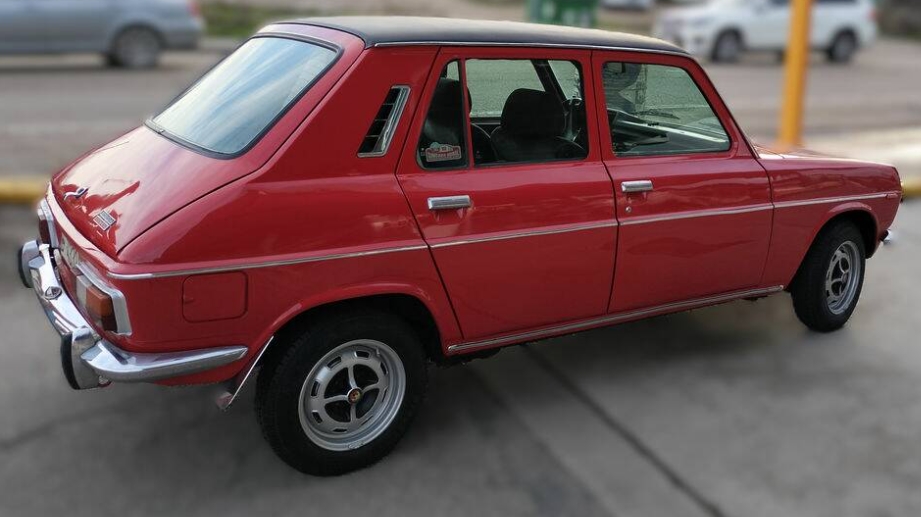
The Evolution of the Simca 1300 and 1500: France’s Mid-Size Family Sedans of the 1960s
During the early 1960s, the French automobile industry underwent a period of rapid modernization. Automakers began replacing older post-war designs with more spacious, modern family cars that reflected new styling trends and improved engineering. Among the most important of these vehicles were the Simca 1300 and Simca 1500, two closely related models produced by Simca.
Introduced in 1963, these cars were designed to replace the aging Simca Aronde and to position Simca more competitively in the European mid-size family car segment. Although the original 1300 and 1500 were produced only until 1966, the platform continued in revised form as the Simca 1301 and 1501, extending the basic design’s life until 1975.
The Simca 1300 and 1500 represented an important milestone for Simca, offering modern styling, increased interior space, and improved comfort compared with earlier models. Their development also reflects the broader evolution of the European automobile industry during the 1960s.
Origins and Development
By the early 1960s, Simca’s popular Aronde had been in production for over a decade and was beginning to show its age compared with newer European competitors. Simca needed a more modern car with greater comfort, improved styling, and larger interior dimensions.
The result was the Simca 1300/1500 project, which debuted on May 22, 1963.
The new model represented a major step forward in design philosophy. Compared with the Aronde, the new sedan featured:
- A longer wheelbase and larger body
- Modern, straight-lined styling typical of the 1960s
- Larger windows and improved visibility
- A more spacious interior
- Updated suspension and chassis engineering
The car was built using a traditional front-engine, rear-wheel-drive layout, which remained common among European family cars of the period.
Simca engineers also adopted MacPherson-style front suspension and improved ride comfort, reflecting the growing emphasis on driving refinement during the decade.
.
We LOVE cars & cruising around, but sometimes day trips to explore new cities are required (with family or friends) for a spice of variety in your life!
So GO explore!
Cruises & Day/Night City Tours to: Baltimore, Boston, Chicago, Marina Del Ray, New York, Niagara, Philadelphia, San Diego, San Francisco, Toronto, Washington DC, etc.:

.
Production Years
The Simca 1300 and 1500 were produced during two main phases:
First generation (original models)
- 1963–1966
Restyled successor models (1301/1501)
- 1966–1975
The original versions were manufactured at Simca’s major production facility in Poissy, France, which had previously been owned by Ford before Simca acquired it in 1954.
Production numbers for the first generation reached substantial levels:
- Approximately 275,626 Simca 1300 models
- Approximately 162,183 Simca 1500 models
These figures illustrate the popularity of the cars during their relatively short initial production run.
Styling and Design
When introduced, the Simca 1300 and 1500 reflected the design trends of early-1960s European sedans.
Key design features included:
- Clean, angular body lines
- A wide front grille
- Large glass areas
- Subtle chrome trim
- Balanced proportions
Although the two models were mechanically similar, they could be distinguished visually.
The Simca 1300 had a grille with nine horizontal bars and three vertical bars, while the Simca 1500 used a grille with eleven horizontal bars and additional chrome accents.
The 1500 also featured more decorative trim and extended rear bumper sections, giving it a slightly more luxurious appearance.
Engines and Mechanical Layout
Both models used Simca’s proven inline four-cylinder engines.
Simca 1300 Engine
The 1300 was powered by the 1.29-liter “Rush” OHV four-cylinder engine, which had already been used in the Aronde.
Specifications included:
- Displacement: 1290 cc
- Power output: approximately 62 horsepower
- Top speed: about 86 mph
Simca 1500 Engine
The 1500 used a larger engine designed to provide more performance and higher cruising speeds.
Specifications included:
- Displacement: 1475 cc
- Power output: approximately 81 horsepower
- Top speed: about 91 mph
Both models used a fully synchronized four-speed manual transmission, though later versions introduced automatic transmission options.
Body Styles
Initially, the Simca 1300 and 1500 were available only as a four-door sedan (saloon).
However, Simca soon expanded the range.
Sedan
The standard four-door sedan was the primary body style and accounted for most sales.
Station Wagon (Break)
The station wagon version, known in France as a Break, was introduced soon after launch.
- 1964: Simca 1500 Break introduced
- 1965: Simca 1300 Break introduced
The wagons featured a split tailgate with a unique design: the rear window could slide downward while the lower tailgate folded open.
This practical configuration allowed easier loading of cargo and became a popular feature among family buyers.
Trim Levels and Model Variants
Throughout their production run, the Simca 1300 and 1500 were offered in several trim levels designed to appeal to different buyers.
Early Trim Levels (1963–1965)
When the models were first introduced, the lineup consisted of the following versions:
Simca 1300
- 1300 (base model)
- 1300 GL (upgraded trim)
Simca 1500
- 1500 (base model)
- 1500 GL
The GL trim generally included additional equipment such as:
- improved interior upholstery
- extra chrome exterior trim
- upgraded dashboard features
These options helped Simca position the 1500 slightly above the 1300 in the market.
Expanded Trim Levels (1965–1966)
In 1965, Simca expanded the trim level structure.
New variants included:
Simca 1300
- 1300 L
- 1300 LS
- 1300 GL
- 1300 GLS
Simca 1500
- 1500 L
- 1500 LS
- 1500 GL
- 1500 GLS
A special version known as the 1500 GLA also appeared with an optional three-speed Borg-Warner automatic transmission, offering additional comfort for drivers who preferred automatic shifting.
Station Wagon Trim Levels
The wagon versions were also offered in multiple configurations.
Common variants included:
- Break (basic wagon)
- Break LS
- Break GLS
- Break Familiale
The Familiale version featured additional seating options, making it particularly appealing to larger families.
In some export markets, the wagon was marketed under the name “Tourisme.”
Driving Experience
The Simca 1300 and 1500 were designed primarily as comfortable family vehicles rather than sporty cars.
Drivers appreciated several characteristics:
- Smooth ride quality
- Predictable handling
- Spacious interior
- Reliable mechanical components
The use of a MacPherson front suspension system and telescopic shock absorbers helped provide stable handling on European roads.
Although performance was modest by modern standards, the 1500 offered respectable highway speeds for a mid-1960s European sedan.
Market Position and Competition
The Simca 1300 and 1500 competed in the European D-segment family car market.
Major rivals included:
- Peugeot 404
- Renault 16
- Ford Taunus
- Opel Rekord
Simca’s models distinguished themselves through:
- Competitive pricing
- Practical interior space
- Conservative but modern styling
The availability of both sedan and wagon versions also helped broaden their appeal.
The 1966 Facelift: Simca 1301 and 1501
After only three years, Simca introduced a significant update to the model line in 1966.
The revised cars were renamed:
- Simca 1301
- Simca 1501
These models featured:
- redesigned front grille
- longer rear bodywork
- updated interior styling
However, the basic structure and mechanical layout remained largely unchanged.
The facelift helped extend the model’s commercial life for nearly another decade.
Production Through the 1970s
The updated 1301 and 1501 models remained in production until 1975, making the overall design one of Simca’s longest-running vehicle platforms.
During this time, the cars continued to receive small updates, including:
- improved braking systems
- revised trim packages
- updated interior materials
The platform ultimately gave way to more modern front-wheel-drive designs in the mid-1970s.
End of Production
By the mid-1970s, the automotive industry had shifted toward new engineering concepts.
Front-wheel drive, hatchback bodies, and improved fuel efficiency were becoming standard in European cars.
As a result, Simca replaced the aging 1301/1501 line with a completely new model:
- Simca-Chrysler 1307 / 1308 / 1309
These cars debuted in 1975 and reflected a much more modern design philosophy.
Legacy and Historical Importance
The Simca 1300 and 1500 played a significant role in Simca’s growth during the 1960s.
Their importance can be summarized in several ways:
Modernizing Simca’s lineup
The cars replaced the aging Aronde and brought Simca into the modern era of family sedan design.
Long production life
Through the later 1301/1501 updates, the platform remained in production for over a decade.
Practical family transportation
The cars became popular with European families thanks to their practicality and affordability.
Collectibility Today
Today, surviving Simca 1300 and 1500 models are relatively rare but appreciated by collectors of classic French cars.
Enthusiasts value them for:
- their distinctive 1960s styling
- historical importance within Simca’s lineup
- mechanical simplicity
Station wagon versions are especially prized due to their lower production numbers.
Future Outlook
Although Simca itself eventually disappeared as a brand during the 1980s following its absorption into the Chrysler Europe and later PSA groups, the Simca 1300 and 1500 remain important artifacts of the company’s most productive era.
Classic car interest in 1960s European family sedans has grown steadily, and well-preserved examples are increasingly displayed at historic automotive events.
As collectors continue rediscovering overlooked models from this era, the Simca 1300 and 1500 are gaining recognition as important representatives of French automotive design during the 1960s.
The Simca 1300 and 1500 represent a significant chapter in the history of French automobiles. Introduced in 1963, these mid-size family cars modernized Simca’s lineup and helped the company remain competitive in a rapidly evolving European market.
With multiple trim levels, practical station wagon variants, and a refined driving experience, the models proved successful with consumers. Their influence continued through the restyled Simca 1301 and 1501, extending the platform’s life until 1975.
Today, the Simca 1300 and 1500 stand as reminders of a transitional era in automotive design—when traditional rear-wheel-drive sedans were gradually giving way to the modern front-wheel-drive vehicles that would dominate the decades ahead.