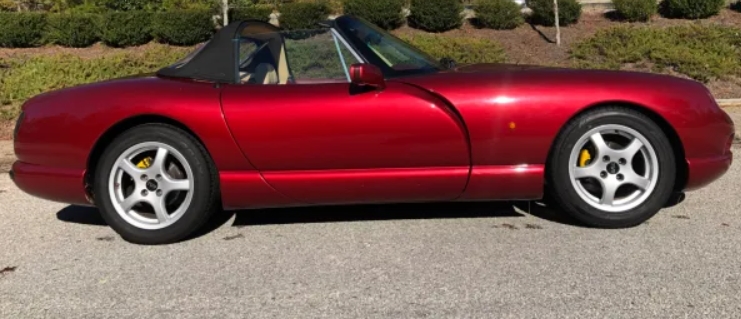
The Evolution of the TVR 390SE and 400SE: Britain’s Wedge‑Era Performance Icons
In the pantheon of British sports cars, few lines are as enthusiastically discussed and as historically intriguing as TVR’s Wedge series — a family of sharply styled, lightweight, high‑performance roadsters produced during the 1980s and early 1990s. At the core of the last chapter of this era were the TVR 390SE and its direct successor, the TVR 400SE. These rare machines combined TVR’s traditional lightweight ethos with ever‑increasing engine performance and evolving design, and today they remain among the most collectible of classic TVRs. This article explores the evolution, technical specifications, production history, variants, and legacy of these two distinctive sports cars.
Origins: TVR’s Wedge Philosophy
TVR’s Wedge series — so named for its distinctive angular body style — began in the early 1980s as the company sought to modernize its lineup and appeal to a performance‑oriented audience. These cars featured a fiberglass body over a tubular spaceframe, powerful V8 engines (typically Rover‑derived), and a minimalist, driver‑focused approach. As the decade progressed, TVR continuously tweaked and upgraded this platform, culminating in some of the most extreme examples yet: the 390SE and, ultimately, the 400SE.
.

.
TVR 390SE (1984–1988/89): The Big‑Bore Wedge
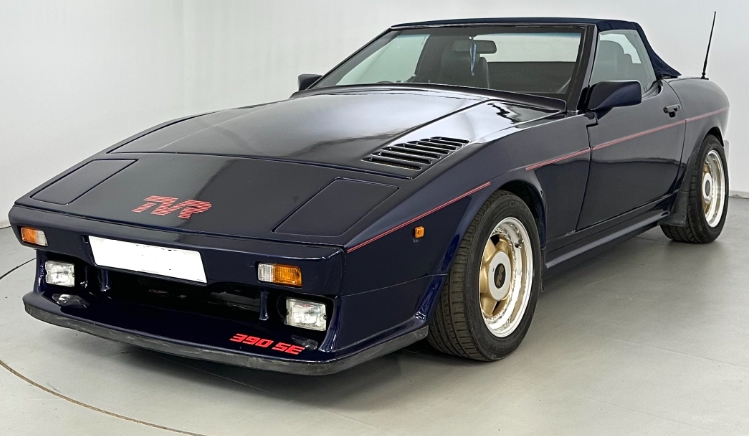
The TVR 390SE was introduced in 1984 as a more powerful, more aggressive version of the standard 350i model. Built in collaboration with engineer Andy Rouse, TVR undertook extensive modifications to the Rover V8 engine, increasing its displacement to 3905 cc (3.9 L) and adding performance‑oriented internals such as high‑lift camshafts, gas‑flowed heads with larger valves, Cosworth‑machined pistons, and a lighter flywheel. These upgrades boosted peak output to around 275 bhp and roughly 270 lb‑ft of torque, delivering noticeably sharper performance over its predecessor.
Although closely related to the 350i in appearance, the 390SE distinguished itself with a deeper front air dam, underbody aerofoil, enlarged brake cooling ducts, ventilated disc brakes, and wider rear tires — all designed to handle its extra power and improve high‑speed stability.
Aesthetically, the 390SE initially retained the signature wedge profile of earlier TVR models but evolved over its production life. Later units featured changes such as flared wheel arches and updated sills, as well as a more rounded front end in the Series 2 version introduced around 1987.
Despite its performance character, the 390SE never received formal British type approval as a stand‑alone model, meaning many examples were technically registered as 350i derivatives with the larger engine and upgraded equipment.
Specifications and Performance
- Production Years: 1984–1988 (some registrations into 1989)
- Engine: 3.9 L Rover V8 (bored and tuned)
- Output: ~275 bhp / 270 lb‑ft
- Transmission: 5‑speed manual
- 0‑60 mph: ~5.6 seconds
- Top Speed: ~143–145 mph (230–233 km/h)
- Number Produced: ~103 units (for 390SE and 420SE combined)
Over its roughly five‑year production span, approximately 100–103 390SEs were built, making it a rare and highly desirable classic today.
Transition Era: From 390SE to 400SE
By the late 1980s, TVR’s wedge cars had grown bolder in both styling and performance. The 390SE sat near the top of the wedge range, but TVR chose to evolve the concept further. In 1988, the company introduced a refreshed model — the TVR 400SE — that would carry the wedge lineage through to the end of production in 1991.
TVR 400SE (1988–1991): Maturing the Wedge
The 400SE replaced the 390SE in 1988 and became the definitive late‑era Wedge TVR. While closely related mechanically to its predecessor, it offered some key refinements and a slightly larger engine. The Rover V8 was increased in displacement to 3948 cc (3.95 L), although peak power remained broadly similar at around 275 bhp with torque figures slightly improved due to the larger displacement.
Visually, the 400SE adopted the more rounded nose and Series 2 style bodywork that had begun to appear on later 390SEs, blending the wedge shape with smoother lines and integrated bumpers that flowed into the fenders. A large underbody spoiler and prominent rear aerofoil continued the performance‑oriented theme, while features like ventilated disc brakes and wider tires were standard.
The 400SE was the last wedge‑bodied TVR ever produced, with manufacturing running until late 1991 and some registrations occurring into 1992. Around 242 examples of the 400SE were built, making it far more common than the 390SE but still rare by general sports car standards.
Some 400SEs were fitted optionally with power steering and other comfort features, but the core philosophy of lightweight performance remained at the forefront.
Specifications and Performance
- Production Years: 1988–1991 (last units in 1992)
- Engine: 3.95 L Rover V8
- Output: ~275 bhp / ~270 lb‑ft
- Transmission: 5‑speed manual
- 0‑60 mph: ~5.6 seconds
- Top Speed: ~145 mph (233 km/h)
- Number Produced: ~242 units
Special and Related Variants
Although the 390SE and 400SE form a coherent evolutionary line, they were part of a broader wedge family that included other rare models:
- 420SE: A performance variant of the 390SE/400SE platform with a 4.2‑litre engine derived from the 420 SEAC program. Only a handful of these were produced.
- 450SE: Launched in 1989, this used a larger 4441 cc Rover V8 producing around 325 bhp and sat above the 400SE in performance. Approximately 35 were built.
While these related models are not the focus of this article, they illustrate the flexibility TVR exercised in its wedge lineup — constantly adjusting displacement and tuning to create distinct driving experiences.
Driving Experience and Engineering Traits
The character of the 390SE and 400SE is best understood through their mechanical simplicity and performance focus. Both cars featured:
- Front‑engine, rear‑wheel drive layout: reinforcing classic sports‑car balance.
- Lightweight fiberglass body: keeping overall weight low and power‑to‑weight ratios favorable.
- 5‑speed manual transmission: providing direct engagement with the drivetrain.
- Minimal electronic aids: emphasizing driver skill and mechanical feedback over stability control or ABS — true to TVR’s philosophy.
On both models, the enlarged engines delivered strong mid‑range torque, making them feel lively and engaging even on public roads. However, the supple chassis and broad wheels meant handling was involving rather than forgiving — reinforcing their character as enthusiast machines.
Legacy and Collectibility
Today, the 390SE and 400SE are highly regarded among classic British sports car enthusiasts. Their rarity, especially in the case of the 390SE, and their place at the end of the TVR wedge era give them historical significance. They also represent a time before widespread electronic driver aids, where raw mechanical engagement was the priority.
Collector interest has been bolstered by the cars’ unique character, limited production numbers, and connection to TVR’s broader performance story — bridging the gap between the earlier 350i and the later Griffith and Chimaera models that followed the wedge series’s discontinuation in 1991.
Conclusion
The TVR 390SE and 400SE exemplify the company’s Wedge era at its peak — blending escalating performance, evolving design, and a raw engagement that few modern cars can match. From the 390SE’s tuners‑enhanced 3.9‑litre V8 to the 400SE’s refined continuation and final chapter, these machines capture a unique piece of British automotive history. As collectors continue to restore and cherish these rare sports cars, the legacy of TVR’s wedge performance story remains vivid, inspiring enthusiasts who value visceral driving experiences and automotive individuality.