The History of Alfa Romeo
The Soul of Italy: A Century of Passion, Innovation, and Resilience in Alfa Romeo’s History
To understand Alfa Romeo is to understand the very essence of Italian automotive passion. It is a brand that does not merely manufacture transportation; it creates rolling sculptures that evoke emotion, inspire devotion, and occasionally, break the heart. For over a century, Alfa Romeo has been a paradox: a builder of some of the most beautiful and technologically advanced cars in history, yet a company that has frequently teetered on the brink of financial ruin. From the cobbled streets of Milan to the victory podiums of the world’s most prestigious racetracks, the story of Alfa Romeo is a dramatic saga of engineering brilliance, artistic flair, and unyielding resilience.
The Genesis: A Foundation of Science and Vision (1910–1915)
Alfa Romeo’s origins trace back to April 24, 1910, in Milan, Italy. The company was born from the ashes of another automaker, Darracq. The Italian investors who purchased the defunct Darracq factory formed a new entity named Anonima Lombarda Fabbrica Automobili, or A.L.F.A.
The driving force behind the company’s engineering vision was a man of remarkable intellect and background: Giuseppe Merosi. Unlike many automotive pioneers who were primarily mechanics or entrepreneurs, Merosi was a trained engineer with a background in naval architecture. He brought a rigorous scientific approach to car design, focusing on precision and performance. The initial investors included financiers like Cavaliere Ugo Stella, who represented the aristocracy of Milan, providing the capital necessary to launch the venture.
The first Alfa Romeo, the 24 HP, was designed by Merosi and introduced in 1910. It was a revelation. Powered by a 4-cylinder, 4.1-liter engine producing 42 horsepower, it could reach a top speed of 62 mph—impressive for the era. The car featured advanced engineering for its time, including a dual ignition system (two spark plugs per cylinder) for reliability, a necessity given the inconsistent quality of early 20th-century fuel.
World War I interrupted civilian car production. The factory pivoted to manufacturing military engines and military vehicles. During this time, the company’s financial stability was secured by a Neapolitan entrepreneur named Nicola Romeo, who took over the company in 1915. Nicola Romeo was a civil engineer who had made his fortune in the mining machinery business. His acquisition of A.L.F.A. saved it from bankruptcy during the war years. In 1918, following the war, the company was officially restructured and renamed Alfa Romeo, cementing the partnership between the original A.L.F.A. moniker and its new owner.
The Golden Age of Racing and Engineering (1920–1939)
The 1920s marked Alfa Romeo’s ascent to automotive royalty. Under Nicola Romeo’s ownership and Giuseppe Merosi’s engineering, the brand targeted the pinnacle of automotive prestige: Grand Prix racing.
The Alfa Romeo P2, introduced in 1924, was the company’s first factory-built race car. It dominated the Grand Prix circuit, winning the inaugural European Grand Prix at Monza. The P2 featured a supercharged 1.5-liter straight-8 engine, a technology that would become a hallmark of Alfa’s high-performance models.
However, the late 1920s brought significant hardship. The post-war economic climate in Italy was unstable, and the company faced severe financial difficulties. In 1928, Nicola Romeo’s personal business ventures failed, dragging Alfa Romeo into insolvency. The Italian government, recognizing the strategic value of the company’s engineering prowess, intervened. In 1929, the Institute for Industrial Reconstruction (IRI), a state-owned holding company, purchased Alfa Romeo. Nicola Romeo was ousted, and the company became a state-controlled entity, a status it would retain for decades.
Despite the financial turmoil, the early 1930s produced the most legendary cars in Alfa’s history. In 1929, the company established a racing division known as Scuderia Ferrari in nearby Modena, managed by the charismatic Enzo Ferrari. While Ferrari acted as the racing team manager, the cars were still factory-built by Alfa Romeo. This era birthed the Alfa Romeo 8C 2900, a masterpiece of engineering featuring an inline-8 engine with dual superchargers. It was arguably the fastest and most advanced car of its time, dominating the Mille Miglia and the 24 Hours of Le Mans. The 8C remains one of the most coveted collector cars in the world today.
The War Years and the Renaissance (1940–1960)
World War II devastated the Alfa Romeo factory in Portello, Milan. The plant was heavily bombed, and production ground to a halt. Post-war Italy was left with a shattered economy and ruined infrastructure. Alfa Romeo faced the immense challenge of rebuilding from rubble.
The company’s resolution to this crisis was a stroke of genius. Recognizing that the Italian public needed affordable, practical transportation, Alfa Romeo pivoted from high-end racing machines to mass-market vehicles. The result was the Alfa Romeo 1900, launched in 1950. It was the company’s first production car with a monocoque chassis and a unibody design, a significant manufacturing advancement. The 1900 was a success, providing the capital needed to fund future projects.
However, the company’s racing ambitions remained. In 1950, Alfa Romeo returned to Formula One with the 158 “Alfetta,” a supercharged 1.5-liter straight-8 car that had been hidden away during the war. Argentine driver Juan Manuel Fangio drove the 158 to victory in the 1950 F1 World Championship, marking Alfa Romeo’s first world title. The 158 remained dominant until 1951, when the rules changed, and Alfa Romeo withdrew from F1 due to budget constraints—a recurring theme in their history.
The Bertone Era and the Giulietta (1954–1962)
In the 1950s, Alfa Romeo sought to create a “people’s car” that retained the brand’s sporting DNA. This led to the development of a new compact platform. To design the body, Alfa Romeo turned to a young, up-and-coming designer named Giorgetto Giugiaro at the Carrozzeria Bertone studio.
The result, unveiled in 1954, was the Alfa Romeo Giulietta Sprint. It was a lightweight, aerodynamic coupe powered by a 1.3-liter twin-cam engine. The design was stunning—a perfect balance of elegance and aggression. The Giulietta (and its successor, the Alfa Romeo Giulia) democratized performance. It was affordable enough for the upper-middle class but fast enough to embarrass sports cars twice its price.
The Giulietta saved the company financially. It established Alfa Romeo’s reputation for building cars that were “everyday supercars.” This model line defined the brand’s identity for the next two decades: high-revving naturally aspirated engines, precise handling, and Italian styling.
The Crisis of the 1970s and the Fiat Merger (1960s–1986)
The 1960s were a golden era for Alfa Romeo, with the introduction of the iconic Giulia sedan and the Spider Duetto. The company built a massive new factory in Arese, near Milan, and a new high-tech plant in Pomigliano d’Arco, near Naples. However, the 1970s brought global economic shocks, particularly the 1973 oil crisis, which devastated the market for high-performance gasoline cars.
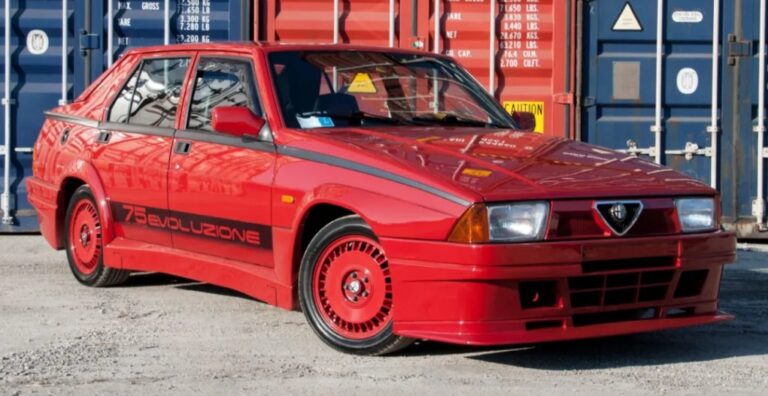
Alfa Romeo’s engineering philosophy remained stubbornly focused on complex, high-revving engines and sophisticated suspension systems, which became increasingly expensive to produce. By the early 1980s, the company was hemorrhaging money. The transition from rear-wheel-drive to front-wheel-drive platforms (the Alfa Romeo 33 and Alfa Romeo 75) was rocky, and quality control issues plagued the brand.
The Italian government, still the majority shareholder through IRI, knew Alfa Romeo could not survive alone. After failed negotiations with Ford and other interested parties, a merger was arranged with a fellow Italian automaker.
In 1986, Alfa Romeo was sold to Fiat (Fabbrica Italiana Automobili Torino). This was not a hostile takeover but a strategic acquisition by Fiat, led by Gianni Agnelli. The sale was finalized for approximately 1.2 billion lire (equivalent to roughly $1 billion USD at the time). Fiat integrated Alfa Romeo into its group, sharing platforms and components to reduce costs while attempting to preserve the brand’s sporting heritage.
The Modern Era: Stellantis and Beyond (1986–Present)
Under Fiat’s ownership, Alfa Romeo experienced a renaissance in the 1990s with the launch of the Alfa Romeo 155 and the legendary Alfa Romeo 155 V6 Ti, a touring car racer that dominated the DTM (German Touring Car Championship) with its innovative “Twin Spark” engine technology.
However, the 2000s and 2010s were turbulent. Quality issues and a lack of consistent product planning plagued the brand. The Alfa Romeo 159 and Alfa Romeo Brera were beautiful but heavy, failing to recapture the agility of older Alfas. The company struggled to penetrate the lucrative U.S. market, which it had abandoned in 1995.
Alfa Romeo returned to the United States in 2015 with the Alfa Romeo 4C sports car, followed by the Giulia sedan and Alfa Romeo Stelvio SUV in 2017. These vehicles were critical to the brand’s survival, offering modern technology (like the class-leading 50/50 weight distribution in the Giulia) wrapped in Italian style.
In 2021, Fiat Chrysler Automobiles (FCA) merged with the French PSA Group to form Stellantis, a massive automotive conglomerate. Alfa Romeo is now a brand under the Stellantis umbrella, sharing resources with Jeep, Dodge, and Maserati. The current strategy focuses on electrification; the company recently launched the Alfa Romeo Tonale, a plug-in hybrid compact SUV, signaling a shift toward a fully electric future by 2027.
What Makes Alfa Romeo Different?
While brands like BMW prioritize driving dynamics through technical precision, and Mercedes-Benz focuses on luxury cars, Alfa Romeo is distinct because it prioritizes emotion. Alfa engineers often speak of “ingegneria passionale” (passionate engineering).
The difference lies in the sensory experience. An Alfa engine note is tuned to be musical, not just efficient. The steering feedback is designed to communicate every nuance of the road surface to the driver’s fingertips. The design language, often penned by the legendary Pininfarina or Bertone studios, emphasizes curvaceous, organic shapes that mimic the human form, avoiding the aggressive, angular lines of German competitors. An Alfa is rarely the most reliable car in its class, nor the most practical, but it is almost always the one that stirs the soul.
Racing Heritage: The Quadrifoglio
Alfa Romeo’s racing program is the bedrock of its identity. The Quadrifoglio (four-leaf clover) badge, which adorns the high-performance versions of their road cars, originated in 1923 when driver Ugo Sivocci painted a clover on his car for luck before winning the Targa Florio. Since then, Alfa’s racing achievements have been staggering:
- 1925: First Grand Prix World Championship.
- 1950 & 1951: Formula One World Championships (the only manufacturer to win the first two F1 championships).
- 1975: European Touring Car Championship (with the Alfa Romeo Alfetta GTV).
- 1993: DTM Touring Car Championship (with the Alfa Romeo 155 V6 Ti).
Today, Alfa Romeo competes in Formula One as a works team (currently operating as Stake F1 Team Kick Sauber, with Alfa’s technical partnership ending in 2023, though the brand remains deeply tied to the sport’s history).
Factory Operations
Alfa Romeo’s manufacturing is a blend of tradition and modernity. The historic Portello factory in Milan, where the company was founded, closed in 1965 and is now a shopping center. The heart of Alfa’s production moved to the Arese plant, which currently serves as the brand’s headquarters and houses the historical museum (Museo Storico Alfa Romeo).
However, modern production is centered at the Pomigliano d’Arco plant in southern Italy. This massive facility was modernized in the 2010s to produce the Giulia and Stelvio. It utilizes the “World Class Manufacturing” (WCM) methodology, a high standard of production efficiency and quality control shared across the Stellantis group. The assembly line is highly robotic, yet skilled craftsmen still handle critical finishing touches, particularly on leather interiors and paintwork, ensuring the bespoke feel expected of an Italian luxury vehicle.
U.S. Consumer Reception
Alfa Romeo’s relationship with the American consumer has been a rollercoaster. The brand first entered the U.S. market in the 1950s and gained a cult following among enthusiasts who appreciated the nimble handling of the Giulietta and Giulia sedans. However, the brand withdrew in 1995 due to declining sales and stringent emissions regulations.
Since its return in 2015, reception has been mixed. Automotive journalists universally praise the driving dynamics of the Giulia and Stelvio; the Giulia Quadrifoglio, in particular, is often cited as a better driver’s car than the BMW M3. However, the U.S. consumer is historically risk-averse regarding reliability and resale value. Alfa has struggled to shake a reputation for electrical gremlins and poor build quality from its early return years. While sales have grown, they remain a niche volume compared to German rivals. In 2023, Alfa Romeo sold approximately 43,000 vehicles in the U.S., a modest figure compared to the hundreds of thousands sold by BMW or Mercedes.
Model History and Sales Figures
First Production Model:
- Alfa Romeo 24 HP (1910): Produced from 1910 to 1913. Approximately 200 units were built. It was a large, open-top touring car that established the brand’s reputation for performance.
Latest Model (as of 2024):
- Alfa Romeo Junior: A subcompact electric crossover introduced in 2024. It is the brand’s first mass-market EV, built on the Stellantis e-CMP platform.
- U.S. Status: As of late 2024, the Junior is primarily for the European market. The latest model available in the U.S. is the 2024 Alfa Romeo Tonale (Plug-in Hybrid).
The Most Popular Vehicle: Alfa Romeo Giulietta (1954–1965) While the modern Stelvio SUV is currently the sales leader in volume, the Alfa Romeo Giulietta (specifically the Sprint coupe and Spider) is the most historically significant and beloved model.
- Why it was popular: It offered Ferrari-like performance at a fraction of the price. The 1.3-liter engine revved to 6,500 RPM, and the lightweight chassis provided handling that outclassed larger, more powerful cars. It was the car that made performance accessible.
- Sales Figures: Over 177,000 units were produced between 1954 and 1965 (including the Giulietta Spider by Pininfarina). In the U.S., it became a symbol of the “La Dolce Vita” lifestyle, popular with celebrities and young professionals.
Modern Sales Context:
- Alfa Romeo Stelvio (2017–Present): The brand’s volume leader.
- Global Sales (2023): Approximately 68,000 units.
- U.S. Sales (2023): Approximately 26,000 units.
- Alfa Romeo Giulia (2016–Present):
- Global Sales (2023): Approximately 35,000 units.
- U.S. Sales (2023): Approximately 8,000 units.
Current Status and Outlook
Alfa Romeo is very much alive and currently undergoing a massive transformation under Stellantis. The brand’s current leadership has set an ambitious goal: to become a fully electric brand by 2027. This transition is risky; the brand’s identity is deeply tied to the sound and feel of internal combustion engines, particularly the “Twin Turbo V6” found in the Giulia and Stelvio Quadrifoglio models.
The outlook is cautiously optimistic. The recent launch of the Alfa Romeo 33 Stradale (a limited-run, $2.6 million supercar) has reignited excitement and proven that Alfa can still build world-class performance machines. However, the success of the brand hinges on the upcoming electric replacements for the Giulia and Stelvio, scheduled for 2025 and 2026.
If Stellantis can maintain Alfa’s driving dynamics while integrating modern EV technology, the “Biscione” (the serpent emblem of Milan) will continue to slither through the automotive landscape for another century. If it fails to convince enthusiasts that an electric Alfa can still possess “anima” (soul), the brand risks fading into a footnote of automotive history. For now, Alfa Romeo remains a beacon of Italian passion in a world increasingly dominated by autonomous, utilitarian transport.