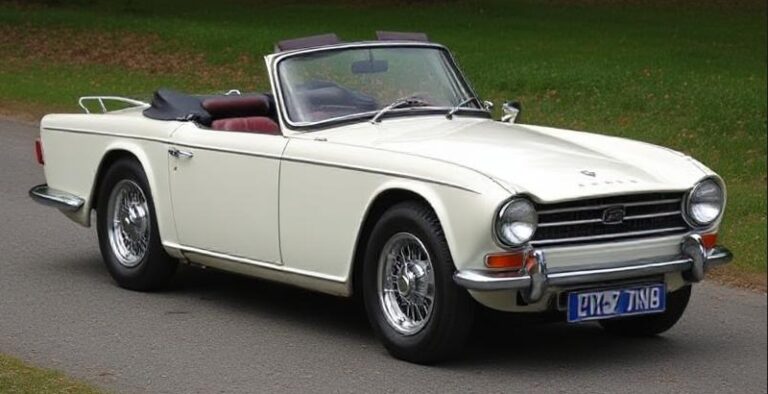
The History of Ford
The Blue Oval Legacy: A Century of Innovation, Struggle, and American Grit
In the pantheon of American industry, few names evoke the same sense of history, innovation, and sheer resilience as Ford. From the dirt floors of a Michigan workshop to the sprawling global conglomerate of today, Ford is not merely an automobile manufacturer; it is a defining character in the narrative of the 20th and 21st centuries. This is the story of the company that put the world on wheels, weathered economic collapses, revolutionized production, and remained, for better or worse, inextricably linked to the American identity.
The Founders: Visionaries of the Plains
The story of Ford begins with Henry Ford (1863–1947), a man born on a farm in Greenfield Township, Michigan. Unlike the polished industrialists of the East Coast, Ford was a tinkerer, a mechanical savant who possessed an innate understanding of how things worked. By 1891, he had moved to Detroit, working as an engineer for the Edison Illuminating Company while experimenting with internal combustion engines in his spare time.
Ford’s first foray into automotive manufacturing was the Detroit Automobile Company, founded in 1899. However, the venture was short-lived, dissolving in 1901 due to disputes over product quality and direction. Undeterred, Ford incorporated the Ford Motor Company on June 16, 1903. He was joined by a group of investors, most notably Alexander Malcomson, a wealthy coal dealer. While Ford provided the technical vision, Malcomson provided the capital. Over time, Ford famously bought out his partners, eventually gaining sole control over the company’s direction—a trait that would define the company’s rigid, independent culture for decades.
The Early Years and the Model T (1903–1927)
Ford Motor Company began operations in a small factory on Mack Avenue in Detroit with a workforce of just a dozen employees. The company’s first vehicle, the 1903 Ford Model A, was a humble two-seater runabout powered by a two-cylinder engine producing 8 horsepower. It sold for $850 (equivalent to roughly $29,000 today), and the company sold 1,750 units in its first year, turning a profit.
However, the true revolution arrived in 1908. The company introduced the Ford Model T, affectionately known as the “Tin Lizzie.” Designed to be rugged, easy to operate, and inexpensive, it was the vehicle for the common man. To achieve this affordability, Ford implemented the moving assembly line in 1913 at his Highland Park plant. This innovation reduced the chassis assembly time from 12.5 hours to just 93 minutes.
The impact was staggering. By 1918, half of all the cars in the United States were Model Ts. Production continued until May 26, 1927, with over 15 million units sold. The Model T democratized travel, allowing rural Americans to access markets and cities, fundamentally reshaping the geography of the nation.
The Great Depression and the V8 (1927–1941)
As the 1920s progressed, General Motors (GM) began offering more stylish, varied models, threatening Ford’s dominance. Henry Ford, stubborn and resistant to change, refused to update the Model T. In 1927, he made the bold decision to shut down production lines to retool for the Model A. The transition was costly and risky, occurring just before the Wall Street Crash of 1929.
When the Great Depression struck, Ford, like all manufacturers, faced plummeting sales. The company slashed wages and laid off workers, leading to significant labor unrest. To differentiate his product from GM and Chrysler, Ford introduced the Ford Flathead V8 engine in 1932. It was the first affordable V8 engine on the market, offering superior power for the price and becoming an instant icon among performance enthusiasts.
World War II and the “Arsenal of Democracy”
The 1930s were marred by labor struggles, culminating in the 1941 Ford Strike. After a tense standoff, Henry Ford eventually signed a contract with the United Auto Workers (UAW), establishing the precedent for unionized labor in the American auto industry.
When World War II engulfed the globe, Ford halted civilian vehicle production to support the Allied war effort. Under the leadership of Henry’s son, Edsel Ford (who had served as president until his death in 1943), and later Henry Ford II, the company became the “Arsenal of Democracy.” The massive Willow Run plant, built in just 87 days, produced a B-24 Liberator bomber every 63 minutes at its peak. Ford also produced over 500,000 engines for military use, alongside tanks and jeeps.
Post-War Struggles and the Renaissance (1945–1970)
Following the war, Ford faced a crisis of leadership and identity. The aging Henry Ford had resisted modern management techniques, leaving the company disorganized and inefficient. In 1945, Henry Ford II was named president. He famously cleaned house, firing many of his grandfather’s loyalists and bringing in a team of financial experts known as the “Whiz Kids” (including Robert McNamara) to implement modern data-driven management.
This era produced the Ford F-Series trucks (introduced in 1948) and the Ford Cortina. However, the crown jewel of this period was the 1964 Ford Mustang. Conceived by Lee Iacocca, the Mustang created the “pony car” segment. It was stylish, affordable, and customizable. On its debut weekend, dealers sold 22,000 units. The Mustang revitalized the company’s image and profitability, proving Ford could still capture the youth market.
The “Malaise Era” and the Pinto Crisis (1970–1990)
The 1970s brought new hardships. The 1973 oil crisis shocked consumers with high gas prices, damaging the sales of Ford’s large, V8-powered cars. The company scrambled to produce smaller, fuel-efficient vehicles, most notably the Ford Pinto.
The Pinto became Ford’s greatest PR nightmare. In 1978, the National Highway Traffic Safety Administration (NHTSA) revealed that the Pinto’s fuel tank was vulnerable to rupture in rear-end collisions, leading to fires. Ford had conducted internal cost-benefit analyses in the late 1960s and determined that paying out lawsuits for burn deaths was cheaper than recalling the vehicles to fix the design (a cost of $137 million versus $49.5 million in liability). This revelation led to a public outcry, congressional hearings, and criminal charges against Ford (though the company was eventually acquitted).
The Pinto crisis, combined with the “Malaise Era” of poor build quality and underpowered engines across the American auto industry, left Ford struggling. They resolved the issue by aggressively improving quality control under the new leadership of Philip Caldwell in 1980, introducing the “Quality is Job 1” campaign, and launching the highly successful Ford Taurus in 1985—a futuristic, aerodynamic sedan that saved the company from bankruptcy.
Mergers, Acquisitions, and Modern Struggles
Unlike its rivals, Ford has largely remained an independent entity, avoiding a buyout by another automaker. However, it engaged in significant mergers and partnerships.
In 1999, Ford purchased the luxury automotive arm of the British company Land Rover (along with Jaguar) to expand its premium portfolio. They also acquired Volvo Cars that year. However, these acquisitions proved financially draining. Following the 2008 financial crisis, Ford faced a liquidity crisis.
The Great Recession and the Way Forward (2008–Present) Unlike General Motors and Chrysler, which required government bailouts and bankruptcy restructuring, Ford managed to survive on its own. This was largely due to CEO Alan Mulally’s “One Ford” plan, implemented in 2006. Mulally mortgaged all of Ford’s assets, including the Blue Oval logo, to secure a $23.6 billion line of credit years before the crash hit. This foresight allowed Ford to weather the recession without taxpayer aid.
During this time, Ford divested from its luxury acquisitions: Jaguar and Land Rover were sold to Tata Motors (India) in 2008; Volvo was sold to Geely (China) in 2010. Ford streamlined its focus to its core brands: Ford and Lincoln.
What Makes Ford Different?
Ford differs from competitors like GM and Toyota in several ways. First, its corporate structure is simpler; for most of its history, it has been controlled by the Ford family through a dual-class stock structure, giving the family outsized voting power and a long-term perspective that public shareholders sometimes lack.
Second, Ford’s cultural identity is deeply tied to the working class. While GM sold status (Cadillac) and Chrysler sold performance (Dodge), Ford sold utility. This is most evident in the F-Series truck line, which has been the best-selling vehicle in America for over 40 years.
Racing Programs
Ford has a storied history in motorsports. In the 1960s, Carroll Shelby’s Mustangs dominated the Sports Car Club of America (SCCA). In 1966, a Ford GT40 Mk.II famously won the 24 Hours of Le Mans, breaking Ferrari’s winning streak—an event dramatized in the film Ford v Ferrari.
In the modern era, Ford returned to Le Mans in 2016 with the GT, winning the GTE Pro class exactly 50 years after their first victory. In NASCAR, the Ford Mustang has been a dominant force in the Cup Series, with drivers like Dale Jarrett and Matt Kenseth securing championships.
Factory Operations and Innovation
Ford’s manufacturing footprint is massive. The River Rouge Complex in Dearborn, Michigan, was once the largest factory in the world, encompassing its own steel mills, docks, and power plant. While modern manufacturing has become more automated and decentralized, with many parts sourced globally, Ford maintains significant production in the U.S. (Michigan, Kentucky, and Ohio), Mexico, and China.
In recent years, Ford has pivoted toward electrification. In 2022, the company formally split into two divisions: Ford Blue (handling traditional gas and diesel engines) and Ford Model e (handling electric vehicles and software). The Rouge Electric Vehicle Center currently produces the F-150 Lightning, marking a massive gamble on the future of the American pickup truck.
Vehicle Models and Sales Figures
- First Vehicle Produced: The 1903 Ford Model A. Produced from 1903 to 1904. The company sold approximately 1,750 units, earning a net profit of roughly $37,000 (about $1.3 million today).
- Latest Vehicle Model: The 2025 Ford Mustang GT (S650). The latest iteration of the legendary pony car. In 2023, the Mustang remained the best-selling sports coupe in America. The hybrid-electric Ford Maverick compact pickup has also seen explosive popularity since its 2022 debut, with over 100,000 units sold annually.
- Most Popular Vehicle: The Ford F-Series (specifically the F-150).
- Why: It is the ultimate utility vehicle, adaptable as a work truck, a family hauler, or a status symbol. Its durability and capability have made it the standard for American pickups.
- Sales Figures:
- U.S.: The F-Series has been the best-selling truck for 47 consecutive years and the best-selling vehicle in the U.S. for 42 years. In 2023 alone, Ford sold approximately 750,789 F-Series trucks in the U.S.
- Global: Ford sells the F-Series in select global markets, but the vast majority of its sales come from North America. Total global sales are estimated at roughly 850,000 to 900,000 units annually.
Marketing and Major Events
Ford’s marketing has often leaned on patriotism and nostalgia. The “Built Ford Tough” campaign, launched in the 1970s and revitalized in the 2000s, is one of the longest-running and most successful ad slogans in history, reinforcing the durability of the F-Series.
A defining moment in Ford’s modern history was CEO Jim Farley’s launch of the F-150 Lightning in 2021. The event was a strategic masterclass, emphasizing that the electric truck would still serve the needs of the traditional construction worker and rancher, directly addressing the skepticism surrounding EVs in the American heartland.
Consumer Reception
U.S. consumer reception of Ford is a study in duality. The brand enjoys intense loyalty, particularly regarding its trucks and Mustangs. The F-150 is often praised for its “best-in-class” towing and payload capabilities, and the company’s infotainment system, SYNC, has improved significantly in reliability.
However, the brand has struggled with quality control issues in recent years. In 2022 and 2023, Ford led the industry in the number of recalls, a lingering headache from the complexity of modern software and supply chain shortages. Despite this, the American consumer remains forgiving of Ford, largely due to the perceived value and capability of its trucks.
Current Status and Outlook
Ford Motor Company is alive, publicly traded (NYSE: F), and remains one of the largest automakers in the world by revenue. The company is currently navigating the industry’s most significant shift since the invention of the assembly line: the transition to electric vehicles.
The outlook is ambitious but uncertain. Ford has committed over $50 billion to EV development through 2026. The company faces stiff competition from Tesla, as well as legacy rivals and new Chinese entrants. However, Ford’s massive installed base of truck buyers provides a unique advantage: the opportunity to electrify the best-selling vehicle nameplate in the world.
Conclusion
From Henry Ford’s first horseless carriage to the high-tech F-150 Lightning of today, the Ford Motor Company has served as a mirror to American society. It has weathered depressions, wars, scandals, and near-bankruptcy. While the automotive landscape changes rapidly, Ford’s strategy remains rooted in the philosophy that built the company: building vehicles for the people who work, drive, and dream in the heart of America. As the industry pivots to batteries and software, the Blue Oval’s endurance suggests it will remain a central figure in the automotive world for decades to come.