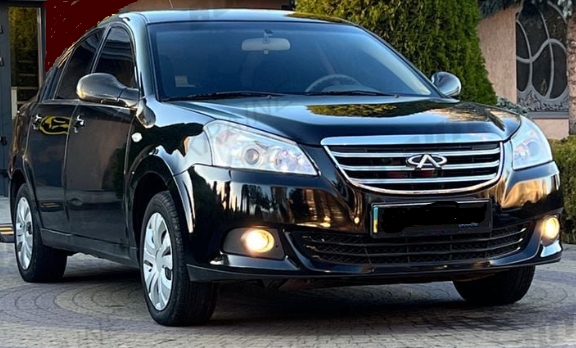
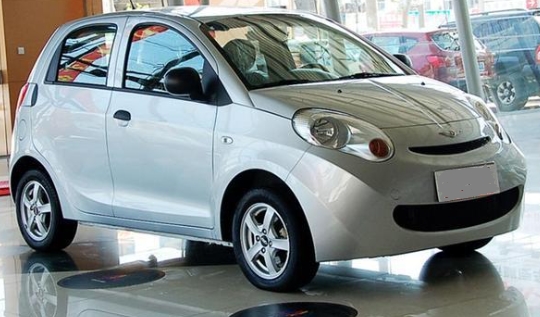
The History of Seres Group (AITO, DFSK, Glory, Fengon, Ruichi, Seres)
From Shock Absorbers to Smart Electric Vehicles
Seres Group is one of the most unusual success stories in the modern automotive industry. Unlike many Chinese automakers that began as state-owned enterprises, Seres developed from a privately owned manufacturing business into a global electric vehicle company associated with intelligent technology, premium SUVs, and a high-profile partnership with Huawei. Over several decades, the company evolved through multiple identities, including Sokon, DFSK, Fengon, Seres, and AITO, while surviving financial instability, competitive pressure, and major strategic transitions.
Today, Seres Group is recognized as a fast-growing Chinese automaker specializing in electric and extended-range electric vehicles. Its brands include AITO, DFSK, Fengon, Ruichi, and Seres. The company remains in operation and has become one of China’s fastest-rising premium EV manufacturers.
Origins of the Company
Seres Group traces its roots back to September 1986 in Chongqing, China. The original business was called Chongqing Baxian Fenghuang Electronic Factory. It was founded by Zhang Xinghai and several business partners. Zhang Xinghai came from a modest background in Chongqing and initially worked in component manufacturing rather than vehicle production. He was known for his entrepreneurial mindset during the early years of China’s economic reforms.
The company’s earliest products were springs and small components for household appliances and automotive seating systems. During the late 1980s and early 1990s, the company expanded rapidly because of growing industrial demand in China and Japan. According to company histories, the business reportedly achieved a dominant share of certain spring and component markets in China during its early years.
In 1996, the company established Chongqing Yu’an Shock Absorber Company. This represented a major turning point because the business shifted toward automotive parts manufacturing. The new factory specialized in shock absorbers for cars and motorcycles and eventually produced more than 1.5 million units annually.
The company later reorganized into Chongqing Yu’an Innovation Technology Group. By the late 1990s, Zhang Xinghai recognized that simply supplying parts would limit long-term growth. He believed Chinese automakers would eventually move beyond low-cost transportation and embrace larger-scale vehicle production.
Formation of DFSK
One of the most important moments in company history occurred in 2003 when Sokon formed a joint venture with Dongfeng Motor Corporation. The partnership created Dongfeng Sokon Automobile, internationally known as DFSK Motor.
The initials “DFSK” stood for Dongfeng Sokon. Dongfeng brought manufacturing experience, state-backed resources, and national distribution capability, while Sokon contributed entrepreneurial flexibility and production expertise.
The joint venture officially began operations on June 27, 2003. DFSK initially focused on inexpensive commercial vehicles, microvans, and compact utility trucks aimed at small businesses and rural buyers. The company entered operation during a period when China’s economy was rapidly industrializing and demand for affordable transportation exploded.
Some early DFSK models included:
DFSK became particularly successful in export markets because its vehicles were inexpensive and mechanically simple. The company expanded into South America, Southeast Asia, the Middle East, Africa, and parts of Europe. By the late 2000s, DFSK was among the first Chinese automakers to achieve certain European certifications for vehicle exports.
Expansion Into Passenger Vehicles
As the company matured, it moved beyond commercial transportation into passenger SUVs and family vehicles. During the 2010s, DFSK launched the Fengguang passenger division, internationally marketed under the name Fengon or Glory in some countries.
Popular models included:
The DFSK Glory 580 became one of the company’s most important products. Introduced in 2016, it significantly improved the company’s reputation because it offered modern styling, affordable pricing, and reasonable technology features. The model sold well in China and several export markets, including Indonesia and South America.
In May 2012, DFSK produced its one-millionth vehicle, demonstrating how rapidly the company had expanded.
Public Listing and Financial Growth
On June 15, 2016, the company was listed on the Shanghai Stock Exchange. At the time, it was still commonly known as Chongqing Sokon Industry Group.
The public offering gave the company access to greater investment capital. Around the same time, management recognized that the future of the automotive industry would likely shift toward electric vehicles.
Rather than rely solely on gasoline-powered vans and SUVs, Sokon began investing heavily in electrification.
Creation of Seres and SF Motors
In 2016, the company founded SF Motors in Santa Clara, California. The new business later became the Seres automotive brand.
The goal was ambitious: develop premium electric vehicles using American engineering expertise and Chinese manufacturing capacity.
SF Motors established research and development facilities in California, Michigan, and Chongqing. It also purchased a former manufacturing plant from AM General in Mishawaka, Indiana.
This represented one of the boldest overseas investments by a Chinese automaker at the time.
However, the company soon encountered difficulties.
Struggles and Setbacks
The transition into premium electric vehicles proved extremely expensive. SF Motors struggled with production delays, engineering challenges, and weak consumer awareness in the United States.
By the late 2010s, the company reportedly laid off workers and delayed its original American launch plans. The EV market had become increasingly competitive due to companies such as Tesla and emerging Chinese rivals like NIO and XPeng.
The company adapted by shifting its strategy. Rather than aggressively entering the U.S. market, Seres concentrated more heavily on China, where EV demand was growing rapidly.
This strategic retreat likely prevented severe financial losses.
Ownership Restructuring With Dongfeng
In November 2018, the company underwent a major restructuring. Sokon acquired Dongfeng’s share of the DFSK joint venture for approximately $670 million. In exchange, Dongfeng acquired roughly 26% ownership in Sokon Group.
This was not a full buyout of Sokon by Dongfeng. Instead, it was a restructuring agreement that gave Sokon greater control over DFSK operations while keeping Dongfeng as a major shareholder.
The move allowed the company to make decisions more quickly and transition faster toward electrification.
Partnership With Huawei and the Birth of AITO
The defining moment in modern Seres history came in 2021 when the company partnered with Huawei.
Huawei had been searching for automotive partners after facing restrictions in global smartphone markets. Seres needed advanced software, electronics, and intelligent driving technology.
Together, they created AITO, a premium smart electric vehicle brand launched in December 2021.
AITO stands for “Adding Intelligence to Auto.”
The partnership was unusual because Huawei became deeply involved in product design, software systems, retail distribution, marketing, and customer experience. Seres handled engineering and manufacturing.
This partnership differentiated Seres from most other automakers. Instead of developing every technology internally, the company leveraged Huawei’s software ecosystem, HarmonyOS integration, and electronics expertise.
The first major AITO model was the:
Other successful models followed:
The AITO M9 became the company’s most successful and recognizable vehicle overall. The model achieved strong sales because it combined luxury-level interior technology, long-range capability, advanced software integration, and aggressive pricing compared with German luxury competitors.
According to industry reports, AITO sales surged dramatically between 2022 and 2025, helping Seres become one of China’s fastest-growing premium EV brands.
Rebranding to Seres Group
In 2022, Chongqing Sokon officially changed its corporate name to Seres Group.
The rebranding reflected the company’s strategic transition away from inexpensive commercial vehicles and toward premium electric mobility.
Management believed the Seres name better represented the company’s future direction and global ambitions.
Brand Portfolio
AITO
AITO focuses on premium smart SUVs developed with Huawei.
Notable models:
- AITO M5
- AITO M7
- AITO M9
DFSK
DFSK remains focused on affordable commercial vehicles and exports.
Notable models:
- DFSK K01
- DFSK C35
Glory / Fengon
Glory and Fengon represent the company’s mainstream SUV and passenger vehicle brands.
Notable models:
- DFSK Glory 580
- Fengon ix7
Seres
The Seres brand concentrates on intelligent EVs and exports.
Notable models:
Ruichi
Ruichi primarily develops electric logistics and commercial vehicles.
Notable models:
Factory Operations
Seres Group operates multiple manufacturing facilities in Chongqing and Hubei, China.
The company’s newer “smart factories” heavily emphasize automation and intelligent manufacturing systems. Facilities such as the Liangjiang Intelligent Factory and Phoenix Intelligent Factory use robotics, digital quality control systems, and connected production lines.
Huawei’s software integration also extends into manufacturing analysis and vehicle diagnostics.
Unlike many legacy automakers, Seres designed much of its modern EV production infrastructure specifically for electric vehicles rather than converting older gasoline-car assembly plants.
Marketing Strategies and Major Events
Seres and Huawei aggressively marketed AITO vehicles through Huawei retail stores across China. This was highly unusual because consumers could effectively shop for vehicles inside electronics stores.
The strategy gave AITO exposure to millions of Huawei customers and helped the brand rapidly gain visibility.
One major milestone occurred when the AITO M7 reportedly received more than 10,000 orders within hours of launch in 2022.
Marketing campaigns focused heavily on:
- Smart cockpit technology
- Voice-command systems
- Huawei HarmonyOS integration
- Luxury features at lower prices than German rivals
- Family-oriented SUV practicality
Racing Programs
Unlike some global automakers, Seres Group has had very limited involvement in major international motorsports. The company primarily focused its investments on production expansion and EV technology rather than racing.
DFSK and related brands occasionally participated in promotional endurance or off-road events in export markets, but the company has not maintained a major factory-backed racing division comparable to companies such as Toyota or BMW.
U.S. Consumer Reception
Seres vehicles have had limited impact in the United States.
The company originally planned to enter the American EV market through SF Motors but delayed those efforts. As a result, mainstream U.S. consumers remain largely unfamiliar with the Seres brand.
Automotive enthusiasts in the U.S. generally viewed the company as an ambitious but relatively unknown Chinese startup during its early American operations.
Globally, however, the company achieved much stronger reception, especially in China.
Sales Figures
Seres Group’s sales history reflects dramatic changes over time.
The company sold more than 400,000 vehicles annually during its DFSK commercial-vehicle peak years. Total group sales reportedly reached approximately 497,000 vehicles in 2024.
AITO sales alone reportedly exceeded 389,000 units in 2024.
U.S. sales figures have been extremely limited because Seres never achieved a large-scale retail launch in America.
Global exports under DFSK and related brands exceeded 500,000 cumulative overseas vehicles according to company information.
What Makes Seres Different
Several factors distinguish Seres Group from other automakers:
- Private Origins
Unlike many Chinese automakers, Seres began as a private company rather than a state-owned manufacturer. - Technology Partnerships
The Huawei alliance created one of the strongest software-focused automotive partnerships in China. - Rapid Reinvention
The company successfully transitioned from low-cost commercial vans to premium intelligent SUVs. - Hybrid Identity
Seres combines automotive manufacturing with consumer electronics integration more deeply than many competitors. - Global Engineering Approach
The company established engineering operations in both China and the United States during its EV expansion phase.
Current Status and Future Outlook
As of 2026, Seres Group remains active and financially significant within China’s EV industry.
The company’s outlook appears considerably stronger than it did during its earlier struggles. AITO has become one of China’s major premium EV brands, and Huawei’s support continues to provide technological advantages and marketing strength.
Industry analysts increasingly view Seres as a serious competitor to premium automakers in China’s intelligent vehicle market. Some reports even noted the company outperforming traditional luxury brands in segments of the Chinese high-end EV market by 2025.
However, challenges remain:
- Intense EV competition in China
- Price wars among manufacturers
- Dependence on Huawei
- Limited brand recognition outside Asia
Even so, Seres Group’s transformation from a small spring manufacturer in 1986 into a major intelligent EV producer represents one of the more remarkable reinventions in the modern automotive industry.