The Little Giant: A Complete History of the Fiat Pandina
In the pantheon of automotive history, few vehicles embody the spirit of accessible motoring quite like the Fiat Panda. Since its introduction in 1980, it has been a symbol of pragmatic, no-frills utility. However, within the Panda’s long and storied lineage, one particular iteration stands out for its rugged capabilities and enduring popularity, particularly in the Alpine regions of Europe: the Fiat Pandina.
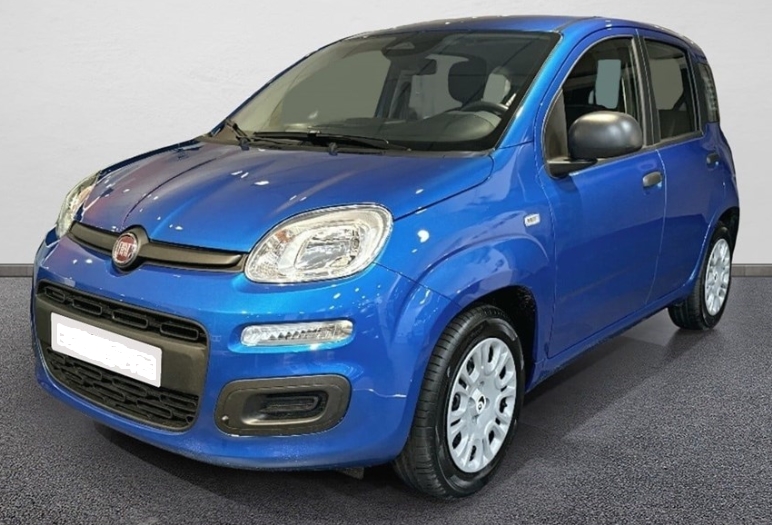
While often mistaken for a standalone model, the Pandina is, in fact, a specialized variant of the second-generation Fiat Panda (Tipo 169). Launched in the mid-1980s, the Pandina bridged the gap between a standard city car and a mini-SUV, offering four-wheel drive and increased ground clearance in a package that was both affordable and reliable.
This article explores the evolution of the Fiat Pandina, tracing its origins, detailing its mechanical specifications, and examining why this “little giant” remains a cult classic today.
The Genesis: A New Panda for a New Era (1980–1986)
To understand the Pandina, one must first understand the vehicle it was based on. The original Fiat Panda (Type 141) was launched in 1980. Designed by Giorgetto Giugiaro of Italdesign, it was a masterpiece of simplicity. It had no modern safety features, no electronic aids, and a rudimentary interior, yet it was robust, spacious, and incredibly economical.
By 1986, the automotive landscape was changing. Rivals like the Renault 4 and the Citroën 2CV were aging, and Fiat needed to update the Panda to meet modern standards of safety, comfort, and performance. This led to the launch of the second-generation Panda, known internally as Type 169.
The second-generation Panda featured a restyled body (though it retained the dimensions of the original), a more aerodynamic nose, and an updated interior. It was during this transition period that the seeds of the Pandina were sown.
.
THIS might be a great place to get your new car from!
Or for those who are into the “car flipping” business, here’s an excellent resource for you!

.
The Birth of the Pandina (1986)
The Fiat Pandina was introduced shortly after the launch of the second-generation Panda, debuting around late 1986/early 1987. It was conceived as a response to the growing demand for “all-terrain” city cars. In Italy, particularly in the northern regions like Piedmont and Lombardy, buyers wanted a vehicle that could navigate snowy mountain roads in winter but was small enough to park in the narrow streets of Turin or Milan.
The Pandina was essentially a factory-lifted version of the Panda 4×4. It combined the mechanical reliability of the standard Panda with enhanced off-road capabilities. While the standard Panda 4×4 was already competent on loose surfaces, the Pandina took this a step further with specific aesthetic and mechanical upgrades.
Mechanical Foundation and Engineering
The Pandina shared its mechanical underpinnings with the standard Panda 4×4, but with specific calibrations that set it apart.
The 4×4 System
The heart of the Pandina was its selectable four-wheel-drive system. Operated via a dashboard lever, this system allowed the driver to engage the front wheels for normal driving (reducing fuel consumption) or lock the center differential to distribute torque equally between the front and rear axles for low-traction conditions. This was a part-time 4WD system, not a full-time AWD setup, which kept the mechanics simple and robust.
Engines
Throughout its production run, the Pandina was offered with a limited but effective range of engines, primarily focused on torque rather than high speed.
- The 769cc Air-Cooled Twin (1987–1992): The original Pandina utilized the venerable air-cooled 769cc “146 B2” engine. This two-cylinder unit produced approximately 34 horsepower. While modest, it was lightweight and relatively punchy at low revs, making it ideal for off-roading.
- The 999cc Water-Cooled Inline-4 (1992–2003): As emissions regulations tightened, the air-cooled engine became obsolete. In 1992, with a mid-life facelift, the Pandina transitioned to the 999cc water-cooled “146 C” engine. This four-cylinder engine (50 hp) offered better refinement, higher top speeds, and improved heating for the cabin—crucial for a winter-focused vehicle.
Suspension and Chassis
The Pandina featured a heavy-duty suspension setup. The ground clearance was increased compared to the standard road-oriented Panda, thanks to longer springs and shock absorbers. The wheel arches were plastic-clad to protect the bodywork from mud and stone chips, a feature that became a visual trademark of the model. The tires were typically 155/70 R13 or 165/65 R13, mounted on rugged steel wheels, often painted in contrasting colors.
Model Evolution and Trim Levels (1986–2003)
Unlike modern vehicles that receive annual updates and complex trim hierarchies (SEL, Titanium, Sport, etc.), the Pandina’s lifecycle was characterized by longevity and minor revisions. The trim levels were often regional, varying between the Italian domestic market and export markets like Germany, France, and Scandinavia.
Phase 1: The Classic Pandina (1986–1992)
The first iteration is the purest form of the Pandina identity.
- Visual Identity: This model featured the original “boxy” design of the second-gen Panda with flat glass and sharp angles. It typically featured a contrasting black roof (or two-tone paint), black plastic bumpers, and specific side moldings.
- Trim Levels:
- Pandina Base: A spartan model focused on utility. It included vinyl seats, rubber floor mats, and a basic dashboard.
- Pandina SX (Sports Extra): A slightly upgraded version featuring cloth seats, a tachometer, and potentially a rear window wiper/washer (often optional on the base).
- Winter/Polar: In cold markets, this was a specific package that included a more efficient heater, defrosters for the side mirrors, and sometimes a fuel-fired auxiliary heater.
- Engine: 769cc Air-Cooled Twin (34 hp).
Phase 2: The Facelift and “Young” Variants (1992–1997)
In 1992, Fiat introduced a significant facelift to the Panda 4×4 family. The Pandina received the new 999cc engine and revised aesthetics.
- Visual Updates: The headlights became larger and more integrated, the rear lights were restyled, and the dashboard received a modernized design with a fabric finish. The exterior trim was updated with ribbed side moldings and redesigned wheel arch extensions.
- Trim Levels:
- Pandina 4×4: The standard model, now powered by the 1.0 Fire engine.
- Pandina Young: Introduced around 1994/1995, this was a lifestyle-oriented trim. It featured more vibrant color options (like the famous “Panda Red” or “Electric Blue”), sportier interior fabrics, and often included a sunroof. The “Young” aimed to capture a younger demographic who wanted a car with a “go-anywhere” image.
- Pandina Super: A higher specification available in some markets, offering upgraded upholstery and better sound insulation.
Phase 3: The Final Years (1997–2003)
As the 1990s drew to a close, the Pandina faced stiff competition from the Suzuki Jimny and the Fiat 500 (the 1998 city car, not the 2007 retro model). Production of the 4×4 Panda variants began to wind down in Western Europe but continued in other forms.
- Special Editions: In its final years, the Pandina was often sold as a “Winter” special edition in Alpine regions. These featured metallic paint, heated seats, and the 1.0 Fire engine.
- The End of an Era: By 2003, the second-generation Panda (Type 169) was phased out in Western Europe (though it continued production in Brazil until 2013). The Pandina nameplate effectively disappeared with it.
The Pandina in Motorsport
A brief but colorful chapter in the Pandina’s history is its involvement in motorsport. While not a factory racer like the Lancia Delta Integrale, the Pandina (specifically the 4×4) became a favorite in amateur rallies and hill climbs, particularly in Italy.
The lightweight chassis (under 900 kg), combined with the short wheelbase and 4WD, made it incredibly agile on loose surfaces. Local tuning shops offered modifications for the air-cooled engine, pushing horsepower well beyond the stock 34 hp. In the 1980s and 1990s, seeing a Pandina sliding sideways through a muddy forest stage was a common sight in regional Italian rallies.
Regional Variations: The Brazilian Connection
It is important to note that the “Pandina” nomenclature was used differently in South America. While the European Pandina was the 4×4 rugged variant, in Brazil, Fiat utilized the name for the Fiat Pandeiro (1991–1992) and later associated the Panda name with the local Fiat Uno production.
However, the true Pandina spirit—that of a robust, utilitarian vehicle—was most successfully transferred to the Brazilian market through the Fiat Uno 4×4 (Mille or Economy). While not officially badged as a Pandina in Brazil, the mechanical DNA (the 1.0 Fire engine and rugged suspension) was shared. The European Pandina remains the definitive version of this concept: a small, dual-purpose vehicle.
The Legacy and Future Outlook
Production of the Fiat Panda Type 169 ceased in Europe around 2003-2004, replaced temporarily by the Panda Cross (based on the 1998 Fiat Punto platform) and eventually the all-new Fiat Panda 4×4 in 2012.
The Pandina Today
Today, the Fiat Pandina is a prized classic in the used car market, especially in Northern Italy and Switzerland. Prices for well-maintained examples have been rising. Enthusiasts value it for its:
- Simplicity: It is easy to repair and lacks complex electronics.
- Capability: Its off-road ability still rivals that of modern crossovers.
- Character: It possesses a charm and honesty that modern cars lack.
The Future: Will We See a New Pandina?
With Fiat’s current focus on electrification (the 500e) and the success of the current Pandino (2012–present), there are no immediate plans to revive the “Pandina” nameplate. However, the spirit of the Pandina lives on in the Fiat Panda 4×4 and the Fiat Pandino (specifically the Cross trim).
The current Pandino Cross features the same DNA: high ground clearance, plastic cladding, and a capable 4×4 system. It is the spiritual successor to the Pandina, albeit with modern technology and safety standards. Fiat has even hinted at an electric 4×4 Pandino in the future, which would likely inherit the rugged, utilitarian ethos of the 1980s original.
Conclusion
The Fiat Pandina was more than just a trim level; it was a philosophy. In an era when 4×4 systems were reserved for expensive, heavy off-roaders, Fiat democratized the technology. They created a vehicle that was affordable enough for the masses yet capable enough for the mountains.
For nearly two decades, the Pandina served as a reliable companion to farmers, winter sports enthusiasts, and city dwellers alike. Its evolution—from the air-cooled 769cc twin of 1986 to the refined 999cc Fire engine of the 1990s—mirrored the progression of the automotive industry itself. Today, it stands as a testament to a time when cars were built to solve problems, not just to project status. The little giant has earned its place in history.