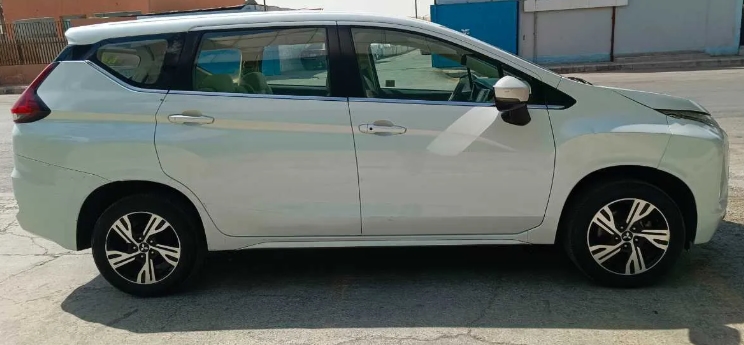
The Mitsubishi Xpander: How a Bold Crossover MPV Redefined the Family Vehicle
In the fiercely competitive landscape of the global automotive market, it is rare for a single model to fundamentally disrupt a well-established segment. Yet, that is precisely what the Mitsubishi Xpander accomplished. Arriving as a bold fusion of a practical Multi-Purpose Vehicle (MPV) and a ruggedly styled Sport Utility Vehicle (SUV), the Xpander didn’t just enter the market; it created a new benchmark for family mobility, particularly in Southeast Asia and other emerging markets. This is the story of its calculated conception, its market-shaking debut, its continuous evolution, and its future trajectory as a cornerstone of the modern Mitsubishi lineup.
A Calculated Genesis: Identifying a Gap in the Market
The story of the Xpander begins in the mid-2010s. For years, the compact seven-seater segment in regions like Southeast Asia was dominated by utilitarian, boxy MPVs. Models like the Toyota Avanza, Daihatsu Xenia, and Suzuki Ertiga were sales champions, prized for their practicality, affordability, and ability to carry large families. However, their design was often an afterthought, prioritizing function over form. Simultaneously, the global appetite for SUVs was exploding. Consumers were drawn to their commanding road presence, high ground clearance, and adventurous styling, but traditional SUVs often lacked the sheer interior flexibility and third-row seating of an MPV.
Mitsubishi’s engineers and designers saw an opportunity. What if they could create a vehicle that offered the non-negotiable seven-seat capacity and versatility of an MPV but wrapped it in the desirable, futuristic, and robust aesthetic of an SUV?
This vision was first showcased to the public in 2016 at the Gaikindo Indonesia International Auto Show (GIIAS) with the unveiling of the Mitsubishi XM Concept. The “XM” name was a portmanteau of “Crossover” and “MPV,” explicitly stating its mission. The concept’s aggressive styling, high-mounted slender lights, and muscular fenders were a radical departure from anything in the segment. It was a clear statement of intent, and the public response was overwhelmingly positive.
.

.
The Debut and Design Philosophy (2017-Present)
Leveraging the excitement generated by the concept, Mitsubishi officially launched the production version, named the Mitsubishi Xpander, at the same Indonesian auto show in August 2017. Production commenced at Mitsubishi’s new plant in Cikarang, Indonesia, which would serve as the global production hub for the model.
The production Xpander remained remarkably faithful to the XM Concept. Its most defining feature was the implementation of Mitsubishi’s “Dynamic Shield” front fascia. This design was revolutionary for its class, featuring a three-tiered lighting setup:
- Top Level: Slim, futuristic LED daytime running lights (DRLs) or position lights, flanking the top edge of the grille.
- Middle Level: Large, main halogen or LED headlamp clusters housed lower down in the bumper, a design choice that protected them from minor scrapes and gave the vehicle a unique, imposing look.
- Bottom Level: Fog lamps integrated into the lower bumper.
This radical front end, combined with sculpted body lines, flared wheel arches, and a unique “floating roof” C-pillar design, gave the Xpander a visual presence that made its competitors look dated overnight. Crucially, it also boasted a class-leading ground clearance of 205 mm, lending it the capability and confidence of an SUV on less-than-perfect roads.
Under the Hood: The Reliable Heart
From its launch until today, the Xpander has been powered by a single, reliable engine option: the 1.5-litre 4A91 MIVEC DOHC 16-valve petrol engine. MIVEC (Mitsubishi Innovative Valve timing Electronic Control system) technology helps optimize power and fuel efficiency across the rev range. This naturally aspirated four-cylinder engine produces approximately 103-105 horsepower and 141 Newton-meters of torque.
While these figures may seem modest, the engine was engineered for real-world usability, providing adequate performance for city driving and highway cruising, all while prioritizing fuel economy and low maintenance costs—key considerations for its target family audience.
Initially, the engine was paired with either a 5-speed manual transmission or a 4-speed automatic transmission. The latter, while durable, was eventually seen as a weak point in an era of more advanced gearboxes. This was rectified in a later facelift.
A Model for Every Family: Trim Levels and Variants
The Xpander was smartly offered in a range of trim levels to cater to different budgets and needs. While the specific names and features vary by country, the hierarchy generally follows a consistent pattern.
- Base Models (e.g., GLX, GLX Plus): These are the entry-level workhorses. They typically come with the core package: seven seats, the 1.5L engine, and essential safety features like dual airbags and ABS. They often feature steel wheels with hubcaps, a basic audio system, and manual air conditioning. The 5-speed manual transmission is most common at this level, with the automatic as an option.
- Mid-Range Models (e.g., GLS, Exceed): This is often the volume-selling sweet spot. These trims add significant creature comforts and aesthetic upgrades. Common features include alloy wheels, a touchscreen infotainment system with smartphone connectivity (Apple CarPlay and Android Auto), steering wheel-mounted audio controls, rear air-conditioning vents, and exterior chrome or silver accents.
- Top-Tier Models (e.g., Sport, Ultimate, GLS Sport): The flagship trims offer the complete Xpander experience. They build upon the mid-range models with features like keyless entry with push-button start, a leather-wrapped steering wheel, more premium seat upholstery, automatic climate control, and additional safety features like Active Stability Control (ASC), Traction Control Logic (TCL), and Hill Start Assist (HSA). Visually, they may also feature unique body kits, two-tone alloy wheels, and more extensive chrome detailing.
The Adventurous Sibling: The Xpander Cross (2019-Present)
Recognizing the strong appeal of the Xpander’s SUV-like qualities, Mitsubishi doubled down on this concept by launching the Mitsubishi Xpander Cross in late 2019. This wasn’t merely a cosmetic package; it was a distinct variant designed to be the “top-of-the-line SUV-style” model.
Key differences for the Xpander Cross included:
- Increased Ground Clearance: Raised to 225 mm, further enhancing its rough-road capability.
- Rugged Exterior Styling: It featured exclusive front and rear bumpers with prominent silver skid plates, black plastic body cladding around the wheel arches and side sills, larger and more aggressively designed alloy wheels, and functional roof rails.
- Premium Interior: The interior often sported a more upscale two-tone color scheme (e.g., black and brown) and more premium materials.
The Xpander Cross successfully blurred the lines between MPV and compact SUV even further, directly competing with vehicles like the Toyota Rush and Honda BR-V, and proved to be an immensely popular addition to the lineup.
Evolution and Refinement: The Major Facelift (2021)
To maintain its competitive edge, the Mitsubishi Xpander received a significant facelift for the 2022 model year (unveiled in late 2021). This update was more than just a cosmetic tweak; it addressed key areas of feedback and modernized the vehicle substantially.
The most noticeable change was a revised front end, which evolved the Dynamic Shield design to feature striking T-shaped LED headlights. The rear also received new T-shaped LED taillights and a redesigned bumper.
Inside, the cabin saw a major overhaul with a new horizontal dashboard design that felt more modern and premium. Higher-quality soft-touch materials were introduced, and top-tier models gained an electronic parking brake (EPB) with auto-hold function, a feature typically found in more expensive vehicles.
Perhaps the most important mechanical update was the replacement of the aging 4-speed automatic with a modern and efficient Continuously Variable Transmission (CVT). This change delivered a smoother driving experience, improved fuel economy, and better responsiveness, addressing one of the few criticisms of the original model.
Global Impact and Future Outlook
The Mitsubishi Xpander has been an undisputed commercial success. It quickly became one of the best-selling vehicles in Indonesia and the Philippines, frequently topping the sales charts in its segment. Its success wasn’t limited to Southeast Asia; Mitsubishi has exported the Xpander to over 40 countries across Latin America, the Middle East, and Africa, where its unique blend of style, space, and ruggedness has found a welcoming audience.
Looking ahead, the future of the Xpander is centered on electrification. Mitsubishi has officially confirmed that a hybrid electric vehicle (HEV) version of the Xpander is in development. This next-generation powertrain, likely to debut within the next couple of years, will be crucial for meeting stricter emissions standards and competing with hybrid offerings from rivals. The Xpander HEV will aim to deliver significantly improved fuel efficiency and lower emissions without sacrificing the practicality and space that define the model.
A full model change, or second generation, is also on the horizon. It will likely be built on a new platform, incorporate Mitsubishi’s latest “Robust & Ingenious” design philosophy, and feature even more advanced safety and technology features, ensuring the Xpander name continues to be a dominant force in the family vehicle segment for years to come.
In conclusion, the Mitsubishi Xpander is far more than just another car. It stands as a testament to smart, consumer-focused product planning. By correctly identifying a desire for SUV style with MPV practicality, Mitsubishi created a segment-buster that has won over hundreds of thousands of families around the world and revitalized the brand’s image. From its bold debut in 2017 to its future as a hybrid, the Xpander’s journey is a masterclass in giving the people exactly what they want, before they even knew they could ask for it.