The TVR Grantura: A British Icon of Performance and Innovation
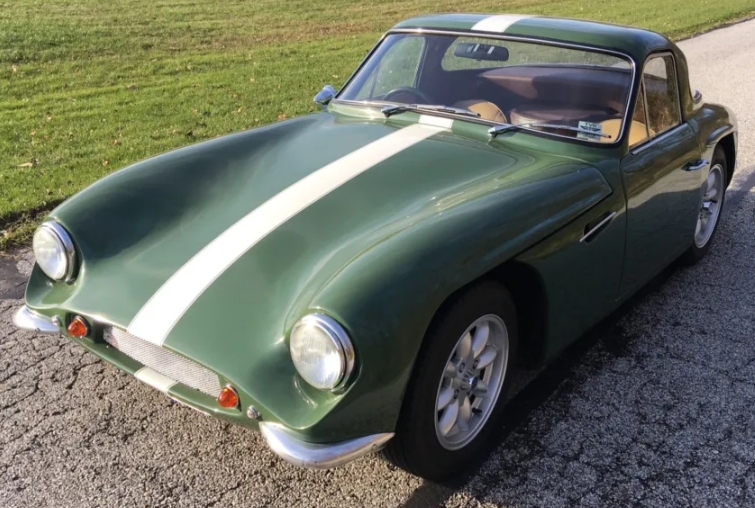
The TVR Grantura stands as one of the foundational models in the history of British sports car manufacturer TVR. Produced from 1958 to 1967, the Grantura was crucial to establishing TVR’s identity as a maker of performance-oriented sports cars. With its lightweight fiberglass body, innovative engineering, and strong racing pedigree, the Grantura helped set the stage for TVR’s later success with more powerful and exotic models.
Though its production run was relatively short compared to other TVR models, the Grantura is still considered a pivotal vehicle in the British sports car movement. It combined the charm of classic European sports cars with a distinctively British approach to design, performance, and affordability. This article delves into the evolution of the TVR Grantura, from its early days to its various models and trim levels, while also considering its lasting impact on TVR’s legacy.
The Birth of TVR and the Grantura (1954-1958)
The roots of the TVR Grantura can be traced back to 1954, when Trevor Wilkinson, the founder of TVR, set out to create a car that could combine affordability, performance, and unique British engineering. Initially, TVR focused on building small-scale, hand-crafted sports cars, with an emphasis on lightness and driving pleasure. Early TVRs, like the TVR Special and the TVR Sports, were built using steel bodies, but the company quickly recognized the potential of fiberglass as a lightweight alternative for car construction.
The introduction of the Grantura in 1958 marked a significant shift in TVR’s approach. Designed as a compact and stylish two-seater sports car, the Grantura was one of the first cars to use a fiberglass body in a mass-production setting. This allowed TVR to create a vehicle that was both lightweight and affordable, while still offering the performance enthusiasts craved.
.

.
Early Years: TVR Grantura I (1958-1961)
The first iteration of the TVR Grantura was the Grantura I, produced from 1958 to 1961. The Grantura I featured a 2.0-liter four-cylinder engine sourced from the Ford Zephyr and Ford Anglia. In this early form, the Grantura was designed as a small, two-seat roadster with minimal luxury but maximum driving enjoyment. Its fiberglass body was mounted on a steel chassis, which was common among TVR’s early models.
The Grantura I was designed to be lightweight and agile, with a top speed of approximately 100 mph (160 km/h), which was impressive for a car of its size and weight. The 0-60 mph sprint time was around 11-12 seconds, a respectable figure for the era. Though modest in power, the Grantura I was lauded for its handling, which became a defining characteristic of the Grantura lineage.
The Grantura I also had a reputation for its versatility. The car was offered with different body configurations, including a roadster version with a convertible roof and a coupe version with a fixed roof, allowing customers to choose based on their preferences. As a result, the early Grantura found success among enthusiasts who appreciated the car’s lightweight construction, handling prowess, and affordable price point.
The Grantura II (1961-1963): Power Boost and Performance Enhancements
In 1961, TVR introduced the Grantura II, a refined version of the original Grantura with notable upgrades. The most significant change was the introduction of a more powerful engine: the Ford 1.8-liter inline-six. This engine was sourced from the Ford Zephyr and offered about 100 horsepower, which represented a substantial increase in power compared to the Grantura I’s four-cylinder engine. The Grantura II could achieve a top speed of around 110 mph (177 km/h) and complete the 0-60 mph sprint in approximately 9 seconds, further establishing the Grantura’s reputation as a capable sports car.
This iteration also saw improvements in the car’s suspension and handling, with the introduction of independent rear suspension (IRS) to improve ride quality and stability. The handling of the Grantura II was further refined with the introduction of disc brakes at the front, providing better stopping power compared to the drum brakes used on the earlier model. These updates made the Grantura II a more complete and competitive sports car in its class.
During this period, TVR also offered a hardtop version of the Grantura, which added additional refinement and comfort to the car while still maintaining its core appeal as a lightweight, performance-oriented vehicle. TVR also introduced the Grantura Mk II with optional wider wheels to improve handling on both road and track.
The Grantura III: The First TVR with a V8 (1963-1966)
The introduction of the Grantura III in 1963 marked a new chapter in the car’s development, with TVR pushing the boundaries of performance even further. The most significant change in the Grantura III was the introduction of the Ford 4.2-liter V8 engine. This was the first time TVR offered a V8-powered vehicle, and it significantly boosted the car’s performance. With the V8 engine, the Grantura III produced around 170 horsepower, making it one of the most powerful cars in its class at the time.
This increase in power resulted in dramatic improvements in performance. The Grantura III could now reach a top speed of approximately 125 mph (201 km/h) and complete the 0-60 mph sprint in just 6.5 seconds. These numbers put the Grantura on par with more expensive sports cars, such as the Jaguar E-Type and the Aston Martin DB5, which were far more expensive than the TVR.
In addition to the more powerful engine, the Grantura III also saw improvements to its chassis and suspension, with further refinements in its handling characteristics. The car’s already excellent balance was enhanced, and the V8 engine helped the Grantura feel more planted on the road, especially at high speeds.
The Grantura III was available in several body configurations, including a roadster and a fixed-roof coupe. The interior was updated with improved materials and better ergonomics, but the car remained focused on delivering an engaging and raw driving experience.
The Final Grantura Model: The Grantura 1800 (1966-1967)
The final iteration of the TVR Grantura was the Grantura 1800, which was produced from 1966 to 1967. This model marked the end of the Grantura’s production and was the last to feature the Ford 1.8-liter four-cylinder engine. The Grantura 1800 was a transitional model before the introduction of the more well-known TVR Vixen in 1967.
The Grantura 1800 featured a slightly more refined design than its predecessors, with additional comfort features and updated styling elements. However, it retained the same core attributes that had made the Grantura a success: light weight, excellent handling, and a focus on driver engagement.
Though the Grantura 1800 was the least powerful version of the car, it still offered respectable performance, with a top speed of around 105 mph (169 km/h) and a 0-60 mph time of 8.5 seconds. This model was primarily aimed at enthusiasts who wanted a more affordable and approachable TVR sports car before the brand transitioned into its next era with the Vixen.
Legacy of the TVR Grantura
Although the TVR Grantura was discontinued in 1967, it left an indelible mark on both TVR’s history and the British sports car landscape. The Grantura played a key role in defining the company’s focus on lightweight, performance-oriented vehicles that were designed for driving enthusiasts, without compromising on speed or handling.
Over its production run, the Grantura helped build TVR’s reputation as a manufacturer of cars that were unique, thrilling to drive, and well-suited for both road and track use. The Grantura’s combination of lightweight fiberglass construction, powerful engines, and agile handling would influence future TVR models, including the TVR Vixen, TVR Tuscan, and TVR Griffith.
The Future Outlook for the TVR Grantura
Although production of the Grantura ended in 1967, the model has since gained a strong following among classic car enthusiasts and collectors. Due to its rarity and historical significance, well-maintained examples of the Grantura are now highly sought after, often fetching premium prices at auction. In the classic car world, the Grantura is considered an icon of British sports car manufacturing, representing an era when performance, lightness, and simplicity ruled the roads.
In the future, the Grantura will likely continue to appreciate in value as part of the growing interest in classic British sports cars. As TVR’s legacy continues through new models like the TVR Griffith, the Grantura remains a crucial part of the brand’s history and an important piece of automotive heritage.
Conclusion
The TVR Grantura was more than just the first car produced by TVR; it was the foundation of the company’s philosophy of lightweight, driver-focused sports cars. From its early days with the Ford Zephyr 1.8-liter engine to its final version with the V8 engine, the Grantura offered a range of performance options that catered to a diverse set of driving enthusiasts.