TVR Tamora: The Evolution of a Controversial British Sports Car
The TVR Tamora occupies a distinctive place in the history of British sports car manufacturing: a vehicle intended to be more accessible, refined, and “civilized” than TVR’s often wild contemporaries, yet still packed with performance and character. Produced during the early 2000s, the Tamora was both a nod to the marque’s heritage and an attempt to broaden its appeal. Though it never reached the commercial heights of TVR’s more iconic models, its development, production run, and legacy reveal much about the challenges and ambitions of the company in its final years before its initial closure.
Origins and Brief History
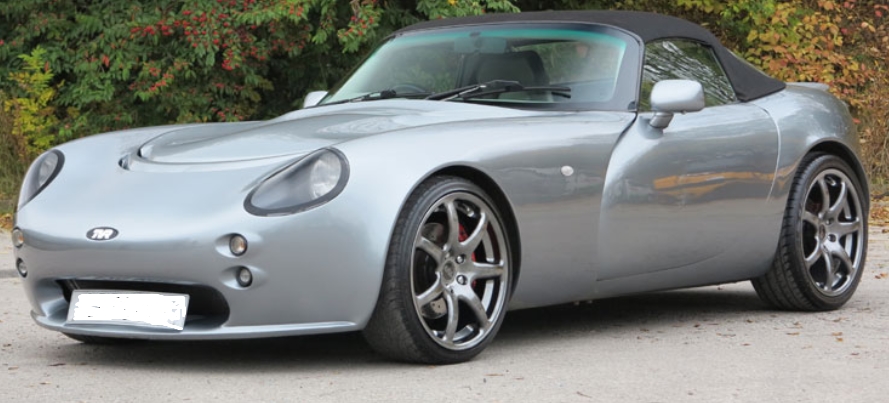
The Tamora was unveiled at the 2000 Birmingham Motor Show, although production commenced in 2002, with the car built to slot between TVR’s older Chimaera/Griffith and the more extreme Tuscan and Sagaris models in the company’s lineup. It was designed to be a slightly more “mainstream” TVR — a 2‑seater sports car with impressive performance but less radical styling and character than some of its peers.
The name “Tamora” derives from a character in William Shakespeare’s Titus Andronicus, continuing TVR’s tradition of drawing from literary and historical sources for model names. Unlike the earlier designs heavily influenced by long‑time owner Peter Wheeler, the Tamora marked a shift toward a more collaborative design process, with a team led by Damien McTaggart responsible for interior and exterior elements.
While TVR hoped the Tamora would attract buyers seeking performance with a little more composure, the market proved challenging: its price was close to that of more established Tuscan models, which undercut its sales appeal. As a result, production remained low, and the model became relatively rare even during its short life.
Production Years and Numbers
The TVR Tamora was produced from 2002 until 2006, with most vehicles built during the first four model years. TVR recorded a total production run of around 356 units built over its lifetime, making the car relatively rare compared to other TVR models.
Production by year is subject to variation in records, but contemporary sources and company figures suggest that most Tamoras were built between 2002 and 2005, with only occasional carry‑over units in 2006 as production wound down.
.

.
Technical Specifications and Layout
At its core, the Tamora was mechanically related to the TVR Tuscan Speed Six and T350, using a similar platform and engine architecture. It featured a:
- Front mid‑engine / Rear‑wheel‑drive layout
- 3.6‑litre TVR Speed Six inline‑six engine
- 5‑speed manual transmission
- Fiberglass body over tubular steel chassis
- Double wishbone suspension front and rear
The Speed Six engine was naturally aspirated and high‑revving, producing around 345–350 hp in typical form. Early units from 2002–2003 tended toward the lower end of this range (around 345 hp), with later build specs closer to 350 hp as the engine was refined.
Performance was strong for the era, with 0–60 mph times around 4.4–4.5 seconds, and a top speed generally quoted in the region of 170–174 mph (275–280 km/h).
Models, Body Styles, and Trim Levels
Unlike many mainstream sports cars that come in multiple official trim levels, the TVR Tamora was produced in a single primary variant — the two‑seat roadster — but with subtle differences and options across its run.
TVR Tamora Roadster (2002–2006)
- Body Style: 2‑door, 2‑seat convertible/roadster
- Engine: 3.6 L TVR Speed Six I6
- Transmission: 5‑speed manual
- Production Years: 2002–2006
- Approximate Output: 345–350 hp
- 0–60 mph: ~4.4–4.5 seconds
- Top Speed: ~170–174 mph
The Tamora’s only configuration was effectively the roadster. While TVR did not officially designate “trim levels” in the way larger manufacturers do (e.g., Sport, Luxury, Special Edition), there were minor differences between early and later builds (e.g., slight power output variance and updates to suspension or interior trim as the model matured).
TVR did not officially list separate coupe or fixed‑head variants under the Tamora name; the closely related T350 served as the coupe variant on the same mechanical platform but was sold separately.
Driving Experience and Engineering Characteristics
The Tamora was designed to meld performance and more approachable handling. The Speed Six engine, while shared with the Tuscan and T350, felt slightly more accessible in the Tamora’s chassis due to suspension tuning aimed at road use rather than outright track attack. Power delivery was linear and responsive, with a characteristic high‑revving nature that became a TVR hallmark.
Like many TVRs of the era, the Tamora lacked electronic nannies such as traction control or stability control. Braking was delivered via ventilated discs all round and handling was governed by double wishbone suspension, giving the car direct, engaging steering and a raw, mechanical feel that appealed to enthusiasts comfortable without modern driver aids.
The interior was similarly minimalist, with analog gauges and sports‑oriented seats. Options often included leather upholstery and bespoke finishes, reflecting TVR’s customization ethos.
Context in TVR’s Lineup and Market
When launched, the Tamora was meant to replace the outgoing TVR Chimaera and Griffith as TVR’s “entry‑level” model, offering performance in a perhaps less intimidating package than the Tuscan or Sagaris. At the time, TVR’s range was becoming increasingly performance‑centred and extreme, and the company hoped the Tamora would bring back some customer accessibility.
Despite this intention, pricing around launch was not dramatically lower than that of the Tuscan, which blunted its appeal to buyers looking for value. Its styling, considered by some reviewers to be less exciting than previous TVRs, also contributed to slower sales relative to expectations.
By the early 2000s, TVR was struggling with financial pressures and corporate uncertainty — factors that ultimately led to production ending in 2006 and the company closing shortly thereafter (before a later revival under new ownership). The Tamora’s limited production run is reflective of this broader context.
Production Figures and Rarity
Official figures for Tamora production vary among sources, but a commonly cited total is 356 units produced between 2002 and 2006. These low numbers make the Tamora quite rare, particularly in markets such as the UK.
Unofficial estimates compiled from registration data and enthusiast tracking suggest a similar trend, with most cars registered in the early 2000s and fewer as time went on.
Because TVR did not mass‑produce cars on the scale of larger manufacturers, even mainstream models like the Tuscan numbered only around 1,840 units across many variants. The Tamora’s low production underscores its niche place within the TVR story.
Future Outlook and Legacy
As of the mid‑2020s, the original Tamora remains a cherished, if underappreciated, classic among TVR enthusiasts. Its blend of performance, lightweight construction, and analogue driving experience endears it to purists, while its rarity enhances desirability at classic car events and among collectors.
Recent years have seen TVR re‑establish itself with new models like the revived Griffith, which combine retro spirit with modern engineering. While the Tamora itself has no direct successor in the modern lineup, the ethos behind it — combining driver engagement with masterful use of lightweight architecture — continues to influence TVR’s new cars.
Interest in early 2000s TVRs has been growing as classic sports cars ages become desirable, and the Tamora is increasingly appreciated as a bridge between TVR’s Wheeler‑era machines and the brand’s modern renaissance. Continued support from enthusiast clubs also helps preserve and celebrate these cars.
The TVR Tamora may not have been a blockbuster sales success, but it remains an interesting chapter in the history of Britain’s most colourful sports car maker. Produced from 2002 to 2006 as a roadster powered by a potent Speed Six engine, the Tamora aimed to offer a slightly more accessible — yet still thrilling — alternative in TVR’s performance lineup. With roughly 356 units produced, it is rare today and prized by collectors. Its significance lies not only in its performance but in what it reveals about TVR’s ambitions and challenges during the turbulent early 2000s. As TVR continues into the future with renewed energy, the Tamora’s legacy as an analogue, driver‑focused sports car remains an enduring part of the marque’s story.