TVR Taimar: The Practical Sports Car That Opened TVR’s Luggage Hatch
The TVR Taimar is one of the more intriguing models in the classic British sports‑car maker’s history — a rare vehicle that blended the visceral appeal of a TVR with a new level of practicality at a time when such characteristics were not expected from the marque. Produced in the late 1970s as part of the TVR M Series, the Taimar is notable not just for its rarity but also for its innovative hatchback design, which addressed a long‑standing limitation of its predecessors. This article explores the evolution of the Taimar, its background, models and trim levels, technical specifications, production details, and its legacy in the world of classic sports cars.
Origins: TVR and the M Series
To understand the Taimar, it’s important to place it within the context of the TVR M Series, a family of sports cars produced by TVR from 1972 to 1979. The M Series marked a transition period for TVR — moving away from smaller, less powerful cars toward larger, more sophisticated vehicles powered predominantly by Ford V‑engines. The range included several models distinguished by engine and body style, including the 1600M, 2500M, and 3000M, with the latter being the most significant in the Taimar’s direct lineage.
The M Series was engineered on a common chassis with glass‑reinforced plastic (GRP) bodywork and independent suspension. It offered a front‑mid engine layout and rear‑wheel drive — hallmarks of TVR’s sports car philosophy. By 1976, the series had already seen multiple engine options and body formats, but all retained the same limited access to the cargo area, as the rear hatch did not open.
.

.
Introducing the Taimar (1976–1979)
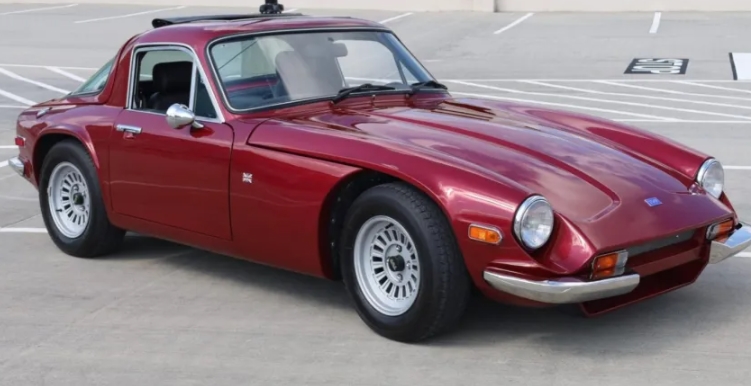
The TVR Taimar was introduced in 1976 as a response to customer and press feedback regarding the limited practicality of TVR’s fixed‑rear window design. Built on the same base as the TVR 3000M, the Taimar’s major innovation was its lift‑up rear hatchback, a design feature that allowed significantly easier access to the cargo area — a welcome development for a true two‑seater sports car.
The name Taimar reportedly derives from the name of a friend’s girlfriend — a quirky tradition among some niche British marques where names often had personal or whimsical origins.
Visually, the Taimar retained much of the 3000M’s profile, with graceful fastback lines and clean bodywork. The hatch, largely made of glass, maintained the car’s aesthetic harmony while improving practicality. A button inside the driver’s door jamb released the rear hatch — an elegant solution for cargo access that belied the car’s sporting intentions.
Models and Trim Levels Offered
Unlike later mass‑market sports cars that might have numerous trims and special editions, the TVR Taimar’s production run was brief and straightforward, with only two distinct versions available during its lifetime:
1. TVR Taimar 3.0 (Naturally Aspirated)
- Production Years: 1976–1979
- Engine: Ford Essex 3.0‑litre V6
- Power Output: Around 142 bhp (142–144 hp)
- Transmission: 4‑speed manual (some with optional overdrive)
- Layout: Front‑engine, rear‑wheel drive
- MSRP (historic pricing): Positioned as a practical yet sporting offering in the TVR lineup.
This was the standard Taimar model and by far the most common: approximately 395 units were built over its production span.
Powered by a 3.0‑litre Essex V6 — the same engine used in the 3000M — this version offered performance comparable to other sports cars of the era. It could reach a top speed of about 120‑124 mph (195‑200 km/h) and sprint from 0 to 60 mph in around 7.7 seconds, making it competitive for its time.
2. TVR Taimar Turbo
- Production Years: 1976–1979
- Engine: Ford Essex 3.0‑litre V6 with Broadspeed turbocharging
- Power Output: Approximately 230 bhp
- Transmission: 4‑speed manual
- Performance: Top speed around 140 mph and 0‑60 mph in the mid‑5‑second range (around 5.8 seconds) according to period tests.
The Taimar Turbo was the rarer and more performance‑focused variant — essentially a factory‑run homologation and competitive model with significant power enhancements. Around 30 turbocharged examples were produced, making it one of the rarest models in TVR’s history.
These turbomodels were equipped with a Broadspeed‑engineered turbocharger, which boosted power dramatically while retaining the Taimar’s lightweight character. The performance was considered exceptional for a British production sports car of the era, and in some cases the Taimar Turbo was among the fastest in its class.
Technical and Design Features
Across both versions, the Taimar kept the same robust chassis architecture as the 3000M: a lightweight tubular backbone frame and GRP body panels. This contributed to a relatively low curb weight (approximately 948–1026 kg depending on specification), which in turn helped the car’s acceleration and handling.
The independent suspension with double wishbones and coil springs at both ends gave the Taimar respectable handling dynamics for its day, while servo‑assisted Girling disc brakes on the front wheels ensured adequate stopping power.
The hatchback’s functional design made the Taimar more practical for touring compared to its fastback siblings, while its styling was smooth and uncluttered, with a long bonnet and relatively squat posture that emphasized sportiness.
Production Numbers and Rarity
The Taimar’s total production was limited, especially when compared to mainstream sports cars. Official records indicate:
- Naturally Aspirated Taimar: ~395 units
- Taimar Turbo: ~30 units
This low volume — combined with the vehicle’s niche appeal and the specialized nature of TVR itself — makes the Taimar a highly collectible classic today. Even the naturally aspirated versions, while more common than the turbos, are rare in the classic market, and well‑restored examples often attract significant interest from collectors.
Historical Context and Legacy
The Taimar’s introduction in 1976 came at a time when TVR was refining its identity as a small‑volume British sports car maker capable of producing performance cars with character and flair. It also exemplified a willingness to innovate — adding a practical rear hatch to a performance car was forward‑thinking for the era and presaged similar design choices that would become mainstream decades later with hatchbacks and liftbacks in sporting categories.
Even though the M Series — including the Taimar — was superseded by the TVR Tasmin and then the wedge‑series cars in 1980, the Taimar’s story remains an interesting footnote in TVR’s evolution. The hatchback concept would later be seen in other models and brands, but the Taimar was one of the first to bridge the gap between sportiness and utility in a British sports car.
Future Outlook
With TVR now revived as a modern manufacturer — releasing new models such as the Tuscan Speed Six and Griffith — the classic Taimar has become an important part of the brand’s heritage. While there are no indications of a direct spiritual successor in the current lineup, the continued interest in lightweight, practical performance coupes suggests that the ethos behind the Taimar still resonates with enthusiasts.
The Taimar’s rarity and historical significance also ensure its role in classic car circles, with dedicated owners and clubs preserving these cars and sharing knowledge about their maintenance and restoration. It also remains an interesting case study for how a sports car can evolve to add real‑world usability without sacrificing performance.
The TVR Taimar may have had a short production run from 1976 to 1979, but its impact on the small British sports‑car scene continues to be felt among collectors and enthusiasts. Born from the M Series alongside the 3000M and other variants, it distinguished itself with a practical hatchback design and spirited performance from its V6 engine — particularly in its turbocharged guise. With just a few hundred examples built, the Taimar stands as a rare and cherished classic that helped broaden the appeal of TVR’s sporting lineage.