Vauxhall Carlton: Evolution of a British Executive and Performance Sedan
The Vauxhall Carlton was a significant nameplate in the British automotive market from the late 1970s through the early 1990s. Positioned in the executive and upper-middle class segment, the Carlton blended practicality and comfort with competitive performance — and, in its most extreme form, achieved fame as one of the fastest four-door saloons of its time. Its evolution reflects broader trends in automotive engineering, badge-engineering within General Motors’ European operations, and shifting market expectations. This article traces the Carlton’s history, production years, models and trim levels, technological developments, variants including the legendary Lotus Carlton, and offers insight into its legacy and future outlook.
Origins: Entering the Executive Segment (1978–1986)
The Vauxhall Carlton was launched in September 1978 as a replacement for Vauxhall’s aging VX1800 and VX2300 range — and a British-market counterpart to the Opel Rekord E, from which it was largely derived. It was built in the UK but used Opel mechanicals, notably rear-wheel-drive layouts and straight-four engines.
Mark I Carlton (1978–1986)
The Mark I Carlton ran from 1978 until 1986, during which time it primarily offered a conventional large saloon or estate layout. Its mechanicals were mostly taken straight from the Opel Rekord, though Vauxhall gave it a distinctive “droop snoot” front end without a traditional grille and a unique instrument binnacle.
Body styles
- 4-door saloon
- 5-door estate (from certain years and trims)
Engine options
- Early four-cylinder petrol engines (1.8 L and 2.0 L) with carburettors
- Diesel engines including 2.3 L diesel by the mid-1980s
- Later fuel injection variants: 2.0 L fuel injection in 1984, replaced by 2.2 L in 1985
Trim levels and equipment
The Mark I Carlton initially launched in L trim only, offering a basic executive specification, though options such as central locking, electric windows, and alloys were available as extras — desirable features given the era.
The Mark I was a competent family and business saloon, combining spacious interiors with comfortable ride quality. Around 80,000 units were produced up to early 1986, showcasing demand for traditional executive transport in the UK market.
.

.
Transformation and Expansion (1986–1994)
In 1986, Vauxhall introduced a completely updated Carlton built on the same platform as the Opel Omega A — itself the successor to the Rekord — but kept the Carlton name in the UK and some other markets. This Mark II Carlton represented a significant shift in positioning, technology, and market appeal.
Mark II Carlton / Opel Omega A (1986–1994)
Launched in late 1986, the second-generation Carlton was a modern, aerodynamic executive car that was awarded European Car of the Year soon after its introduction in some markets — testament to its qualities in comfort, refinement, and engineering.
Body styles
- 4-door saloon
- 5-door estate (commonly referred to as “Caravan” in some trim variants)
Engine line-up
The Mark II broadened Carlton’s appeal by offering more varied engines over its production run:
- 1.8 L and 2.0 L four-cylinder petrol engines (GM Family II) — base and mid-range powerplants
- 2.3 L diesel and later turbo diesel options — appealing to high-mileage buyers
- 2.6 L straight-six petrol — added in 1990 for smoother performance
- 3.0 L straight-six (12v and 24v) — used in higher-end trims like the GSi
- 3.6 L twin-turbo inline-six — in the extraordinary Lotus Carlton performance variant (1990–1992)
Trim levels and market positioning
The Mark II Carlton was offered in a wide range of trims over its life, reflecting diverse buyer needs. Examples from the era include:
- L / Li – Entry-level models
- GL / GLi – Mid-range trims with added comfort features
- Club / Diamond – Enhanced equipment and refinement
- CDi / CDXi – Higher specification with features such as improved interior trim and optional extras
- GSi 3000 – High-performance trim with 3.0 L straight-six, available with 12v and later 24v engines, marketed at enthusiasts and executive drivers alike
In the diesel range, variants such as LD, L TD, GL TD, CD TD, and Club TD catered to economy-focused buyers, especially fleet and high-mileage users.
The Lotus Carlton: A Performance Icon (1990–1992)
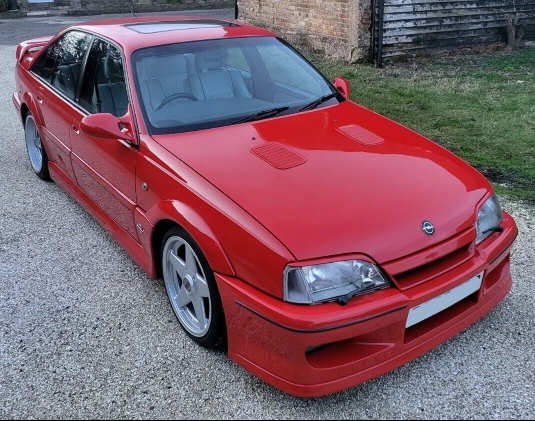
Perhaps the most iconic Carlton — and certainly the most extreme — was the Lotus Carlton, developed in collaboration with Lotus Cars and produced from 1990 until 1992. Built on the Mark II Carlton platform, this model was a dedicated effort to transform the executive saloon into a world-class performance machine.
Engine and performance
- Twin-turbocharged 3.6 L straight-six petrol engine (C36GET) producing around 377 bhp
- 6-speed manual gearbox (ZF unit as used in contemporary high-performance cars)
- Top speed around 176 mph (283 km/h) — making it one of the fastest four-door saloons of its era
- Acceleration and handling matched or exceeded many sports cars of the early 1990s
Approximately 950 Lotus Carltons were built globally during its production run, making it rare and highly collectible today. Its performance blurred the line between traditional family executive cars and genuine sporting machinery, challenging rivals such as the BMW M5 with its combination of power, poise, and British engineering flair.
Model Evolution and Key Milestones
Across its production life, the Carlton underwent numerous updates and refinements, many of which reflected broader market trends and technological progress.
Mark I Highlights
- 1978 launch as a replacement for the Victor models
- Initial availability solely in L trim, with optional extras
- Later introduction of diesel and fuel-injected petrol engines in the early 1980s
Mark II Highlights
- 1986 redesign with Opel Omega A underpinnings and more sophisticated suspension and aerodynamics
- Expanded engine lineup including six-cylinder petrol and diesel options
- Introduction of high-performance trims such as GSi 3000 and later 24v engines
- Lotus Carlton model — the ultimate fast saloon of its day
Facelifts and updates during this period included improvements to safety (e.g., ABS brakes becoming standard on some trims from 1989), aesthetic changes such as chrome grilles and smoked taillights, and the gradual shift towards more refined interior fittings — reflecting increasing competition in the executive segment.
End of an Era and Future Outlook
Production of the Carlton concluded in early 1994, when Vauxhall adopted the Omega nameplate — aligning it with Opel’s global naming convention and retiring the Carlton name after about 16 years on sale.
Today, the Carlton is appreciated as both a practical classic and a collector’s piece, especially in its higher-end variants like the GSi 24v and Lotus Carlton. Enthusiasts value the range for its combination of comfort and performance, and the Lotus model in particular continues to enjoy a passionate following at car events and collector auctions. The Lotus Carlton’s performance legacy — once dubbed a “super saloon” — has secured its place in automotive history as a remarkable engineering achievement.
In terms of the broader classic market, early Mark I models are gaining interest from collectors of 1980s British executive cars, while Mark II examples with performance credentials hold particular traction. Preservation efforts, enthusiast clubs, and specialist restorers are helping to ensure these cars survive and remain appreciated by future generations of automotive enthusiasts.
Conclusion
From its humble beginnings as a rebadged Opel Rekord with a distinctive British front end to its transformation into a modern executive car and performance icon, the Vauxhall Carlton spans an interesting chapter in European automotive history. Produced from 1978 to 1994, the Carlton evolved from a comfortable saloon into a versatile range with diverse trims and engines — culminating in the legendary Lotus Carlton, one of the fastest four-door sedans of its era. Its story reflects broader trends in badge engineering, performance innovation, and the shifting desires of buyers across two decades, leaving a rich legacy that continues to draw interest today.