The History of Mr. Norm and Grand Spaulding Dodge
Chicago’s High-Performance Mopar Legacy
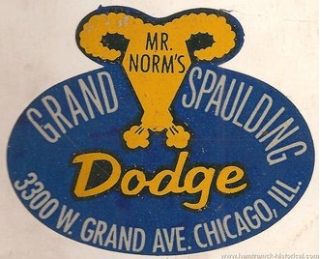
Few names in American muscle car history carry the mystique and street credibility of Norm Kraus, better known nationwide as “Mr. Norm.” Through his work at Grand Spaulding Dodge, Kraus transformed a neighborhood Chicago dealership into one of the most influential high-performance Dodge outlets in the United States. From the early 1960s through the golden age of muscle cars, Mr. Norm and Grand Spaulding Dodge helped define factory-backed street performance, pioneering dealership-built specialty cars and aggressive marketing tactics that set them apart from typical car retailers.
This is the story of how a Chicago dealership became a performance legend.
Origins of Grand Spaulding Dodge (1950s–1960s)
Grand Spaulding Dodge was founded in Chicago, Illinois, in the 1950s. The dealership was established by the Koldoff family, who operated it as a standard Dodge retail outlet on the city’s West Side. During the postwar automotive boom, Dodge—then part of Chrysler Corporation—was enjoying strong sales nationwide. However, by the late 1950s and early 1960s, Dodge’s image lagged behind competitors in the youth performance market.
In 1962, Norm Kraus, a young entrepreneur with a keen understanding of performance culture and marketing, acquired a stake in the dealership and soon became its driving force. Born in 1938, Kraus grew up in Chicago and developed a deep interest in cars at an early age. His early exposure to the booming hot-rod and drag racing scenes of the Midwest shaped his vision: cars weren’t just transportation—they were statements.
Under Kraus’s leadership, Grand Spaulding Dodge would move from ordinary retail operations to become a nationally recognized performance powerhouse.
The Rise of “Mr. Norm” (1962–1974)
Norm Kraus quickly realized that Dodge’s corporate performance efforts were inconsistent in the early 1960s. While Ford Motor Company and General Motors were aggressively marketing muscle cars, Dodge’s performance image needed reinforcement.
Kraus decided to take matters into his own hands.
He began modifying new Dodge vehicles at the dealership level—installing high-performance engines, tuning carburetors, upgrading rear axles, and fitting performance exhaust systems. These cars were fully warrantied and sold through normal retail channels, but they offered significantly more performance than stock models.
To build these specialty cars, Kraus collaborated with engineers and tuners, most notably Dick Maxwell, a former Dodge racing engineer. Together, they engineered dealership-installed performance packages that rivaled factory muscle cars.
By the mid-1960s, “Mr. Norm’s Grand Spaulding Dodge” had become synonymous with high-performance Mopars.
Signature Models and Performance Milestones
Grand Spaulding Dodge did not manufacture vehicles independently; instead, it modified Dodge factory models. However, these dealership builds were significant enough to be recognized as distinct performance offerings.
Three notable models associated with Mr. Norm include:
The 1968 Dodge Dart GSS (Grand Spaulding Special)
The most famous and arguably most successful vehicle associated with Mr. Norm was the 1968 Dodge Dart GSS. In an era of escalating horsepower wars, Kraus installed the massive 426 HEMI V8 engine—rated at 425 horsepower—into the lightweight Dodge Dart body.
This combination created a quarter-mile monster capable of running in the low 11-second range, extraordinary performance for a street-legal car in 1968.
Approximately 50 Dart GSS 426 HEMI cars were produced, making them rare and highly collectible today. While precise sales figures are limited due to dealership-level production, Dodge Dart U.S. sales in 1968 exceeded 200,000 units overall. Globally, Dart production numbers were higher due to international assembly.
The Dart GSS became the most iconic and popular vehicle associated with Mr. Norm because it delivered supercar performance in a compact car package—essentially a street-legal drag car with a factory warranty.
Racing Programs and Track Influence
Performance credibility required proof at the drag strip.
Grand Spaulding Dodge was heavily involved in NHRA drag racing throughout the 1960s. The dealership sponsored and built race cars competing in Super Stock classes. Mr. Norm himself was active in drag racing circles, and his cars frequently appeared at Midwest tracks.
The dealership’s connection to factory racing programs aligned with Chrysler’s broader motorsports efforts, particularly during the height of the muscle car wars. Dodge’s factory drag cars and NASCAR efforts boosted showroom traffic, and Mr. Norm capitalized on that publicity.
Although Grand Spaulding Dodge was not an official manufacturer racing team, its influence in dealership-backed racing was substantial.
Marketing Genius: “Mr. Norm’s Grand Spaulding Dodge”
One of Kraus’s most innovative strategies was aggressive, youth-oriented marketing.
He branded himself as “Mr. Norm,” becoming one of the first dealership owners in America to cultivate a personal performance identity. His advertisements boldly declared:
“Mr. Norm’s Grand Spaulding Dodge—The Home of the HEMI.”
Radio spots, print ads, and drag strip promotions targeted young buyers hungry for horsepower. Unlike conservative dealership marketing of the era, Mr. Norm’s ads emphasized quarter-mile times, engine displacement, and street dominance.
This strategy proved effective, turning a single Chicago dealership into a nationally recognized performance destination.
Factory Operations and Modifications
Grand Spaulding Dodge operated as a traditional dealership in terms of sales and service. However, its service department functioned as a performance shop.
Factory Dodge vehicles arrived at the dealership in stock form. Performance upgrades were installed on-site, including:
- Engine swaps (such as 426 HEMI installations)
- High-performance camshafts
- Heavy-duty rear differentials
- Performance carburetors
- Custom paint and striping packages
These modifications were performed before delivery to customers. Because they were installed through an authorized Dodge dealership, warranty coverage often remained intact—a significant selling point.
Hardships and the Muscle Car Decline (1970–1974)
The early 1970s brought devastating changes to the performance car market.
Several factors converged:
- Rising insurance premiums for high-horsepower vehicles (1970–1972)
- Federal emissions regulations beginning in 1970
- The 1973 oil embargo
- Increased fuel economy concerns
Horsepower ratings dropped sharply across the industry. By 1972, compression ratios were reduced, and net horsepower ratings replaced gross ratings, making engines appear even weaker on paper.
These industry-wide issues severely impacted performance-oriented dealerships like Grand Spaulding Dodge.
As muscle car sales declined nationwide, so did the demand for high-performance specialty builds. By 1974, the original high-performance era of Mr. Norm’s Grand Spaulding Dodge had effectively ended.
Corporate Changes and Chrysler’s Evolution
During Grand Spaulding Dodge’s prime, Dodge operated under Chrysler Corporation (1925–1998). Chrysler faced major financial struggles in the late 1970s.
In 1998, long after the original dealership’s heyday, Chrysler Corporation merged with Daimler-Benz AG to form DaimlerChrysler.
Later, in 2009, following bankruptcy proceedings, Chrysler assets were acquired by Fiat S.p.A., forming Fiat Chrysler Automobiles (FCA).
While these mergers occurred decades after the original Grand Spaulding Dodge performance era, they reshaped the Dodge brand that Mr. Norm had helped popularize.
U.S. Consumer Reception
During the 1960s, American consumers responded enthusiastically to Dodge’s performance offerings. The muscle car era was fueled by Baby Boomers reaching driving age, affordable gasoline, and expanding suburban culture.
Grand Spaulding Dodge became a pilgrimage site for Midwest enthusiasts. Customers traveled from across the country to purchase Mr. Norm specialty cars.
The dealership’s vehicles were seen as authentic, aggressive, and factory-credible—traits that differentiated them from independent tuners.
What Made Mr. Norm Different?
Unlike major manufacturers, Mr. Norm operated at the dealership level. This allowed:
- Rapid customization
- Personalized builds
- Close customer relationships
- Marketing flexibility
- Direct drag racing involvement
Where companies like Ford and GM built factory muscle cars in large volumes, Mr. Norm created boutique, high-impact performance packages with lower production numbers and higher exclusivity.
He effectively pioneered the “dealer-tuned” muscle car model that would later be echoed by specialty brands.
Revival Efforts and Modern Era
Though the original high-performance operations faded in the 1970s, the Mr. Norm name did not disappear.
In the 2000s, Norm Kraus reintroduced Mr. Norm’s performance packages for modern Dodge vehicles, including the Dodge Challenger and Dodge Charger. These modern builds paid homage to the 1960s heritage.
Special edition collaborations with Dodge dealers continued into the 21st century, reinforcing the brand’s legacy among Mopar enthusiasts.
Current Status and Outlook
Grand Spaulding Dodge as originally known ceased to operate in its historic high-performance form in the 1970s due to market conditions and declining muscle car demand.
However, the Mr. Norm brand continues to exist as a performance identity associated with modern Dodge specialty builds and collector car culture.
Norm Kraus himself remained active in automotive circles for decades, appearing at car shows and Mopar reunions.
Legacy
Mr. Norm and Grand Spaulding Dodge occupy a unique place in American automotive history.
They were not a car manufacturer in the traditional sense, yet they shaped Dodge’s performance reputation during the muscle car era. By combining dealership access, racing credibility, and bold marketing, Mr. Norm demonstrated that innovation didn’t have to originate solely at the corporate factory level.
The 1968 Dodge Dart GSS stands as his crowning achievement—a lightweight street machine that embodied everything thrilling about 1960s American performance. The Dodge Coronet Superbee wasn’t anything to sneeze at either.
Today, collectors prize Mr. Norm vehicles for their rarity and authenticity. The dealership’s story reflects both the explosive optimism of the 1960s and the sobering realities of the 1970s automotive downturn.
From Chicago’s West Side to national muscle car legend, Mr. Norm’s Grand Spaulding Dodge remains a defining chapter in America’s horsepower history.