The Evolution of RTR Vehicles: From the Mustang RTR-C to the Modern Spec Series
RTR Vehicles is a performance automotive company known for modifying and producing specialized versions of Ford vehicles—most notably the Ford Mustang. Founded in 2009 by professional drift driver Vaughn Gittin Jr., the company built its reputation on blending motorsports engineering with factory-quality design. Over the years, RTR has developed a wide range of vehicles and trim levels, including concept cars, limited-production models, and dealer-installed performance packages.
This article traces the evolution of every major vehicle produced or modified by RTR Vehicles, from the company’s first prototype in 2009 to the modern Mustang RTR lineup.
The Beginning: Mustang RTR-C (2009)
RTR Vehicles debuted its first car in 2009, the Mustang RTR-C, at the SEMA automotive trade show. This limited-production vehicle served as the brand’s proof of concept and helped establish RTR’s design identity.
The RTR-C was based on the Ford Mustang platform but featured extensive modifications. It used a full carbon-fiber body, lightweight HRE CF40 wheels, Wilwood performance brakes, and a supercharged 5.0-liter V8 engine producing over 650 horsepower. The car was extremely exclusive—only 10 units were built.
The RTR-C demonstrated the philosophy that would guide the company’s future: combining aggressive styling with track-ready performance. While the model was never mass-produced, it established RTR as a legitimate performance brand in the automotive industry.
.

.
The Classic Reimagined: Mustang RTR-X (2011)
In 2011, RTR introduced another significant project: the Mustang RTR-X. Unlike the RTR-C, which was based on a modern Mustang, the RTR-X was built from a 1969 Ford Mustang chassis.
The vehicle featured:
- A Boss 302R racing engine producing more than 440 horsepower
- Individual throttle bodies for improved airflow
- Modern suspension and drift-optimized chassis tuning
The RTR-X was designed primarily as a demonstration vehicle for motorsports and promotional purposes. It represented the company’s connection to drifting culture and classic American muscle.
Although only one was built, the car gained significant attention in enthusiast communities and at automotive events.
Birth of the Production Line: Mustang RTR Spec Series (2010–Present)
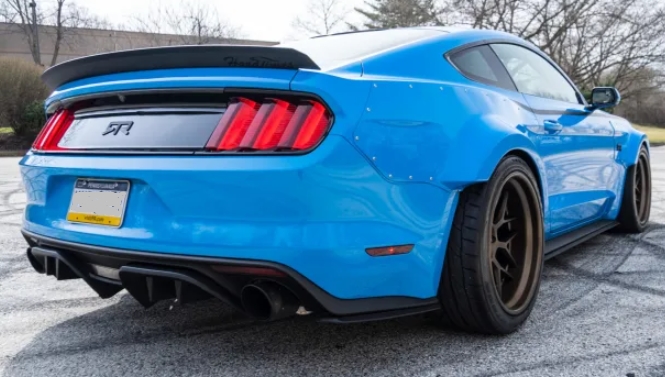
The most important step in RTR’s history occurred in 2010 with the introduction of the Mustang RTR Spec series, the company’s first widely available performance packages.
Unlike the concept vehicles before it, the Spec series was designed to be installed on production Ford Mustangs through authorized dealerships. This allowed customers to purchase a factory-style modified vehicle with professional engineering and serialized identification.
Since its introduction, the Spec lineup has evolved through several generations of the Mustang platform, including:
- S197 Mustang (2010–2014)
- S550 Mustang (2015–2023)
- S650 Mustang (2024–present)
Over time, RTR expanded the series into several trim levels offering increasing performance and styling upgrades.
Mustang RTR Spec 1
Production: 2011–present
Platform: Mustang EcoBoost or Mustang GT
The Spec 1 is the entry-level RTR package and focuses primarily on styling improvements and mild performance upgrades.
Typical components include:
- RTR upper grille with integrated LED lighting
- RTR front splitter and rear spoiler
- Custom RTR wheels and tires
- Tactical Performance lowering springs
- RTR graphics and badging
- Serialized dash plaque signed by Vaughn Gittin Jr.
The Spec 1 was designed to provide the signature RTR look without significantly increasing the vehicle’s price. Engines are typically the same as the base Mustang models, including the 2.3-liter EcoBoost turbocharged engine (around 315 horsepower) or the 5.0-liter V8 GT engine (around 460 horsepower) depending on configuration.
Because of its affordability and availability, the Spec 1 has become one of the most common RTR packages sold.
Mustang RTR Spec 2
Production: 2010–present
Platform: Mustang GT and EcoBoost
The Spec 2 represents the next level of performance within the RTR lineup. It includes everything from the Spec 1 package but adds more aggressive suspension and aerodynamic upgrades.
Key features include:
- RTR Tactical Performance suspension system
- Adjustable shocks and sway bars
- RTR aerodynamic body kit components
- Larger wheels and high-performance tires
- Interior performance upgrades and serialized identification plate
The Spec 2 package is aimed at drivers who want improved handling and track-capable dynamics without dramatically increasing engine output.
Throughout the 2010s and early 2020s, the Spec 2 became the core model of the RTR lineup, balancing affordability and performance.
Mustang RTR Spec 3
Production: 2018–present
The Spec 3 introduced significantly increased engine performance and more advanced mechanical upgrades.
Key characteristics include:
- Supercharged 5.0-liter V8 engine
- Output approaching 750 horsepower or more depending on generation
- Upgraded cooling systems
- High-performance suspension tuning
- Enhanced braking components
Later versions of the Spec 3 for the newest Mustang generation produce approximately 810 horsepower and 615 lb-ft of torque using a Whipple supercharger system.
This model effectively transformed the Mustang RTR into a true high-performance supercar competitor.
Mustang RTR Spec 5
Production: 2018–present (limited production)
The Spec 5 represents the most extreme version of the Mustang RTR lineup.
Earlier versions were essentially high-performance builds based on the Spec 3, but the latest generation—introduced for the 2026 model year—features substantial upgrades.
Notable specifications include:
- 870 horsepower from a supercharged 5.0-liter V8
- Widebody aerodynamic design
- Adjustable coilover suspension
- Carbon-fiber body components
- Borla performance exhaust system
- Limited production of 50 units annually
With a price approaching $160,000, the Spec 5 is aimed at collectors and serious performance enthusiasts.
Other Major RTR Projects and Special Vehicles
While the Mustang RTR Spec series forms the core of the company’s production lineup, RTR has also developed several experimental or promotional vehicles that pushed the boundaries of performance.
Hoonicorn Mustang
One of the most famous cars associated with RTR is the Hoonicorn Mustang, developed with rally driver Ken Block.
This vehicle featured:
- A twin-turbocharged V8 producing over 1,400 horsepower
- All-wheel drive
- Extreme aerodynamic modifications
The car gained worldwide fame through high-performance stunt driving videos and automotive media.
Mustang Mach-E 1400
RTR also collaborated with Ford on the Mustang Mach-E 1400, an experimental electric performance vehicle.
Key characteristics included:
- Seven electric motors
- Approximately 1,400 horsepower
- Multiple drivetrain configurations
The Mach-E 1400 demonstrated how electric vehicles could compete in drifting and motorsports environments.
Generational Changes in the RTR Mustang
RTR vehicles evolved alongside Ford’s Mustang platform. Each generation introduced design and engineering changes.
S197 Generation (2010–2014)
The first RTR Mustangs were based on the S197 Mustang platform. These early vehicles emphasized styling upgrades and suspension improvements.
Key elements introduced during this era included:
- The signature RTR LED grille lights
- Custom body graphics
- Lowered suspension setups
These visual elements quickly became trademarks of the brand.
S550 Generation (2015–2023)
The arrival of the S550 Mustang marked a significant leap in RTR engineering.
During this period, RTR introduced:
- The Spec 3 supercharged models
- Advanced suspension tuning systems
- Greater customization options
The S550 generation helped RTR expand internationally, with licensed builds appearing in markets such as Australia.
S650 Generation (2024–Present)
The newest S650 Mustang platform brought the latest evolution of RTR vehicles.
Current models include:
- Spec 1
- Spec 2
- Spec 3
- Spec 5
Modern RTR Mustangs feature advanced aerodynamics, integrated LED grille lighting, and upgraded powertrain options capable of producing over 800 horsepower.
New serialization systems introduced in 2026 allow each car to be uniquely numbered by model year and production sequence.
Trim Levels Summary
Throughout its history, RTR Vehicles has offered the following primary trim levels:
| Trim Level | Years Produced | Purpose |
|---|---|---|
| RTR-C | 2009 | Limited carbon-fiber concept Mustang |
| RTR-X | 2011 | One-off drift-inspired 1969 Mustang |
| Spec 1 | 2011–present | Entry-level styling and suspension package |
| Spec 2 | 2010–present | Performance-focused suspension and styling |
| Spec 3 | 2018–present | Supercharged high-performance Mustang |
| Spec 5 | 2018–present | Ultra-high-performance limited-production model |
These tiers allow buyers to choose between mild customization and extreme track-focused builds.
Influence of Motorsports on RTR Vehicles
RTR’s development philosophy is heavily influenced by motorsports, particularly drifting.
Founder Vaughn Gittin Jr. used his experience in professional competition to shape vehicle design, focusing on:
- Suspension balance
- Drift-friendly steering angles
- Track durability
This motorsport background distinguishes RTR vehicles from many traditional tuning packages.
Future Outlook
RTR Vehicles continues to expand its lineup and influence within the automotive industry.
Several trends are shaping the company’s future:
- Factory collaboration with Ford
Upcoming RTR Mustangs may eventually be produced directly on Ford’s assembly lines rather than modified after production. - Electric performance vehicles
Experimental projects like the Mach-E 1400 suggest that RTR may develop future high-performance EVs. - Expanded product range
RTR has begun modifying vehicles beyond the Mustang, including trucks and off-road vehicles such as the Ford Bronco.
With continued motorsports success and growing partnerships with major manufacturers, RTR appears positioned to remain a prominent performance brand.
Since its founding in 2009, RTR Vehicles has developed a distinctive lineup of performance automobiles centered primarily on the Ford Mustang. Beginning with the limited-production RTR-C concept, the company quickly evolved into a respected builder of high-performance vehicles through its Spec-series Mustang packages.
Over more than a decade, RTR expanded its offerings to include multiple trim levels—from the accessible Spec 1 to the extreme Spec 5—along with experimental projects like the Hoonicorn and Mach-E 1400.
Today, RTR Vehicles continues to push the boundaries of modern American performance cars, combining motorsports engineering with factory-quality design. As the automotive industry moves toward electrification and advanced performance technologies, RTR’s innovative approach suggests that its next generation of vehicles may be even more ambitious than those that came before.