Royal Pontiac’s Legacy with the Pontiac Firebird Trans Am — Dealer-Built Legends, Not Factory Models
Important Clarification (Factual Basis): Royal Pontiac never manufactured Pontiac Firebird Trans Ams as an automaker. Royal Pontiac was a high-performance Pontiac dealership based in Michigan, active mainly in the 1960s and 1970s, known for dealer-installed performance enhancements such as the famous “Bobcat” packages — particularly on GTOs and other Pontiacs. The Pontiac Firebird Trans Am was a factory-built model produced by General Motors’ Pontiac Division from 1969 through 2002.
That said, Royal Pontiac did modify, sell, and promote performance Firebird Trans Ams, and its role in the performance enthusiast community helped raise the profile of many Firebird Trans Ams among American buyers. This article focuses on the evolution of the Royal Pontiac connection to the Firebird Trans Am — covering dealer-modified versions, notable trim levels and performance packages Royal Pontiac offered or championed, how those cars fit into the broader Firebird Trans Am lineage, and the overall historical and cultural context of Royal Pontiac’s influence.
Introduction: A Dealer That Became Automotive Folklore
Royal Pontiac began as a traditional franchised Pontiac dealership and evolved, under the leadership of Ace Wilson, into one of the most famous performance-oriented dealerships in the United States. While Royal Pontiac did not build cars from scratch, the dealership gained renown nationwide for its high-output dealer-tuned Pontiacs — especially during the peak years of the American muscle car era in the 1960s and early 1970s.
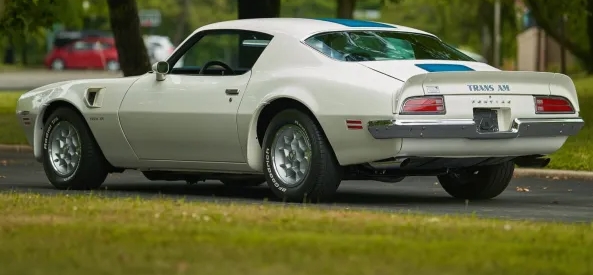
Within that performance culture, the Pontiac Firebird Trans Am — introduced by Pontiac in 1969 — became one of the most desirable vehicles for enthusiasts. Royal Pontiac offered enhanced versions of Firebird Trans Ams, often featuring dealer performance upgrades, appearance packages, and specialized tuning. These vehicles were not separate factory models but rather dealer-modified Trans Ams that carried Royal Pontiac’s performance identity.
.

.
The Pontiac Firebird Trans Am — Factory Origins (1969–2002)
To understand Royal Pontiac’s role, it helps to summarize the Firebird Trans Am’s factory evolution:
- 1969–1973 (First Generation): Firebird Trans Am introduced as a high-performance package within the Firebird lineup.
- 1970–1981 (Second Generation): Larger body, more powerful engines, cultural rise during the muscle car era with legends like the 1977 “Bandit” Trans Am.
- 1982–1992 (Third Generation): Aerodynamic redesign; performance package becomes iconic.
- 1993–2002 (Fourth Generation): Modernized performance with LT1 and later LS1 engines; production ends in 2002.
Through this entire period, the Trans Am stayed firmly under Pontiac’s factory production and engineering.
Royal Pontiac’s Performance Culture and Trans Am Involvement
Who Was Royal Pontiac?
Royal Pontiac, based in Royal Oak, Michigan, became famous in the 1960s and early 1970s as a performance-focused Pontiac dealership. While many dealers simply sold cars, Royal Pontiac also:
- Tuned engines beyond factory specifications
- Offered dealer performance packages (e.g., the “Bobcat” series)
- Promoted quarter-mile times and dyno results in advertising
- Built a national reputation among performance buyers
It was this culture that linked Royal Pontiac to many of Pontiac’s performance cars — including Firebird Trans Ams.
Dealer Performance Enhancements
Royal Pontiac’s specialty was its dealer-installed performance modifications. These were applied to stock factory vehicles after delivery from the GM assembly line. Common Royal Pontiac enhancements included:
- Upgraded camshafts
- Enhanced intake and carburetion tuning
- Ignition improvements
- Exhaust system upgrades
- Dyno tuning
Though documentation records vary, Royal Pontiac applied these modifications across several Pontiac models, including:
- Pontiac GTO
- Full-size Pontiacs
- Firebirds
- Firebird Trans Ams
These modified vehicles often carried enhanced performance over standard factory outputs and were marketed to racers and enthusiasts.
Royal Pontiac and the Firebird Trans Am (By Era)
Below is an era-by-era look at Royal Pontiac’s connection to the Firebird Trans Am, including dealer-modified variants and performance focus.
Late 1960s — Early 1970s: First Generation Enthusiasm (1969–1973)
Factory Context:
The Trans Am debuted in 1969, originally intended as a higher-performance Firebird package with handling upgrades and unique styling.
Royal Pontiac Involvement:
Royal Pontiac did not offer a “Royal Pontiac Trans Am” model name in factory catalogs, but the dealership did:
- Order Firebird Trans Ams for customers
- Apply Bobcat performance upgrades to Trans Ams
- Promote enhanced big-block Trans Ams for drag and street use
Notable Features of Dealer-Modified Trans Ams in This Era:
- Higher output than factory net ratings (which were often conservative)
- Aftermarket-style performance parts with dealer backing
- Optimized for street and drag strip
These dealer-enhanced 1969–1973 Trans Ams became known within performance circles, though they were still Pontiacs at the factory level.
Mid-1970s — Performance Pressures and Cultural Shift (1974–1976)
The mid-1970s brought challenges:
- Federal emissions regulations tightened
- Insurance costs rose
- Fuel economy became a priority after the 1973 oil crisis
These pressures forced manufacturers, including Pontiac, to detune engines. For most dealers, this made performance upgrades harder to economically justify.
Royal Pontiac’s Approach:
Rather than outright horsepower wars, Royal Pontiac shifted focus during this period to maximize available performance while staying street-legal. This often meant:
- Fine-tuning emissions-compliant engines
- Enhancing drivability and response
- Promoting handling and suspension work
In other words, the focus shifted from peak drag strip horsepower to all-around performance improvements, even on Trans Ams.
Late 1970s — The Bandit Era and Cultural Boom (1977–1981)
The second generation Trans Am gained enormous popularity with the release of Smokey and the Bandit (1977), starring Burt Reynolds driving a black and gold Trans Am.
Even though this was a factory car promoted by Pontiac, it boosted demand nationwide — including at performance dealers like Royal Pontiac.
Royal Pontiac Role During This Boom:
- Continued performance tuning for road and track use
- Supplied customers with customized Trans Ams
- Promoted enhanced versions in regional and national circles
Though documentation of specific Royal Pontiac Trans Am trim levels from this period is rare, the dealership’s reputation ensured that many buyers seeking performance versions went through Royal Pontiac or similar performance-oriented dealers.
1980s — Third Generation and Modern Performance (1982–1992)
The Trans Am received a complete redesign in 1982 with improved aerodynamics and modernized engines.
Royal Pontiac’s Relationship:
Royal Pontiac transitioned along with the times:
- Offering performance tuning bench-tested to enhance throttle response and power
- Optimizing suspension components beyond factory settings
- Supplying dealer advice to Trans Am buyers and racers alike
While some performance was available through a factory package, high-performance minded customers often sought Royal Pontiac’s skills to extract even more capability from their cars.
1990s — Fourth Generation and LS1 Power (1993–2002)
By the 1990s, the Firebird Trans Am had matured into a sophisticated performance coupe with modern engine management and optional high-output units like the LS1 V8 (introduced in the late ’90s).
Royal Pontiac’s relevance in this era was more rooted in enthusiast support than exclusive dealer-built versions. Enthusiasts continued to purchase Trans Ams from Royal Pontiac and would often seek aftermarket upgrades — sometimes installed or advised by Royal Pontiac’s service teams.
Trim Levels and Dealer-Enhanced Packages
It’s important to understand that Royal Pontiac did not offer official trim levels for Trans Ams in the way Pontiac’s factory catalog did. Instead, the dealership enhanced factory trims with performance kits and tuning. Some commonly referenced dealer enhancements (across Pontiacs, including Trans Ams) included:
- Bobcat Performance Package — multi-stage tuning for increased power
- Custom Exhaust and Intake Work
- Multi-Stage Ignition and Timing Optimization
- Suspension Upgrades for Handling and Launch
These modifications did not change factory trim level designations; instead, they created dealer-modified variants prized by enthusiasts.
Performance and Cultural Impact
Although Royal Pontiac’s dealer-modified Trans Ams did not have factory production figures or official trim level lists, their influence was nonetheless impactful:
- They helped keep dealer-level performance alive even as factory muscle ramped down in the ’70s.
- They maintained enthusiast interest in Trans Ams through the 1980s and beyond.
- They contributed to the perception of Pontiac Trans Ams as serious performance cars, not just styling icons.
Consumer Reception
Across all eras, the Firebird Trans Am was generally well-received in the United States:
- 1969–1973: Enthusiast praise for performance and handling
- Late 1970s: Broader cultural popularity thanks in part to media exposure
- 1980s: sustained performance credibility
- 1990s: Modern V8 performance re-established the model as a legitimate sports coupe
Royal Pontiac’s involvement enhanced consumer perception among performance buyers by demonstrating that real performance gains were achievable even within factory compliance.
Royal Pontiac vs. Factory Production
This distinction is essential:
- Pontiac Firebird Trans Am: A factory-built vehicle with standardized trim levels, engines, and options documented by Pontiac/General Motors.
- Royal Pontiac Firebird Trans Am: Dealer-modified Trans Ams with enhanced performance beyond stock specification — not separate factory models.
Royal Pontiac’s cars did not appear in official production statistics with unique VIN differences attributable to the dealership. Instead, they are known through enthusiast documentation, racing records, and individual collectors.
Why Dealer Versions Still Matter
Even though Royal Pontiac did not manufacture Trans Ams, its role in the performance ecosystem was historically significant:
- Performance Credibility: Dealer tuning built confidence that high-output performance was realistic and reliable.
- Marketing Influence: Bold advertising and quarter-mile time reporting helped fuel performance culture.
- Cultural Reach: Performance-focused vehicles from Royal Pontiac became spoken about alongside factory muscle cars.
The End of the Line and Legacy
The Firebird Trans Am’s factory production ended in 2002 as part of GM’s broader discontinuation of the Firebird line. Pontiac itself was later discontinued in 2010 during GM’s restructuring.
Royal Pontiac faded as a performance powerhouse by the mid-1970s as fuel economy and emissions regulations curtailed muscle car production and shifted consumer demand. Its later years were defined by enthusiast support rather than exclusive dealer models.
Legacy Today:
- Firebird Trans Ams — including those tuned by Royal Pontiac — are collectible.
- Dealer-modified Trans Ams, especially early era high-performance cars, attract serious collectible car interest.
- Royal Pontiac’s story remains an example of how dealers shaped American performance car history.
Conclusion: A Dealer’s Influence on an Icon
The Pontiac Firebird Trans Am stands as an American performance legend. While Royal Pontiac did not manufacture unique Trans Am models, its performance-oriented modifications, marketing savvy, and enthusiast reputation helped many owners maximize the potential of their Trans Ams — especially during muscle car’s golden era.
Royal Pontiac’s influence lives on through the cars that carry its name on build sheets, dyno sheets, and in collector circles. These vehicles serve as historic reminders that automotive passion often comes not just from factories, but from the spirited dealers and enthusiasts who challenge conventions and bring performance dreams to life.