Royal Pontiac Bobcat Catalina: The Dealer-Built Full-Size Muscle Marvel
The Royal Pontiac Bobcat Catalina stands as one of the most intriguing and rare examples of dealer-enhanced American performance cars from the early 1960s. It wasn’t a factory-produced trim level with standardized documentation; rather, it was a performance conversion offered by Royal Pontiac, a dealership in Royal Oak, Michigan, that became legendary for turning ordinary Pontiacs into race-ready and street-dominating machines. At the height of the pre-muscle-car era, before factory muscle cars truly took hold, Royal Pontiac’s Bobcat conversions — including the Catalina — bridged the gap between factory performance and grassroots drag racing success.
This article traces the evolution of the Royal Bobcat Catalina, detailing its origins, technical enhancements, performance reputation, rarity and legacy, and other relevant historical insights.
Origins: When a Dealer Became a Performance Powerhouse
Royal Pontiac was founded in the late 1950s and became one of the most performance-oriented dealerships in the U.S. under Ace Wilson Jr. and his team. Unlike most dealerships focused only on retail sales, Royal Pontiac actively raced, modified, and marketed high-performance Pontiacs in the early 1960s.
The name “Bobcat” itself is a clever portmanteau: it was formed by rearranging the letters from Catalina (CAT) with the addition of letters drawn from Bonneville (B, B, O) — literally spelling out B-O-B-C-A-T. This name became the badge of Royal Pontiac’s dealer-built performance cars.
Royal Pontiac’s involvement with Pontiacs went beyond simple sales. With support from Pontiac engineers and access to performance parts catalogs, Royal Pontiac’s team competed in races and led promotional campaigns — all of which helped establish the dealership’s reputation nationwide.
.

.
Pontiac Catalina: The Full-Size Foundation
To appreciate the Bobcat conversion, it helps to understand the base model:
The Pontiac Catalina itself was a full-size automobile produced by General Motors’ Pontiac division from 1950 through 1981. It was Pontiac’s bread-and-butter full-size car, positioned below the more expensive Bonneville and Grand Prix in the lineup.
Standard Canons like the Catalina offered a variety of V8 engine options throughout the 1950s and ’60s, but even the fastest factory Catalinas had more of a cruiser personality than a muscle-car attitude.
Royal Pontiac saw an opportunity to push this full-size car into high-performance territory — especially given the Catalina’s relatively light weight, large frame, and availability of Pontiac’s high-output engines.
Royal Bobcat Catalina: What It Was
The Royal Bobcat Catalina wasn’t a separate factory model or a dealer “trim level” listed in factory catalogs. Instead, it was a dealer-enhanced performance version of the Catalina, featuring a combination of factory high-performance components and dealer-tuned upgrades.
Royal’s Bobcat conversion included:
- Dealer-applied performance engine tuning, including tweaks to ignition timing, carburetor jets, and compression ratios.
- Unique Royal Bobcat badges applied to the C-pillars or rear pillars identifying the conversion.
- Optional performance parts such as heavy-duty suspension components and aluminum-style wheels.
- Period-correct paint accents and graphic elements to give the car a distinctive personality.
Though specifics varied, one of the most famous examples came from 1962, when Royal Pontiac took delivery of a Catalina and converted it into a high-performance machine ready for both street and strip.
1962: The Bobcat Catalina Takes Shape
The early 1960s were pivotal for the Royal Pontiac performance program, and 1962 represents the best-known example of the Bobcat Catalina. Most Bobcat Catalinas built in this era were based on the two-door hardtop variant of the Pontiac Catalina.
The 421-Powered Bobcat Catalina
One of the standout examples was equipped with Pontiac’s 421 cubic-inch V8:
- This large V8 was one of Pontiac’s most potent engines in the pre-muscle era.
- Royal Bobcat tuning and dealer-applied enhancements reportedly pushed output figures significantly — with contemporary road tests suggesting boosted power figures around 400–500 horsepower and near‐supercar acceleration during the era.
- Performance numbers from reputable publications and enthusiasts from the period show the car capable of 0–60 mph in the low 5-second range and quarter-mile times under 14 seconds — remarkable for a full-size car of that time.
Though this was essentially a one-year phenomenon — primarily centered on 1962 models — these Bobcat Catalinas became performance legends among street and strip enthusiasts.
Other Years and Variants
Unlike factory models produced over multiple years with documented trim-level codes, Royal Bobcat Catalinas were largely a brief, highly specialized occurrence tied to the early 1960s performance boom. Here’s how the timeline played out:
1959–1961: Pre-Bobcat Catalinas
Royal Pontiac had begun experimenting with performance-oriented Catalinas and other full-size Pontiacs in the late 1950s and early 1960s, often using top-level engines and minor tuning tweaks. But these cars didn’t carry the “Bobcat” branding until the early 1960s.
1962: Peak Bobcat Catalina Year
This is the best-documented and most celebrated year for the Bobcat Catalina. Royal Pontiac took advantage of Pontiac’s high-output engines and bespoke dealer enhancements to produce a handful of cars that blurred the line between street cruiser and competitive racer.
1963 Onward: Shift to GTO and Bobcat Program Expansion
As the mid-1960s rolled in and Pontiac introduced the GTO — a mid-size performance icon — Royal Pontiac shifted much of its performance focus to that model. The Bobcat package was applied to many models, including the GTO, Grand Prix, and even early Firebirds, but the Catalina Bobcat never became a persistent product line past the early 1960s.
Thus, while Bobcat conversions continued on other models throughout the 1960s, the Bobcat Catalina as its own distinct performance machine is best documented for the 1962 model year.
Trim Levels and Performance Packages
Because Royal Bobcat Catalinas were dealer conversions and not factory-recognized trim levels, they didn’t come with rigidly prescribed factory trim codes. Instead, performance and appearance options varied by customer order and dealer service choices. Typical elements associated with Bobcat conversions included:
- Standard Bobcat Performance Tune-Up — including ignition and fueling tweaks.
- Heavy-Duty Suspension Packages — upgraded springs, shocks, and reinforced chassis upgrades for racing.
- Performance Bolt-Ons — such as aluminum-style wheels and high-flow carburetion.
- Badge and Styling Enhancements — unique “Bobcat” badging and subtle paint accents.
Each Bobcat Catalina was effectively custom tailored based on the owner’s wishes and the dealer’s performance recommendations.
Performance and Cultural Impact
Royal Bobcat Catalinas weren’t mass-produced performance cars — far from it. However, the ones created cut across what many performance enthusiasts of the time thought possible for a full-size automobile.
- They demonstrated that even big, luxurious full-size cars could be transformed into serious performance machines through smart tuning and racing-inspired upgrades.
- Bobcat Catalinas showcased Royal Pontiac’s engineering prowess and helped build the dealership’s reputation nationally.
The mythology behind Royal Bobcat conversions lies not in factory documentation, but in enthusiast lore, period magazine coverage, and the rare surviving examples that continue to attract attention at collector car events.
Rarity and Collectibility Today
Surviving Royal Bobcat Catalinas are extremely rare — often one-off collector cars rather than what a traditional model lineup might produce. Because they were custom conversions, documentation can be sparse, and many examples have been lost to time. Nonetheless:
- Restored Bobcat Catalinas are highly prized among classic car collectors due to their uniqueness and performance heritage.
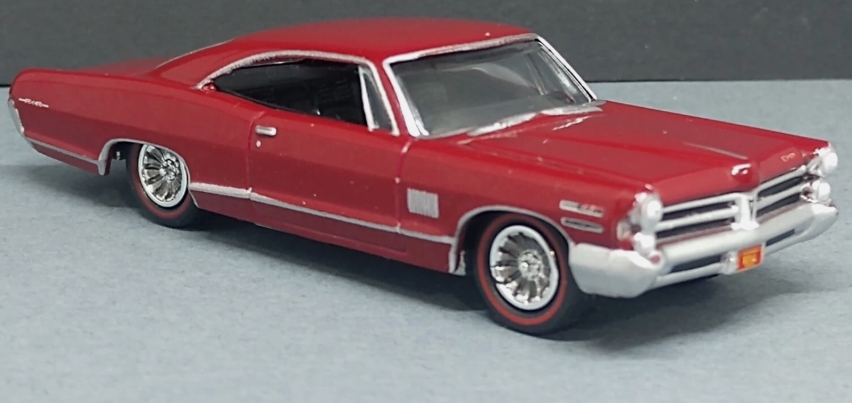
- Die-cast model makers have even produced replicas of the 1962 Bobcat Catalina in miniature form, highlighting its iconic status among American classic cars.
These cars have become prized show cars at events like cruise nights and concours gatherings, often commanding premium prices compared to standard factory models from the same era.
The End of the Bobcat Era and Legacy
Royal Pontiac’s performance heyday began to fade in the late 1960s and into the early 1970s due to a combination of factors:
- Changing corporate policies within General Motors regarding racing and dealer performance programs.
- Rising emissions regulations and insurance costs that dampened the muscle car boom.
- Shifts in consumer preferences toward mid-size muscle cars and eventually compact and efficient vehicles.
Ace Wilson eventually phased out the high-performance program and sold his Royal Racing operations by 1969, and later sold the dealership altogether by 1974 as the muscle car era waned.
Today, the Bobcat name survives as a symbol of grassroots performance innovation — a period when dealers and enthusiasts collaborated to push the boundaries of what was possible on American roads and racetracks. The Bobcat Catalina stands as a vivid reminder that not all performance car history was written on factory lines; some of it was written in dealership garages, drag strips, and the imagination of passionate enthusiasts.
Conclusion: The Bobcat Catalina in American Performance History
The Royal Bobcat Catalina occupies a unique niche in American automotive history. It wasn’t a factory model produced on assembly lines with mass production figures and comprehensive factory specs. Instead, it was a dealer-built performance marvel — a rare, custom-tuned full-size muscle car crafted at the height of the pre-muscle-car era by Royal Pontiac.
- Years Produced: Primarily built and promoted in 1962, with earlier and later dealer work related to other models.
- Performance: Dealer-tuned engines, often the potent 421 V8, delivering performance figures that rivaled contemporary muscle cars.
- Trim and Options: Custom performance upgrades and visual enhancements rather than factory-assigned trims.
- Legacy: A symbol of early performance innovation at the dealer level and a high-prized collector example today.
Rare survivors of these cars continue to remind enthusiasts that, in the early 1960s, ingenuity at a local dealership could challenge even the mightiest factory-built performance cars of the era.