Berger SS Camaro (2000 –2002): The Evolution of a Modern Classic
When automotive enthusiasts think of modern-era dealer-built muscle cars, few are as intriguing or collectible as the Berger SS Camaro. While the Chevrolet Camaro itself has deep roots going back to 1967, the Berger iteration is unique: it represents a revival of dealership-led performance at the turn of the 21st century and stands as a limited-production tribute to both Chevrolet’s heritage and Berger Chevrolet’s own performance legacy. This article explores the history, evolution, and lasting significance of the 2000 Berger SS Camaro, including its production, variants, performance features, and outlook among collectors and enthusiasts.
A Dealer with Muscle Car Credentials: Berger Chevrolet History
Berger Chevrolet, located in Grand Rapids, Michigan, traces its roots back to 1925. Over the decades, the dealership became more than just a retail outlet — it earned a reputation for performance-oriented vehicles. In the late 1960s, Berger was among a handful of dealers using Chevrolet’s Central Office Production Order (COPO) system to produce high-performance Camaros with big-block engines, placing it alongside other legendary performance dealers of the era.
By the late 1990s, the dealership’s leadership, led by Matt Berger, wished to honor that legacy — and the impending end of the fourth-generation Camaro (produced from 1993 to 2002). With Camaro production scheduled to cease after the 2002 model year, Berger Chevrolet planned a limited-edition performance Camaro to commemorate the dealership’s 75th anniversary and pay tribute to the muscle car tradition that began decades earlier.
.

.
The Fourth-Generation Camaro: Setting the Stage
Before diving into the Berger SS specifically, it’s important to contextualize the platform on which it was built. The fourth generation of the Chevrolet Camaro, produced from 1993 to 2002, marked a significant evolution in design and performance. These Camaros featured modernized suspension geometry, improved aerodynamics, and — crucially — the LS series of overhead-valve V8 engines beginning in 1998. When equipped with an LS1 5.7-liter V8 and performance enhancements, the Camaro SS offered significant power and handling improvements over its predecessors.
As the model line neared its end, the stage was ripe for something special — especially for customers who wanted more performance and exclusivity than the standard SS.
Introducing the 2000 Berger SS Camaro
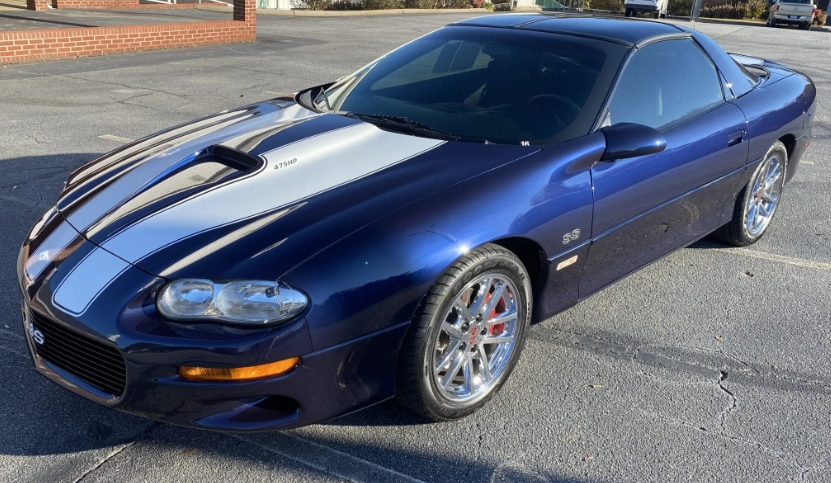
The Berger SS Camaro made its debut in 2000 as a special dealer-enhanced edition of the fourth-generation Camaro SS. Created in collaboration with GMMG Inc., a specialty performance assembler based in Marietta, Georgia, these cars were not factory Chevrolet cars — they were standard Camaro SS units ordered through Berger Chevrolet and then modified with performance upgrades and cosmetic enhancements.
Purpose and Philosophy
The intent behind the Berger SS was clear:
- Commemorate Berger Chevrolet’s 75th anniversary, celebrating years of performance leadership.
- Revive the spirit of classic COPO and dealer-special Camaros, giving buyers a modern interpretation of a “factory hot rod.”
- Produce an exceptionally limited number of cars (just 100 production units over three years), boosting exclusivity and collectibility.
2000: The First Year — 75th Anniversary Edition
In 2000, Berger produced the first batch of Berger SS Camaros — a limited run of 31 units (including prototypes). These early cars were explicitly tied to Berger Chevrolet’s 75th Anniversary, blending performance and commemorative design.
Production Numbers
- Total produced: Approximately 31 (including one prototype and 30 production cars).
Performance and Features
All 2000 Berger SS Camaros shared:
- A 5.7-liter LS1 V8 tuned to approximately 375 horsepower (with 390 lb-ft of torque).
- A 6-speed manual transmission.
- Unique chassis and suspension enhancements, including 1.5-inch lowering springs.
- Special cosmetic touches:
- Dual hood and deck lid stripes.
- A blacked-out rear taillight panel.
- Chrome 17-inch SS wheels.
- “Prescribed Power by Berger” badging and numbered plaques.
Body Styles
- Coupe with T-tops were the predominant format.
- A handful of convertibles and special prototypes also existed.
2001: Expansion and Refinement
Following the positive reception to the 2000 model, Berger continued the program in 2001 with another batch of SS Camaros.
Production Numbers
- Approximately 27 cars were built in 2001.
Performance Enhancements
The 2001 Berger SS remained grounded in the original concept but introduced new performance escalations:
- Phase 1 upgrades: Bumped output to around 380 horsepower.
- Phase 2 upgrades: Further tuned engines to approximately 435 horsepower with upgraded cylinder heads, cams, and calibration.
These enhancements were often noted on the vehicle’s exterior with badges indicating the performance phase.
Cosmetics and Features
- Revised wheel designs (often “Mallet 396” style).
- Continued use of black rear panels, custom stripes, and numbered plaques.
- Interior touches such as white-faced gauges with distinctive trim and badges.
The 2001 Berger SS continued the balance of performance upgrades with visual distinction that set these cars apart from standard SS models.
2002: Final Model Year and Peak Performance
The 2002 model year marked the final production of the Berger SS Camaro, coinciding with the end of the fourth-generation Camaro itself. General Motors announced it was discontinuing the Camaro after 2002, making these limited editions even more compelling to collectors.
Production Numbers
- Around 43 Berger SS Camaros were built in 2002.
Performance Packages
2002 Berger SS cars offered the most diverse and powerful lineup of the series:
- Phase 1 (approx. 380 hp) – standard enhanced SS package.
- Phase 2 (approx. 435 hp) – upgraded performance with internal engine enhancements.
- Optional Phase 3 / 427 packages (post-production upgrades) – while not standard via Berger, many owners later commissioned upgrades to LS7-style 427 engines producing up to 600 horsepower through aftermarket or GMMG work.
This year also saw the introduction of unique wheel options (e.g., Fikse FM5s) and continued use of signature Berger graphics, plaques, and interior touches.
Shared Characteristics Across All Berger SS Years
Across the 2000–2002 lineup, the Berger SS Camaros shared several key traits that make them identifiable and distinct:
Performance and Drivetrain
- Always equipped with a 6-speed manual transmission — a hallmark of enthusiast-oriented design.
- Suspension upgrades and performance brakes aimed at enhancing handling.
Visual and Branding Elements
- Distinctive “Prescribed Power by Berger” emblems.
- Dual stripes on hood and deck lid.
- Special rear panel paint treatments.
- Numbered plaques, with each car uniquely numbered in the limited run.
Collectibility and Rarity
With just 100 production cars, plus a few prototypes and dealer cars, this series is one of the rarer late-generation Camaro variants.
How the Berger SS Camaro Stands Out from Standard Camaros
The fourth-generation Camaro offered several trim levels and performance packages from Chevrolet itself, including various SS, Z28, and later 35th Anniversary editions. However, the Berger SS was different for several reasons:
- Dealer-specific tuning rather than factory-built options.
- Limited production runs with unique numbering and exclusivity.
- Higher levels of performance potential through performance phases above stock SS specifications.
- Distinct aesthetics and badging not available from Chevrolet retail channels.
Thus, while a standard SS Camaro of the era was already a compelling muscle sports car, the Berger SS — by virtue of rarity and performance tweaks — captured the attention of enthusiasts and collectors alike.
Collectibility and Market Legacy
Because of their low production numbers and dealer-specific nature, Berger SS Camaros have become sought-after among collectors, especially those interested in late-model performance cars with a direct connection to the muscle car culture. Examples tend to command premiums over similar baseline SS models, especially well-preserved or documented units.
Auction results and private sales records show that clean, low-mile Berger SS cars are often valued significantly above the average price for a comparable standard Camaro SS — reflecting rarity and historical appeal.
Future Outlook and Enthusiast Appreciation
Looking ahead, the Berger SS Camaro occupies a unique niche in American muscle car culture — an intersection of classic muscle heritage and late-model performance. Several factors contribute to its long-term appeal:
Cultural Significance
The revival of dealer-built performance cars in the 2000s echoes the glory days of the 1960s. As the automotive world moves toward electrification, vehicles like the Berger SS Camaro — with its V8 soundtrack, manual gearbox, and limited run — symbolize a fading era of performance motoring.
Collector Demand
Given their scarcity and historical significance, demand for Berger SS Camaros is expected to remain strong among enthusiasts and collectors, particularly those who favor unique, low-production performance variants.
Heritage and Documentation
Cars with original documentation, known ownership histories, and verified build numbers typically command the highest value — a trend that’s likely to continue as these vehicles age and become rarer.
Conclusion: A Modern Muscle Car with Classic Roots
The Berger SS Camaro is more than just a performance variant of a late-generation Camaro — it’s a purpose-built tribute to decades of American muscle car history. Produced in small numbers between 2000 and 2002 to commemorate Berger Chevrolet’s 75th anniversary and celebrate the end of the fourth-generation Camaro, these cars occupy a special place in performance car lore.
From the 375-hp 75th Anniversary cars of 2000 to the more powerful Phase 1 and Phase 2 iterations of 2001 and 2002, Berger SS Camaros combined dealership passion with tangible performance enhancements. Today, they’re cherished by collectors and enthusiasts as rare, evocative reminders of the era when dealer-built specials carried forward a tradition that started with the muscle car icons of the 1960s.
In a world increasingly dominated by electronics and automation, the Berger SS Camaro — with its raw V8 power, manual transmission, and limited numbers — remains a testament to the enduring appeal of true American performance.