Clénet Automobiles: The Evolution of America’s Neo-Classic Luxury Car
During the late 1970s and 1980s, a small California company created some of the most distinctive luxury automobiles ever built in the United States. These vehicles blended modern engineering with styling inspired by pre-World War II grand touring cars. The result was the Clénet—an ultra-luxurious, hand-built neo-classic automobile produced in very limited numbers.
Manufactured by Clénet Coachworks, these vehicles were designed to evoke the elegance of 1930s luxury automobiles while incorporating contemporary drivetrains and amenities. Although production volumes were small and the company faced financial struggles, Clénet automobiles earned a reputation for craftsmanship, exclusivity, and extravagant design.
This article explores the evolution of the Clénet, including its history, production years, models, trim variations, and legacy.
Origins of Clénet Coachworks
The Clénet story began with French industrial designer Alain Clénet, who moved to the United States in the 1970s. Inspired by the grandeur of pre-war luxury cars and the emerging neo-classic car movement, Clénet envisioned a modern automobile that captured the visual drama of 1930s roadsters while offering contemporary reliability.
In 1975, Clénet and several investors established Clénet Coachworks in Santa Barbara County, California. The company’s first vehicles were hand-assembled in a small aircraft hangar at the Santa Barbara Airport in Goleta.
Clénet cars were extremely expensive from the start. Early models sold for around $27,500 in the late 1970s, and later versions exceeded $80,000–$100,000, placing them among the most expensive American cars of their era.
The cars quickly attracted celebrity buyers, including entertainers, athletes, and international dignitaries. Their dramatic styling and exclusivity helped establish Clénet as one of the most prestigious American neo-classic car manufacturers.
.
NO MORE dead batteries with this:

.
Neo-Classic Design Philosophy
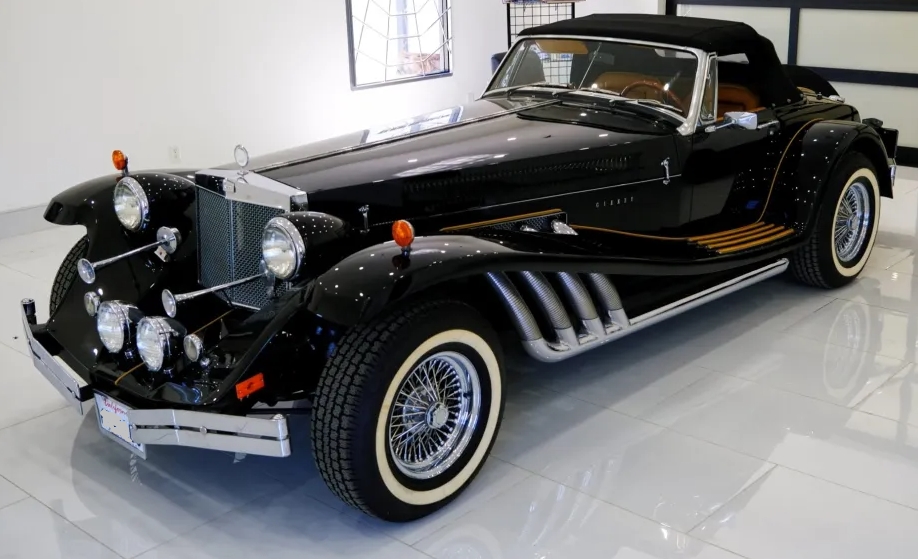
Clénet automobiles were part of a niche category known as neo-classic cars, which combined modern mechanical components with styling inspired by luxury automobiles of the 1920s and 1930s.
Typical design characteristics included:
- Long engine hoods and rear-set cabins
- External side exhaust pipes
- Freestanding headlamps and sweeping fenders
- Large chrome radiator grilles
- Running boards and vintage body proportions
Despite their retro appearance, Clénet cars used modern components from mainstream manufacturers, particularly Ford and Lincoln, ensuring easier maintenance and improved reliability.
Interiors were lavishly appointed with:
- Connolly leather upholstery
- Italian walnut dashboards
- English wool carpeting
- Crystal ashtrays and etched glass accents
These luxurious details reinforced the brand’s reputation as a handcrafted luxury automobile.
Clénet Models and Evolution
Throughout its history, Clénet produced several model series. Unlike most automakers, the company did not offer conventional trim levels; instead, each series represented a distinct model with limited variations and highly customizable interiors.
Major Clénet model series included:
- Series I (1977–1979)
- Series II (1979–1987)
- Series III Asha (1981–1987)
- Series IV (1986–1987, extremely limited)
- Series V (design concept only)
Clénet Series I (1977–1979)
The Clénet Series I was the company’s first production model and the vehicle that established the brand’s identity.
Production Years
1977–1979
Body Style
- Two-seat roadster
Production Total
Approximately 250 units were produced.
Design and Features
The Series I was a dramatic two-seat convertible with exaggerated 1930s styling. Key features included:
- Long hood measuring more than two meters
- Exposed exhaust pipes exiting the sides of the engine compartment
- Chrome radiator grille
- Separate fenders and headlamps
The passenger compartment was compact and positioned far toward the rear of the vehicle, emphasizing the car’s dramatic hood length.
Mechanical Components
The Series I used mechanical parts sourced from mass-produced vehicles, including:
- Ford V8 engines (6.6-liter to 7.5-liter)
- Automatic transmission
- Lincoln-derived chassis components
Interior elements were sourced from other vehicles as well. For example, the cockpit and doors were adapted from the MG Midget.
Market Reception
The Series I quickly gained attention due to its flamboyant styling and exclusivity. However, production remained limited because each car was hand-built and required extensive craftsmanship.
Clénet Series II (1979–1987)
In 1979, Clénet introduced the Series II, which replaced the Series I and became the company’s most successful model.
Production Years
1979–1987
Body Style
- Four-seat cabriolet (convertible)
Production Total
Approximately 180–187 units were produced.
Design Changes
The Series II was significantly larger than the Series I and was designed as a luxury touring convertible capable of seating four passengers.
Key differences included:
- Longer wheelbase
- Larger passenger cabin
- Revised radiator grille with vertical bars
- Additional side windows behind the doors
The body proportions were more balanced, making the car appear less extreme than the earlier roadster.
Mechanical Specifications
The Series II used:
- 5.8-liter Ford V8 engine
- Rear-wheel drive
- Automatic transmission
Despite the smaller engine compared with the Series I, the Series II focused more on luxury cruising than high performance.
Special Variants
Several experimental variations of the Series II were considered or produced as one-off vehicles, including:
- A four-door dual-cowl phaeton built for a Middle Eastern customer
- Proposed wood-paneled “woodie” wagon design
- Planned four-door sedan with suicide doors
Most of these remained prototypes or design studies.
Clénet Series III “Asha” (1981–1987)
In 1981, Clénet expanded its lineup with a second model called the Series III Asha.
Production Years
1981–1987
Body Styles
- Convertible
- Hardtop coupe
Production Total
Approximately 51–65 vehicles.
Name Origin
The model’s name honored Alain Clénet’s daughter, Asha.
Design and Engineering
The Series III featured a more modern interpretation of the Clénet design language.
Key changes included:
- Shorter and more compact proportions
- Integrated body design
- Removal of external exhaust pipes
- Squared roofline on coupe models
Unlike earlier models that reused passenger compartments from other vehicles, the Series III introduced a custom-designed body structure created specifically for Clénet.
Powertrain
The Series III used a 4.9-liter Ford V8 engine producing approximately 136 horsepower.
While not especially fast, the vehicle emphasized comfort and luxury rather than performance.
Ownership Changes and Company Revival
By 1982, Clénet Coachworks experienced severe financial problems and filed for bankruptcy.
The company was eventually purchased by early employee and entrepreneur Alfred J. DiMora, who revived the brand in 1984. Production resumed at a new facility in Carpinteria, California.
DiMora continued producing the Series II and Series III models while also developing new designs intended to expand the Clénet lineup.
Clénet Series IV (1986–1987)
The Series IV was intended to replace the Series III.
Production Years
1986–1987 (very limited)
Body Style
- Roadster
Production Total
Only one fully completed factory vehicle and a few unfinished examples.
Design
The Series IV returned to a roadster configuration reminiscent of the original Series I but incorporated design updates.
Notable features included:
- Straight front bumper
- Revised fenders
- Neo-classic styling similar to earlier Clénets
However, the company’s continuing financial problems prevented full production.
Clénet Series V (Concept)
A fifth model, the Series V, was proposed by Alfred DiMora but never built.
Status
- Design concept only
- No production prototype
The Series V was intended to be another neo-classic roadster with redesigned fenders and running boards.
Production Summary
Estimated Clénet production by model:
| Model | Production Years | Body Style | Approximate Production |
|---|---|---|---|
| Series I | 1977–1979 | Roadster | ~250 |
| Series II | 1979–1987 | Cabriolet | ~187 |
| Series III Asha | 1981–1987 | Coupe / Convertible | ~51–65 |
| Series IV | 1986–1987 | Roadster | 1 completed |
| Series V | Concept | Roadster | 0 |
In total, roughly 500 Clénet automobiles were produced.
Cultural Impact and Celebrity Owners
Clénet cars gained significant attention in the 1980s due to their rarity and distinctive design. Several high-profile individuals owned Clénets, including:
- Farrah Fawcett
- Rod Stewart
- Ken Norton
- Sylvester Stallone
The brand was sometimes described by journalists as the “American Rolls-Royce.”
In 1986, the Clénet automobile was also selected as the Official Centennial Car during the celebration marking 100 years of the gasoline-powered automobile.
Legacy and Collector Status
Today, Clénet vehicles occupy a unique niche among collector automobiles.
Key reasons for their lasting appeal include:
- Extremely limited production numbers
- Hand-crafted construction
- Distinctive neo-classic styling
- Celebrity ownership history
Well-preserved examples can sell for $100,000 or more, depending on condition and rarity.
Car clubs and enthusiast organizations continue to preserve the history of the brand and maintain surviving vehicles.
Future Outlook for Clénet
Although the original Clénet Coachworks ceased operations in the late 1980s, interest in the brand has remained strong among collectors and automotive historians.
The brand name has been revived periodically by Alfred DiMora, who has explored limited-production luxury automobiles inspired by the original Clénet philosophy.
While large-scale production is unlikely to return, the legacy of Clénet automobiles continues through collector communities and specialized restoration shops.
The Clénet represents one of the most distinctive luxury automobiles ever produced in the United States. Created by Alain Clénet in the mid-1970s, the brand blended 1930s styling with modern engineering to produce hand-crafted neo-classic vehicles unlike anything else on the road.
Across several model series—from the dramatic Series I roadster to the refined Series III Asha—Clénet cars remained symbols of exclusivity and craftsmanship. Although only about 500 vehicles were produced, their bold design and luxurious construction have ensured a lasting legacy.
Today, Clénet automobiles stand as rare collector cars and fascinating artifacts from an era when independent automakers dared to create extravagant vehicles purely for the joy of style, craftsmanship, and automotive artistry.