The Evolution of the Lifan 620, 630 and 650: From Budget Sedan to Modernized Compact
The Lifan 620 and its successor, the Lifan 650, represent a significant chapter in the development of Lifan Motors as it transitioned from a low-cost domestic manufacturer into a global exporter of compact passenger vehicles. Produced over roughly a decade, these sedans illustrate how Lifan refined its design, engineering, and market strategy while responding to increasing competition and changing consumer expectations.
Origins of the Lifan 620
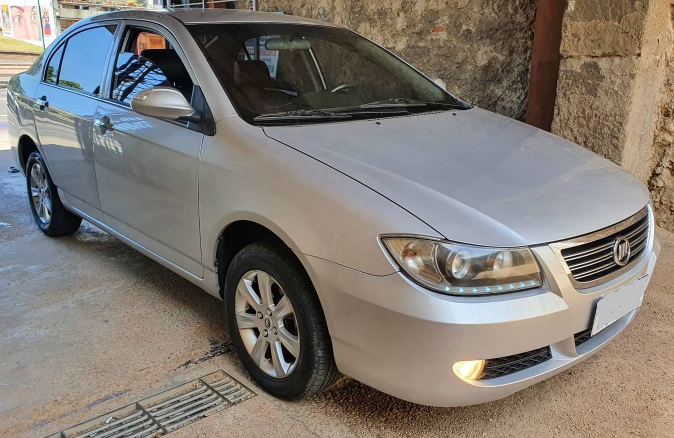
The Lifan 620 was introduced as one of Lifan’s first serious attempts at producing a modern compact sedan. It entered production in 2008, with market launch occurring around 2009, marking Lifan’s expansion beyond small, entry-level vehicles into a more mainstream segment.
At the time, compact sedans were a critical segment in both domestic Chinese and export markets. Lifan positioned the 620 as an affordable alternative to established models, emphasizing value, simplicity, and global availability.
The car was sold internationally under different names, including Lifan Solano in Russia and Martin Motors MM620 in parts of Europe.
.

.
Production Timeline and Generational Evolution
The Lifan 620 family evolved gradually rather than through distinct generational redesigns.
Production Years:
- 2008–2018 – Lifan 620 main production
- 2014–2016 – Lifan 630 facelift variant introduced
- 2016–present (limited markets) – Lifan 650 replaces 620/630
Instead of launching a completely new generation, Lifan updated the platform through facelifts and redesigns, culminating in the 650.
Platform, Design, and Dimensions
The Lifan 620 was a compact four-door sedan built for affordability and practicality.
Key Specifications:
- Length: 179.1 inches (4550 mm)
- Width: 67.1 inches (1705 mm)
- Height: 58.9 inches (1495 mm)
- Wheelbase: 102.6 inches (2605 mm)
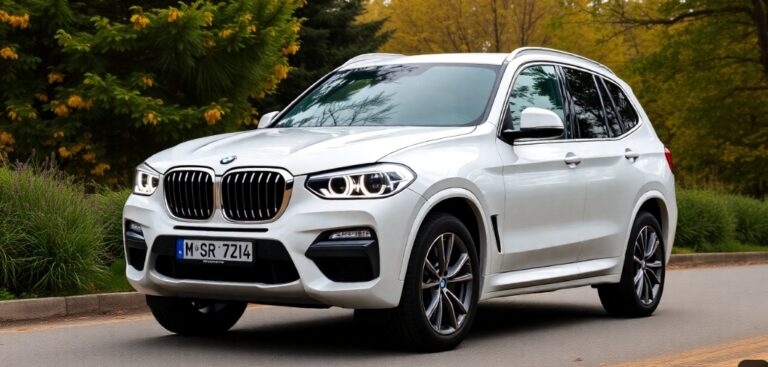
The design was influenced by European styling trends, with some observers noting similarities to the BMW 3 Series in its early form.
Interior space was a key selling point, offering a roomy cabin and a trunk capacity of approximately 386 liters.
Powertrain and Mechanical Development
The Lifan 620 featured a range of small-displacement gasoline engines throughout its production.
Engine Options:
- 1.5-liter inline-4
- 1.6-liter inline-4
- 1.8-liter inline-4
Output Range:
- Approximately 94 to 125 horsepower depending on engine
Transmission Options:
- 5-speed manual
- Continuously variable transmission (CVT)
The powertrain emphasized reliability and low operating costs rather than performance, aligning with the vehicle’s target market.
Models and Trim Levels: Lifan 620
The Lifan 620 was offered in multiple trims across different markets, though naming conventions varied.
Early Years (2008–2013)
Core Trim Levels:
- DX (Standard)
- CX (Luxury)
Features:
DX (Standard):
- Cloth interior
- Basic audio system
- Power windows
- Dual airbags
CX (Luxury):
- Leather seating
- Parking sensors
- Improved interior trim
- Additional comfort features
Even base models included essential safety features such as ABS and EBD, making them competitive in budget markets.
Mid-Cycle Updates (2014–2016): Lifan 630
In 2014, Lifan introduced the Lifan 630, a facelifted version of the 620.
Key Changes:
- Redesigned front and rear styling
- Updated headlights and grille
- Improved interior features
Engine Options:
- 1.5-liter engines with improved efficiency
Trim Structure:
- Base
- Comfort
- Luxury
The 630 also introduced an electric variant, reflecting early experimentation with electrification.
Transition to the Lifan 650
The Lifan 650, launched at the 2016 Beijing Auto Show, represented the most significant redesign of the platform.
Although technically an evolution of the 620/630, the 650 featured:
- Completely redesigned exterior
- Updated interior layout
- Improved overall refinement
It effectively replaced the earlier models in Lifan’s lineup.
Lifan 650: Production and Development
Production Years:
- 2016–late 2010s (varies by market)
The 650 continued to be sold in some markets even after Lifan began restructuring its automotive operations.
Powertrain and Performance: Lifan 650
The 650 simplified the engine lineup compared to the 620.
Engine:
- 1.5-liter inline-4 gasoline engine
- Output: approximately 103 horsepower
Transmission:
- Manual (primary offering)
The focus remained on affordability and fuel efficiency rather than performance upgrades.
Models and Trim Levels: Lifan 650
The Lifan 650 was offered in a more streamlined trim lineup compared to its predecessor.
Typical Trim Structure:
- Standard
- Comfort
- Luxury / Flagship
Feature Breakdown:
Standard:
- Basic infotainment
- Cloth seating
- Essential safety systems
Comfort:
- Upgraded infotainment system
- Alloy wheels
- Enhanced interior materials
Luxury / Flagship:
- Leather upholstery
- Advanced infotainment features
- Additional convenience equipment
The simplified trim structure reflected Lifan’s attempt to streamline production and reduce costs.
Technology and Features Evolution
Across both the 620 and 650, features improved gradually over time.
Early Features (620):
- Manual climate control
- Basic audio systems
- Limited driver assistance
Later Features (630/650):
- Touchscreen infotainment
- Navigation systems
- Improved interior materials
- Parking sensors and cameras
Despite these improvements, the vehicles remained behind global competitors in terms of advanced safety and connectivity.
Global Market Presence
The 620 and its derivatives were among Lifan’s most widely exported vehicles.
Key Markets:
- China
- Russia
- Iran
- Tunisia
- Uruguay
In Russia, local assembly helped reduce costs and improve market penetration, where the car was sold as the Lifan Solano.
Market Position and Use Cases
The Lifan 620 and 650 were positioned as budget-friendly compact sedans.
Target Customers:
- First-time car buyers
- Taxi and fleet operators
- Budget-conscious families
Their affordability and simplicity made them attractive in emerging markets, even as competition increased.
Challenges and Limitations
Despite their global reach, the 620 and 650 faced several challenges:
1. Strong Competition
Competing against both domestic Chinese brands and established global automakers.
2. Limited Innovation
Gradual updates were not enough to keep pace with rapidly advancing competitors.
3. Brand Perception
Lifan struggled to build strong brand recognition outside its core markets.
4. Financial Difficulties
Lifan’s financial issues in the late 2010s impacted development and production.
Role in Lifan’s Evolution
The 620 and 650 were central to Lifan’s growth as an automaker.
Key Contributions:
- Established Lifan in the compact sedan segment
- Enabled global expansion through exports
- Served as a foundation for later vehicle development
They were among the company’s most important models during its peak years.
Legacy and Industry Context
The evolution from the 620 to the 650 reflects broader trends in the automotive industry:
- Transition from basic, low-cost vehicles to more refined designs
- Increasing importance of global markets
- Gradual shift toward electrification
The inclusion of an electric variant in the 630 hinted at Lifan’s future direction, even before its restructuring.
Future Outlook
Although the 620 and 650 are no longer central to Lifan’s lineup, their legacy continues through the company’s transformation.
Key Developments:
- Lifan’s restructuring and partnership with Geely
- Formation of Livan Automotive
- Focus on electric vehicles and battery-swapping technology
Future vehicles derived from this lineage are likely to:
- Use dedicated EV platforms
- Incorporate advanced connectivity
- Offer improved efficiency and performance
The Lifan 620 and 650, produced from 2008 through the late 2010s, represent a complete lifecycle of a compact sedan evolving through facelifts and redesigns rather than full generational changes. With trims ranging from basic DX/Standard models to more equipped Luxury variants, these vehicles provided affordable transportation to a wide audience.
While they never became global leaders in innovation, they played a crucial role in Lifan’s development and international expansion. The transition from the 620 to the 650 demonstrates how the company attempted to modernize its offerings in a rapidly changing industry.
Today, these models stand as important milestones in Lifan’s history—bridging the gap between its early gasoline-powered vehicles and its eventual shift toward electrified mobility.