The Evolution of the Lifan X50: Lifan’s Entry-Level Crossover for a Global Market
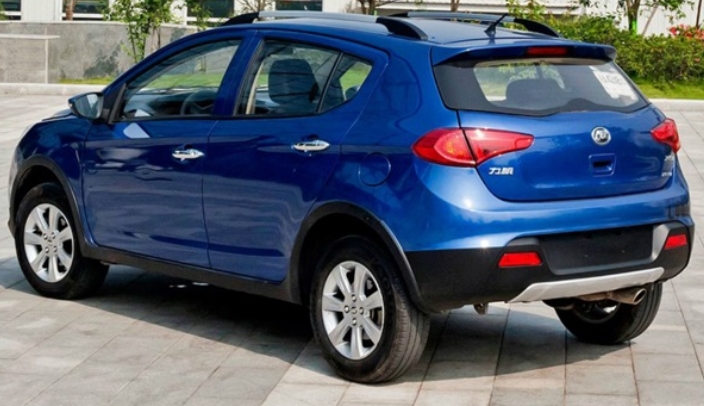
The Lifan X50 was one of Lifan Motors’ most important attempts to enter the fast-growing subcompact crossover segment during the 2010s. Positioned below the larger X60, the X50 combined hatchback practicality with SUV-inspired styling, targeting younger buyers and emerging markets. Although it never achieved the long production run of some rivals, the X50 played a meaningful role in Lifan’s global expansion strategy and remains a notable example of early Chinese crossover development.
Origins and Concept Development
The Lifan X50 was first revealed publicly at the Guangzhou Auto Show 2013, where it appeared as a near-production concept. It was later showcased in production form at the Beijing Auto Show 2014, signaling Lifan’s readiness to enter the subcompact crossover category.
This segment was rapidly expanding at the time, driven by urban consumers seeking affordable vehicles with SUV styling but compact dimensions. Lifan’s approach was pragmatic: rather than developing a completely new platform, the X50 was based on the Lifan 530 sedan, effectively transforming a small car into a raised crossover.
.

.
Production Timeline and Global Reach
The Lifan X50 had a moderately short but geographically diverse production run.
Production Years:
- 2014 – Production begins and initial launch
- 2015–2018 – Main production period and export expansion
- 2019 – End of production in China
- Extended production/assembly in some markets:
- Russia: until 2020
- Iran: 2015–2018
The X50 was assembled in multiple locations, including China, Russia, Iran, and Uruguay, reflecting Lifan’s strong focus on export markets.
Platform, Design, and Dimensions
The X50 was designed as a subcompact crossover SUV, though it was structurally closer to a lifted hatchback.
Key Specifications:
- Length: 161.4 inches (4100 mm)
- Width: 67.8 inches (1722 mm)
- Height: 60.6 inches (1540 mm)
- Wheelbase: 100.4 inches (2550 mm)
Layout:
- Front-engine, front-wheel drive only
- Five-door hatchback body style
- Seating for five passengers
Design Philosophy:
The X50 featured:
- Elevated ride height
- Black plastic cladding for SUV styling
- Compact proportions for urban maneuverability
This design allowed Lifan to market the vehicle as a crossover while keeping costs low.
Powertrain and Mechanical Evolution
Unlike larger Lifan SUVs, the X50 maintained a very simple and consistent powertrain lineup throughout its production.
Engine Options:
- 1.3-liter inline-4 gasoline engine (early availability)
- 1.5-liter inline-4 gasoline engine (primary engine)
The 1.5-liter engine became the dominant configuration, producing approximately:
- 102 horsepower (76 kW)
Transmission Options:
- 5-speed manual
- Continuously variable transmission (CVT)
Performance:
- Top speed: approximately 99–106 mph (160–170 km/h)
The X50 prioritized affordability and efficiency over performance, making it suitable for city driving and light commuting.
Models and Trim Levels
The Lifan X50 was offered in multiple trims across different markets. While naming conventions varied, the structure generally followed a three-tier system with incremental feature upgrades.
2014–2015: Initial Launch Trims
At launch, the X50 was available with both engines (in some markets) and multiple equipment levels.
Typical Trim Levels:
- Base / Standard
- Comfort
- Luxury / Flagship
Features by Trim:
Base (Standard):
- Cloth upholstery
- Manual air conditioning
- Basic audio system
- Power windows and mirrors
Comfort:
- Alloy wheels
- Improved interior materials
- Enhanced audio system
Luxury / Flagship:
- Leather upholstery
- Parking sensors
- Rearview camera
- Advanced infotainment system
Even early base models included safety features such as airbags, ABS, and power accessories, which were competitive for the price.
2016–2017: Expanded Equipment and Market Adaptation
During the mid-cycle years, the X50 did not receive a full facelift, but equipment levels improved, particularly in export markets.
Updates Included:
- Broader availability of CVT transmission
- Improved infotainment systems
- Additional safety features such as electronic stability control (ESP) in higher trims
Trim Structure:
- Entry-level (fleet-oriented)
- Mid-range (Comfort)
- High-end (Luxury/Flagship)
The overall structure remained consistent, but feature content increased.
2018–2019: Final Production Models
In its final years, the X50 lineup was simplified in some markets as Lifan’s financial situation worsened.
Final-Year Characteristics:
- Reduced number of trim combinations
- Continued offering of manual and CVT variants
- Focus on maintaining affordability
No major redesign or second generation was introduced before production ended in 2019.
Features and Technology
The X50’s feature set evolved gradually over time, reflecting its budget positioning.
Standard Features:
- Air conditioning
- Power windows and mirrors
- Basic infotainment system
- Dual front airbags
Higher Trim Features:
- Touchscreen display
- Navigation system
- Rearview camera
- Parking sensors
- Leather upholstery
- Additional airbags and stability control
While these features were competitive in emerging markets, they lagged behind more advanced systems offered by global competitors.
Market Position and Pricing
The X50 was positioned as an entry-level crossover, targeting younger buyers and budget-conscious consumers.
Pricing (China Market at Launch):
- Approximately ¥59,800 to ¥82,800 (about $9,000–$12,500 at the time)
Target Customers:
- First-time car buyers
- Urban commuters
- Small families
- Ride-hailing drivers
Its affordability and compact size made it especially appealing in developing markets.
Global Expansion and Export Strategy
The X50 became one of Lifan’s most widely exported vehicles.
Key Markets:
- China
- Russia
- Iran
- Latin America (including Uruguay)
Local assembly in countries like Russia helped reduce costs and improve accessibility.
Strengths and Weaknesses
Strengths:
- Affordable pricing
- Practical size for urban driving
- Relatively well-equipped for its segment
Weaknesses:
- Modest performance
- Limited refinement
- Build quality concerns in some markets
- Lack of all-wheel drive
These factors contributed to mixed reviews and limited long-term competitiveness.
Role in Lifan’s Lineup
The X50 occupied an important position within Lifan’s SUV range:
- Below: Larger models like the X60
- Alongside: Sedans such as the Lifan 530
It served as Lifan’s entry-level crossover, helping attract younger buyers and expand the brand’s reach.
Legacy and Industry Context
The Lifan X50 reflects a broader trend in the automotive industry during the 2010s:
- Rapid growth of compact crossovers
- Increasing globalization of Chinese automakers
- Use of existing platforms to reduce development costs
Although it was not a technological leader, the X50 demonstrated how Chinese manufacturers could quickly enter new segments.
Future Outlook
The discontinuation of the X50 coincided with major changes at Lifan.
Key Developments:
- Financial restructuring of Lifan around 2020
- Formation of new ventures such as Livan Automotive
- Shift toward electric vehicles and battery-swapping technology
Industry Trends:
- Electrification replacing gasoline entry-level vehicles
- Increased emphasis on connectivity and safety
- Greater competition from both domestic and global brands
While the X50 has no direct successor, its role as an affordable crossover may eventually be filled by electric models in the future.
The Lifan X50, produced from 2014 to 2019 (with extended production in some markets until 2020), represents an important step in Lifan Motors’ evolution. Offered in multiple trims—typically structured as Base, Comfort, and Luxury—it provided a simple yet effective combination of affordability, practicality, and SUV styling.
Although it did not achieve long-term global success, the X50 played a key role in expanding Lifan’s presence in international markets and introducing the brand to a new generation of buyers. Its legacy lies in its contribution to the early wave of compact crossovers from Chinese automakers—a segment that continues to evolve rapidly in today’s automotive landscape.