The Evolution of the Lifan 530: A Transitional Subcompact Sedan for Global Markets
The Lifan 530 represents a key step in the evolution of Lifan Motors’ passenger car lineup. Positioned as the successor to the earlier Lifan 520, the 530 was designed to modernize the company’s entry-level sedan offering while expanding its appeal in both domestic and international markets. Produced during the mid-2010s, the Lifan 530 reflects a transitional era for the company—bridging older, basic designs and more refined vehicles that followed later in the decade.
Origins and Development
The Lifan 530 traces its origins to the earlier Lifan 520, one of the company’s first compact sedans. By the early 2010s, Lifan sought to replace the aging model with something more contemporary, both in design and engineering.
The new sedan debuted as a concept—still labeled as the 520—at the Guangzhou Auto Show in 2011. It later appeared in production form at the Shanghai Auto Show, where it was officially introduced as the Lifan 530.
Sales began in October 2013, marking the official launch of the model in China.
The 530 was designed to replace the 520 entirely, offering improved styling, updated interior features, and better overall refinement.
.

.
Production Timeline
The Lifan 530 had a relatively straightforward production lifecycle without major generational changes.
Production Years:
- 2013 – Launch and start of production
- 2014–2017 – Main production years with incremental updates
- 2018 – End of production
Unlike some competitors, the 530 did not receive a full facelift or second generation. Instead, Lifan focused on maintaining the model with minor updates until it was discontinued.
Platform, Dimensions, and Design
The Lifan 530 was built as a subcompact four-door sedan, targeting urban drivers and budget-conscious buyers.
Key Dimensions:
- Length: 169.3 inches (4300 mm)
- Width: 66.5 inches (1690 mm)
- Height: 58.7 inches (1490 mm)
- Wheelbase: 100.4 inches (2550 mm)
Layout:
- Front-engine, front-wheel drive
- Five-passenger seating
- Conventional sedan body style
Design Characteristics:
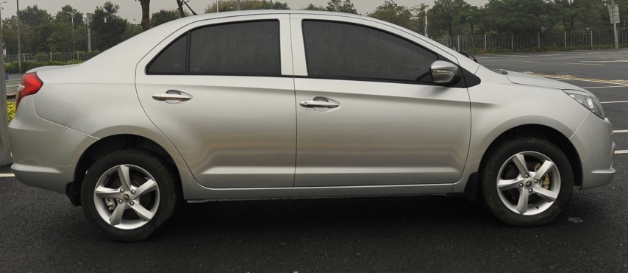
The design of the Lifan 530 was notably influenced by the Toyota Vios XP90, particularly in its proportions and side profile.
While not entirely original, this approach helped the vehicle appeal to buyers familiar with global design trends.
Powertrain and Performance
The Lifan 530 maintained a simple and consistent mechanical configuration throughout its production run.
Engine Options:
- 1.3-liter inline-4 gasoline engine
- 1.5-liter inline-4 gasoline engine
Output:
- Approximately 94–102 horsepower depending on engine
Transmission Options:
- 5-speed manual
- Continuously variable transmission (CVT)
Performance:
- Top speed: approximately 106–109 mph (170–175 km/h)
The focus remained on fuel efficiency and ease of maintenance rather than performance.
Models and Trim Levels
The Lifan 530 was offered in multiple trims across different markets. While naming conventions varied, the overall structure followed a familiar hierarchy.
2013–2014: Initial Launch Trims
At launch, the Lifan 530 was offered with basic and mid-level configurations.
Typical Trim Levels:
- Standard / Base
- Comfort
- Luxury
Features by Trim:
Base (Standard):
- Cloth seating
- Manual air conditioning
- Basic audio system
- Steel wheels
Comfort:
- Alloy wheels
- Improved interior materials
- Enhanced audio system
Luxury:
- Leather upholstery
- Parking sensors
- More advanced infotainment
Pricing at launch ranged from approximately ¥51,800 to ¥69,800 (about $8,000–$11,000 at the time), reinforcing its budget positioning.
2015–2016: Expanded Features
During the mid-production years, the Lifan 530 saw incremental improvements rather than structural changes.
Updates Included:
- Wider availability of CVT transmission
- Improved infotainment systems
- Enhanced safety features in higher trims
Trim Structure:
- Entry-level (fleet-oriented)
- Mid-range (Comfort)
- High-end (Luxury/Flagship)
Optional features in higher trims included:
- Electronic stability control (ESP)
- Tire pressure monitoring
- Up to six airbags
These updates helped the 530 remain competitive in emerging markets.
2017–2018: Final Model Years
In its final years, the Lifan 530 lineup was simplified.
Final-Year Characteristics:
- Reduced number of trim combinations
- Continued offering of core engine and transmission options
- Minimal feature updates
By 2018, production ended as Lifan shifted focus to newer models and faced increasing financial pressure.
Features and Technology Evolution
The Lifan 530’s features evolved modestly over its lifecycle.
Standard Features:
- Air conditioning
- Power windows and mirrors
- Basic infotainment system
- Dual front airbags
Higher Trim Features:
- Touchscreen infotainment
- Navigation system
- Rearview camera
- Parking sensors
- Leather seating
Although competitive at launch, the 530’s technology began to lag behind rivals by the late 2010s.
Global Market Presence
The Lifan 530 was widely exported and marketed under different names:
- Lifan Celliya (Russia)
- Kantanka Amoanimaa (Ghana)
Key Markets:
- China
- Russia
- Middle East
- Africa
- Latin America
This global reach was a key part of Lifan’s strategy, allowing the company to compete in developing markets where affordability was a primary concern.
Market Position and Use Cases
The Lifan 530 was positioned as an entry-level subcompact sedan.
Target Customers:
- First-time car buyers
- Budget-conscious families
- Taxi and fleet operators
- Urban commuters
Its affordability, simplicity, and ease of maintenance made it particularly attractive in emerging markets.
Strengths and Weaknesses
Strengths:
- Low purchase cost
- Simple, reliable mechanical design
- Spacious interior for its class
Weaknesses:
- Limited performance
- Outdated technology by later years
- Build quality concerns in some markets
These factors contributed to declining competitiveness toward the end of its production.
Role Within Lifan’s Lineup
The Lifan 530 occupied a key entry-level position:
- Predecessor: Lifan 520
- Above: Smaller city cars like the Lifan 320
- Below: Larger sedans like the Lifan 620
It served as a gateway model, introducing customers to the Lifan brand.
Industry Context and Legacy
The Lifan 530 was introduced during a period of rapid growth in China’s automotive industry. It reflects several broader trends:
- Expansion of affordable vehicles into global markets
- Use of existing designs and platforms to reduce costs
- Increasing competition among domestic automakers
Although not a technological leader, the 530 played an important role in Lifan’s international expansion.
Future Outlook
The discontinuation of the Lifan 530 coincided with major changes within Lifan.
Key Developments:
- Financial restructuring of Lifan around 2020
- Formation of new ventures such as Livan Automotive
- Transition toward electric vehicles
Likely Future Trends:
- Replacement of entry-level gasoline sedans with electric vehicles
- Increased focus on battery-swapping technology
- Greater emphasis on connectivity and safety
While the 530 itself has no direct successor, its role may eventually be filled by affordable EV sedans in emerging markets.
The Lifan 530, produced from 2013 to 2018, represents a significant step in Lifan Motors’ development as a global automaker. Built as a successor to the 520, it offered a modernized design, improved features, and a competitive price point.
Across its lifecycle, the 530 was available in multiple trims—typically structured as Base, Comfort, and Luxury—paired with simple yet reliable engine options. While it did not undergo major redesigns, it remained relevant through incremental updates and strong export performance.
Ultimately, the Lifan 530 stands as a transitional model: a vehicle that helped Lifan expand internationally while highlighting the challenges of competing in a rapidly evolving automotive industry.