The Evolution of the BAIC Weiwang M20 and M30: Affordable MPVs for China’s Growing Families
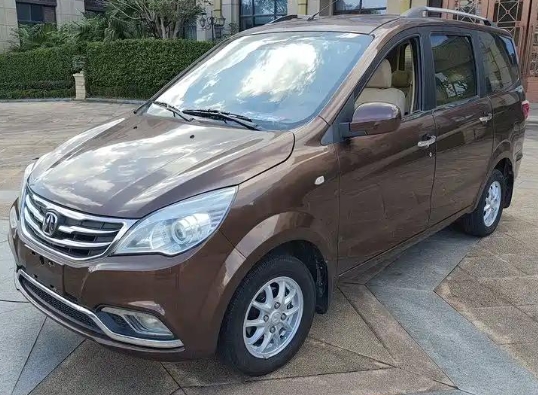
The BAIC Weiwang M20 and M30 played an important role in the development of China’s affordable multi-purpose vehicle market during the 2010s. Produced under the Weiwang sub-brand of BAIC Group, these compact MPVs were designed to provide low-cost transportation for large families, small businesses, and commercial operators. While relatively simple by international standards, the M20 and M30 helped establish Weiwang as one of China’s rapidly growing domestic automotive brands during the decade.
The vehicles combined practicality, seating flexibility, and low operating costs at a time when demand for affordable seven- and eight-seat vehicles was increasing throughout China. Over time, the lineup expanded with facelifted and crossover-inspired versions, demonstrating BAIC’s efforts to modernize its entry-level MPV offerings.
Origins of the Weiwang Brand
The Weiwang brand was launched by BAIC Group in 2011 through Beiqi Yinxiang Automobile, a joint venture between BAIC and Yinxiang Motorcycle Group. The purpose of the brand was to target China’s booming market for compact commercial vehicles and affordable family transportation.
During the early 2010s, Chinese consumers increasingly wanted vehicles that offered more seating capacity than small sedans while remaining inexpensive to purchase and maintain. Domestic automakers responded by developing compact MPVs that blended van practicality with passenger-car features.
The Weiwang M20 became one of the brand’s earliest and most successful products.
.

.
Introduction of the Weiwang M20 (2013)
The Weiwang M20 debuted during the 2013 Guangzhou Auto Show before officially entering the Chinese market later that year. It was developed as a compact rear-wheel-drive MPV with seating for up to eight passengers.
Production Years
- 2013–2017
Vehicle Class
- Mini MPV
- Compact van
Body Style
- Five-door MPV
Layout
- Mid-engine, rear-wheel drive
The M20 was based on the same platform as the Huansu H2, another BAIC-affiliated vehicle. Unlike many modern MPVs that used front-wheel drive, the M20 retained a rear-wheel-drive configuration better suited for carrying passengers and cargo in rural and commercial applications.
Design and Engineering
The M20 featured a tall, boxy body shape intended to maximize interior space. Although compact in size, the vehicle offered impressive seating flexibility and cargo capacity for its price segment.
Dimensions
- Wheelbase: 109.8 inches
- Length: 174.8 inches
- Width: 66.9 inches
- Height: 70.2 inches
The vehicle’s relatively tall roof and upright proportions allowed comfortable seating for large families and small business operators transporting goods.
Engine and Transmission
Throughout production, the M20 primarily used:
- 1.5-liter naturally aspirated inline-four gasoline engine
- Five-speed manual transmission
The engine produced approximately 106 horsepower and 107 pound-feet of torque, which was considered adequate for the vehicle’s intended use.
Weiwang M20 Trim Levels
The M20 was offered in multiple trim levels aimed at different customer groups. Exact trim names occasionally varied by year and market, but the lineup generally followed a familiar structure.
Basic Trim
Entry-level models included:
- Steel wheels
- Cloth seating
- Manual air conditioning
- Basic radio system
- Sliding side doors
- Minimal exterior trim
These versions appealed primarily to commercial operators and rural buyers.
Standard Trim
Mid-level versions added:
- Power windows
- Remote keyless entry
- Front fog lamps
- Improved interior materials
- Rear parking sensors
These trims became popular among families seeking affordable passenger transportation.
Luxury Trim
Higher-end versions offered:
- Alloy wheels
- Upgraded infotainment systems
- Enhanced dashboard trim
- Additional chrome accents
- Improved upholstery materials
While still inexpensive compared to international competitors, the upper trims attempted to provide a more modern and comfortable driving experience.
Sales Success in China
The M20 became one of China’s better-selling domestic MPVs shortly after launch. Its affordability and practicality helped it gain popularity in smaller cities and rural regions.
In 2014, the M20 ranked among China’s top-selling MPVs, with more than 77,000 deliveries reported during the year. The vehicle’s success demonstrated the enormous demand for low-cost family transportation in China during the period.
Introduction of the Weiwang M30 (2015)
As competition in China’s MPV market intensified, BAIC introduced the Weiwang M30 in late 2015. The M30 served as a more premium facelifted version of the M20 rather than an entirely new vehicle.
Production Years
- 2015–2017
The M30 retained the same overall platform and mechanical layout as the M20 but received substantial visual updates intended to modernize the design.
Exterior Changes
Compared with the M20, the M30 featured:
- Redesigned front bumper
- Larger grille
- Updated headlights
- Revised taillights
- More modern front fascia styling
The updated appearance helped the M30 compete against increasingly stylish domestic MPVs entering the Chinese market.
Weiwang M30 Trim Levels
The M30 lineup mirrored the M20 structure while adding more premium equipment.
M30 Base
Included:
- Cloth seats
- Manual transmission
- Basic infotainment
- Steel wheels
M30 Comfort
Added:
- Alloy wheels
- Enhanced cabin materials
- Multifunction steering wheel
- Improved audio system
M30 Premium
Top trims included:
- Chrome exterior trim
- Larger multimedia display
- Rear parking assistance
- Additional convenience equipment
Although still positioned as a budget MPV, the M30 demonstrated how Chinese manufacturers were gradually improving refinement and styling in affordable vehicles.
The Weiwang M35 Crossover Variant
BAIC later expanded the lineup further with the Weiwang M35, a crossover-inspired derivative based on the M20 platform.
Production Years
- Approximately 2015–2017
The M35 featured:
- Plastic body cladding
- Revised bumpers
- Slightly raised ride height
- More rugged exterior styling
This variant reflected the growing popularity of SUV-inspired vehicles in China during the mid-2010s. Many manufacturers introduced crossover styling elements even on compact vans and MPVs to attract younger buyers.
International and Rebadged Versions
One notable aspect of the M20 and M30 platforms was their use across several brands and export markets.
Changhe Freedom M50
Under BAIC-owned Changhe, the platform was rebadged as the Changhe Freedom M50.
Changhe Freedom M50S
A sportier version called the M50S added revised body styling and more aggressive exterior features.
Ruili Doda V2
The platform also appeared under the Ruili Doda brand for regional Chinese markets.
These rebadged models allowed BAIC to maximize the value of the platform while targeting different customer groups.
Market Challenges and Decline
By the late 2010s, China’s automotive market was changing rapidly. Consumer demand increasingly shifted toward compact SUVs and more sophisticated crossovers. Buyers also began expecting better safety features, more advanced technology, and improved refinement.
As a result, older compact MPV designs like the M20 and M30 struggled to remain competitive. Production of the Weiwang M20 and M30 ended around 2017 as BAIC redirected attention toward newer vehicles.
Several factors contributed to the decline:
- Growing popularity of SUVs
- Increased competition from domestic rivals
- Rising consumer expectations
- Stricter safety and emissions standards
Legacy and Future Outlook
Although relatively basic vehicles, the Weiwang M20 and M30 represented an important stage in the evolution of China’s automotive industry. They demonstrated how domestic automakers were transitioning from producing simple commercial vans to creating more versatile family-oriented MPVs.
The vehicles also highlighted several broader trends:
- Rapid expansion of China’s low-cost vehicle market
- Increasing focus on comfort and styling
- Growth of crossover-inspired design
- Expansion of Chinese brands into export markets
Today, BAIC’s priorities have shifted heavily toward SUVs, electric vehicles, and intelligent mobility technologies. The Weiwang brand itself has become less prominent as the company reorganized its lineup.
However, the M20 and M30 remain notable examples of the affordable MPVs that helped motorize millions of families and small businesses across China during the 2010s. Their success contributed to the rise of Chinese domestic automakers and demonstrated the growing capabilities of China’s rapidly developing automotive industry.