The History of BAIC’s Ruixiang, Hoen, Bisu, Sub Brands
The Rise, Collapse, and Reinvention of BAIC’s Chongqing Automotive Brands
Among the many automotive brands created during China’s rapid automotive expansion in the 2010s, few experienced a journey as dramatic as Bisu, Hoen, and Ruixiang. These brands were connected through a complex relationship involving the state-owned automotive giant BAIC Group and the private-sector Yinxiang Group.
What began as an ambitious effort to create affordable sport utility vehicles (SUVs), multi-purpose vehicles (MPVs), and crossovers for China’s growing middle class eventually led to financial crisis, factory shutdowns, bankruptcy proceedings, and a complete corporate restructuring. Out of those difficulties emerged BAIC Ruixiang, while the Hoen brand became part of the company’s attempt to enter the electric vehicle market.
Although these brands remain largely unknown outside China, they represent an important chapter in the history of China’s automotive industry and illustrate both the opportunities and risks of rapid expansion in one of the world’s most competitive car markets.
Origins: BAIC and Yinxiang
The story begins with BAIC.
BAIC Group
BAIC Group was founded in 1958 and is one of China’s largest state-owned automobile manufacturers. The company operates numerous brands and joint ventures, including partnerships with major international automakers.
During the 2000s, BAIC sought to expand beyond Beijing and establish manufacturing operations throughout China.
One of those efforts led to cooperation with Yinxiang Group.
Yinxiang Group
Yinxiang Group was founded in 1997 by entrepreneur Zhang Xinghai and members of the Zhang family.
Before entering automobile manufacturing, Yinxiang became successful producing:
- Motorcycles
- Engines
- Industrial equipment
- Automotive components
The company developed a reputation as one of Chongqing’s largest motorcycle manufacturers.
To expand into automobiles, Yinxiang partnered with BAIC.
Creation of BAIC Yinxiang
Years of Operation
In 2010, BAIC and Yinxiang formed a joint venture commonly known as BAIC Yinxiang.
The venture combined:
- BAIC’s automotive technology and production expertise
- Yinxiang’s manufacturing resources and regional presence
The goal was straightforward: produce affordable vehicles for China’s rapidly expanding domestic market.
The company established large-scale production facilities in Chongqing and began manufacturing vehicles under several brands.
The Bisu Brand
Years of Operation
Bisu was introduced in 2016 as a more upscale companion brand to BAIC Yinxiang’s existing products.
Unlike the mainstream Huansu lineup, Bisu targeted younger consumers seeking stylish vehicles with more features and modern designs.
The brand was operated through Chongqing Bisu Automotive Corporation, which maintained separate sales channels and marketing operations. Production facilities were designed for approximately 250,000 vehicles annually.
What Made Bisu Different?
Bisu attempted to occupy a position between budget brands and premium manufacturers.
Its strategy emphasized:
- Youth-oriented styling
- Higher equipment levels
- Larger infotainment systems
- More upscale interiors
- Competitive pricing
While many Chinese budget vehicles focused solely on affordability, Bisu attempted to offer additional perceived value without significantly increasing costs.
Bisu Vehicle Lineup
Bisu T3
Production: 2016–2020
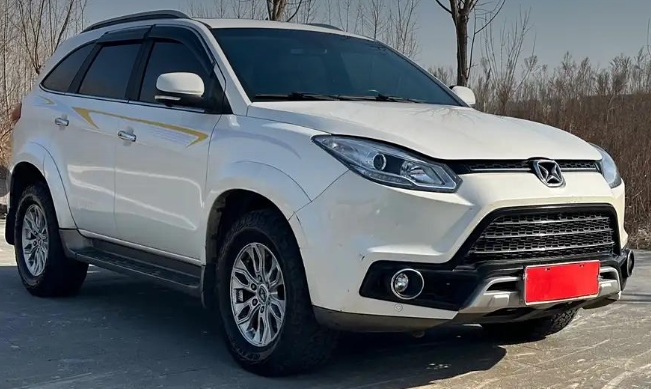
The Bisu T3 was the company’s first crossover and became the vehicle most closely associated with the Bisu brand.
Features included:
- Five-passenger seating
- Turbocharged engine options
- Compact SUV styling
- Affordable pricing
The T3 shared much of its engineering with existing BAIC Yinxiang platforms while receiving unique exterior styling.
Bisu T5
Production: 2017–2020
The Bisu T5 was a larger compact SUV positioned above the T3.
It offered:
- Larger dimensions
- More interior space
- Improved technology features
- Family-oriented design
Bisu M3
Production: 2016–2019
The Bisu M3 was a seven-passenger MPV.
Notable characteristics included:
- Flexible seating arrangement
- Family-focused packaging
- Competitive pricing
The vehicle shared significant engineering with the Huansu H3.
Bisu’s Most Successful Vehicle
Among all Bisu products, the Bisu T3 is generally regarded as the brand’s most successful model.
Reasons included:
- It launched the brand.
- It entered China’s fastest-growing vehicle segment.
- It appealed to younger buyers.
- It offered attractive pricing.
Precise global sales figures were never widely published, but available Chinese-market data indicate that the T3 significantly outsold the brand’s other vehicles during its strongest years.
Financial Problems Begin
Early Warning Signs
By 2017, BAIC Yinxiang was already experiencing difficulties.
Several factors contributed:
Overexpansion
The company launched numerous brands and models in a short period.
Market Competition
Competition intensified from:
These competitors possessed stronger dealer networks and larger development budgets.
Falling Demand
Chinese consumers increasingly favored established brands, making it difficult for smaller manufacturers to maintain sales momentum.
Factory Shutdowns and Labor Problems
The crisis worsened dramatically in 2018.
Production at BAIC Yinxiang facilities slowed and eventually stopped.
Workers reportedly protested over unpaid wages as the company struggled with cash flow problems. Debt levels increased rapidly while vehicle sales declined.
The company attempted to restart operations during 2019 but failed to recover sufficient sales volume.
Bankruptcy and Reorganization
2021 Bankruptcy Proceedings
The turning point came in April 2021.
A Chongqing court approved bankruptcy and restructuring proceedings for BAIC Yinxiang after years of financial difficulties.
What Happened?
The original BAIC Yinxiang operation effectively collapsed under:
- Excessive debt
- Weak vehicle sales
- Production interruptions
- Loss of market share
How Was the Problem Resolved?
Instead of liquidating the company, investors organized a restructuring plan.
Approximately $280 million (about 2 billion yuan at the time) was invested into the reorganized company. Funding came from:
- BAIC Group
- Yinxiang Group
- Investment funds backed by the Chongqing municipal government
The reorganized company became:
BAIC Ruixiang Automobile.
Birth of BAIC Ruixiang
Years of Operation
BAIC Ruixiang: 2021–present
Ruixiang was created as the successor to BAIC Yinxiang.
Unlike Bisu, which disappeared during the restructuring process, Ruixiang inherited many manufacturing assets, facilities, and engineering resources.
The objective was to create a leaner and more financially sustainable automotive company.
Ruixiang Vehicle Lineup
Ruixiang X3
One of the brand’s early crossover vehicles.
The Ruixiang X3 targeted:
- Budget-conscious buyers
- Small families
- First-time vehicle owners
Ruixiang X5
The Ruixiang X5 became one of company’s flagship products.
Features included:
- Mid-size SUV dimensions
- Modern styling
- Updated infotainment systems
- Improved safety equipment
Boteng Series
Additional vehicles later joined the lineup:
- Ruixiang Boteng V1
- Ruixiang Boteng V2
- Ruixiang Boteng M3
These models expanded the company’s offerings in the MPV and utility vehicle segments.
The Hoen Brand
Years of Operation
Hoen: 2023–present
The Hoen brand represents BAIC Ruixiang’s move toward electric mobility.
Unlike Bisu, which focused on gasoline-powered vehicles, Hoen was developed for the growing electric vehicle market.
Hoen O2
The first major Hoen product was:
Hoen O2
The vehicle originated from an earlier electric-car project before being integrated into the Ruixiang organization.
The Hoen O2 was positioned as:
- An affordable electric city car vehicle
- A modern urban transportation solution
- A competitor to emerging entry-level EVs
The model demonstrated Ruixiang’s effort to remain relevant during China’s EV transition.
Factory Operations
Manufacturing operations are centered in Chongqing, one of China’s largest automotive production regions.
The facilities historically included:
- Stamping operations
- Body welding
- Paint shops
- Final assembly lines
- Engine manufacturing facilities
During the Bisu era, annual production capacity was planned at approximately 250,000 vehicles and 250,000 engines.
Following restructuring, Ruixiang continued utilizing portions of these facilities while modernizing operations and reducing excess capacity.
Marketing Strategies
Bisu Marketing
Bisu emphasized:
- Young buyers
- Stylish design
- Affordable SUVs
- Technology features
Advertising frequently portrayed active lifestyles and modern urban living.
Ruixiang Marketing
Ruixiang shifted toward:
- Value-oriented positioning
- Practical family transportation
- Financial stability
- Electric mobility
This represented a more conservative approach following the company’s restructuring.
Racing Programs
Unlike major Chinese manufacturers such as Geely or SAIC, neither Bisu nor Ruixiang established significant factory-backed international motorsports programs.
The companies concentrated resources on:
- Product development
- Dealer expansion
- Manufacturing operations
Any motorsport involvement was limited and did not become a central part of brand identity.
Major Accomplishments
Despite their challenges, these brands achieved several notable milestones.
Bisu
- Successfully launched a new automotive brand in 2016.
- Built a nationwide dealer network.
- Introduced multiple SUVs and MPVs within a short period.
- Established independent manufacturing operations.
Ruixiang
- Successfully emerged from bankruptcy restructuring.
- Preserved manufacturing jobs and facilities.
- Restarted vehicle production after the collapse of BAIC Yinxiang.
- Expanded into electric vehicles through Hoen.
U.S. Consumer Reception
For practical purposes, there is no measurable American consumer reception for Bisu, Ruixiang, or Hoen vehicles.
The brands have never maintained large-scale retail operations in the United States.
As a result:
U.S. Sales Figures
- Bisu: No meaningful U.S. sales.
- Ruixiang: No meaningful U.S. sales.
- Hoen: No meaningful U.S. sales.
American awareness of these brands is extremely limited, even among automotive enthusiasts.
Mergers, Acquisitions, and Ownership Changes
Unlike companies that were outright purchased by a competitor, Bisu’s story is primarily one of restructuring.
Original Ownership
- BAIC Group
- Yinxiang Group
2021 Reorganization
BAIC Yinxiang was reorganized through court-supervised bankruptcy proceedings.
The successor company, BAIC Ruixiang Automobile, received investment from:
- BAIC Group (founded 1958)
- Yinxiang Group (founded 1997)
- Chongqing government-backed investment funds
Rather than being bought outright by a rival automaker, the company was effectively rebuilt under new ownership and financing arrangements.
Current Status and Outlook
Bisu
Status: Defunct
Years of operation: 2016–2020
Reason for discontinuation:
- Financial collapse of BAIC Yinxiang
- Declining sales
- Bankruptcy restructuring
The brand disappeared during the reorganization process and has not returned.
Hoen
Status: Active
Years of operation: 2023–present
Hoen remains part of BAIC Ruixiang’s electric vehicle strategy, though it currently operates on a relatively small scale.
BAIC Ruixiang
Status: Active
Years of operation: 2021–present
Ruixiang continues to produce vehicles in China and serves as the surviving successor to BAIC Yinxiang.
Its future depends largely on:
- Success in electric vehicles
- Maintaining competitive pricing
- Expanding dealer support
- Avoiding the overexpansion that contributed to the downfall of Bisu and BAIC Yinxiang
The histories of Bisu, Hoen, and Ruixiang illustrate both the extraordinary growth and volatility of China’s automotive industry. Bisu emerged with ambitious plans to attract younger buyers but disappeared after only four years due to the financial collapse of its parent organization. BAIC Yinxiang’s bankruptcy could have ended the story entirely, yet the restructuring created BAIC Ruixiang, allowing production facilities, jobs, and engineering resources to survive.
Today, Ruixiang and Hoen represent a second chance for the former BAIC Yinxiang operation. Whether they can achieve long-term success remains uncertain, but their survival through one of China’s most notable automotive restructurings has already secured their place in the history of the country’s automotive industry.